5 Renewable Energy Systems for Your Home
Growing environmental concerns, the desire for a more sustainable lifestyle, and the constant increase in electricity and gas costs have driven many people to seek more efficient energy alternatives for their homes. Renewable energy has become an increasingly accessible, cost-effective, and adaptable solution for different types of housing, from single-family homes to multi-family buildings and detached houses.
Once the decision to invest in these systems has been made, it is essential to study which option is most suitable for each home’s circumstances: the type of house, its orientation, the local climate, the available space, and, of course, the budget. Not all technologies perform equally well in all environments, and a good choice can make all the difference in both performance and long-term savings. In this post, we analyze several renewable energy options, discussing their advantages, disadvantages, and key aspects to consider before installation.
SOLAR
Solar energy is undoubtedly one of the most popular and widespread renewable energy sources. Its success is due to its accessibility, its adaptability to different types of homes, and its low maintenance. Furthermore, in countries like Spain, the climate is a determining factor: we have one of the highest numbers of sunshine hours in Europe, making solar energy a particularly cost-effective option.
Within this type of energy, we find two main systems: photovoltaic energy and solar thermal energy, each with different functions and applications.
Photovoltaic Energy
Photovoltaic energy directly transforms sunlight into electricity using solar panels installed on the upper parts of buildings, such as roofs. These panels capture solar radiation and convert it into electrical energy that can power the home, significantly reducing electricity bills.
Before installation, a technical study is conducted to determine the most suitable location. Factors such as roof orientation, pitch, shade, type of dwelling, land area, and climate directly influence the system’s performance. It is also important to consider the available budget, as the installed capacity will determine the self-consumption potential.
One of the major advantages of photovoltaic energy is the availability of numerous grants and subsidies, both national, regional, and municipal, which can considerably reduce the initial investment.
Estimated investment: from €5,000 to €12,500, depending on the size of the installation and energy needs.
Solar Thermal Energy
Solar thermal energy works differently. Instead of generating electricity, it harnesses solar radiation to heat a liquid—usually water—using solar panels or collectors. This heat is transferred to a circuit that feeds a storage tank, providing domestic hot water and even heating.
The tank can be placed next to the panel or inside the home. Installing it near the collector improves efficiency, although it may be less aesthetically pleasing, so the decision usually involves balancing performance and design.
This system is especially useful in homes with high hot water consumption or in temperate climates where solar radiation is constant for much of the year.
Estimated investment: between €1,200 and €4,500, making it a more economical option than photovoltaics.
WIND ENERGY (MINI WIND)
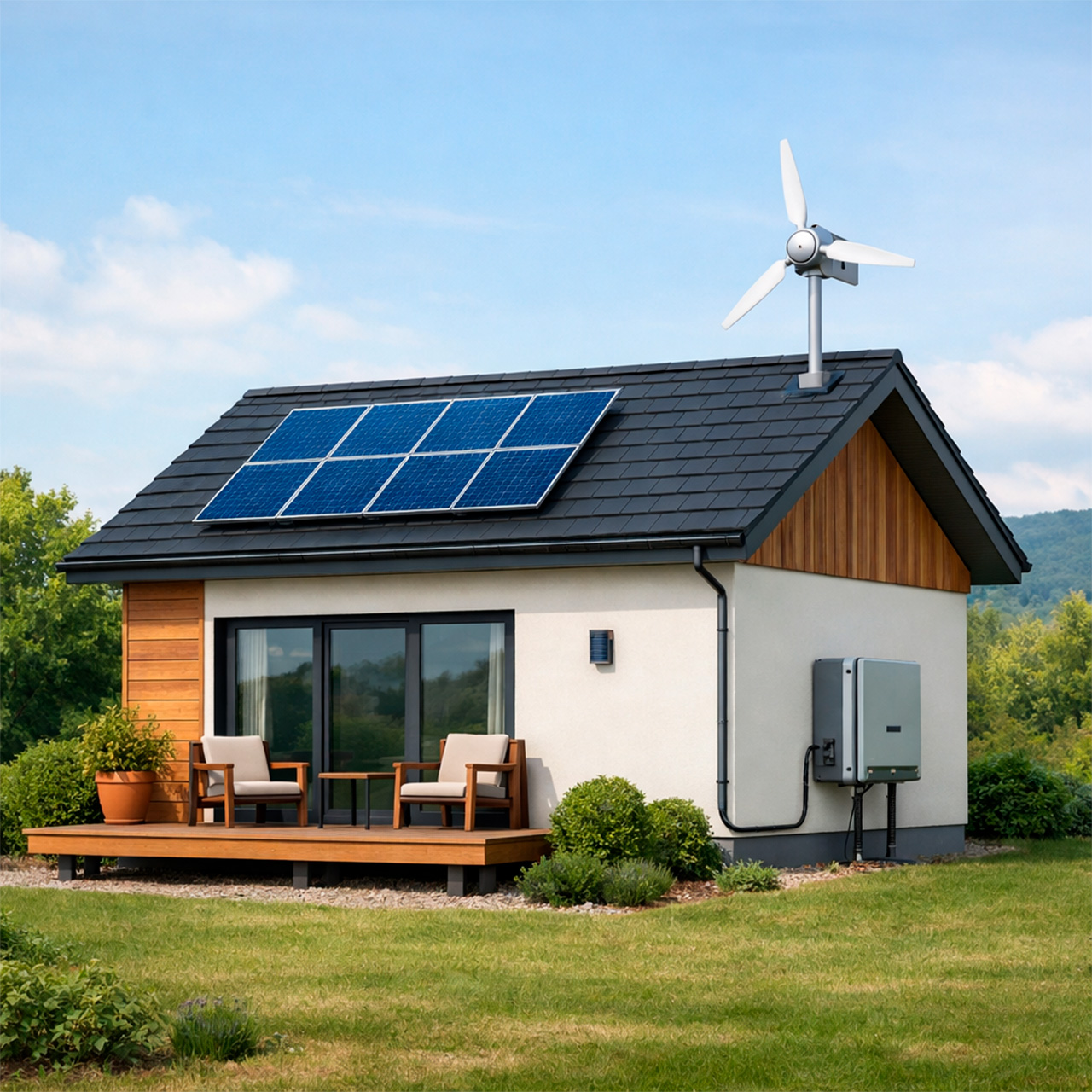
Domestic wind energy, or mini wind, uses small turbines of less than 100 kW to generate electricity from the wind. It is especially useful in isolated homes or rural areas where connection to the electrical grid is difficult.
The main drawback is its variability: production depends on the intensity and consistency of the wind, which can cause fluctuations in supply. Therefore, it is often combined with photovoltaic energy to ensure stability.
Estimated investment: between €2,000 and €8,000.
GEOTHERMAL ENERGY
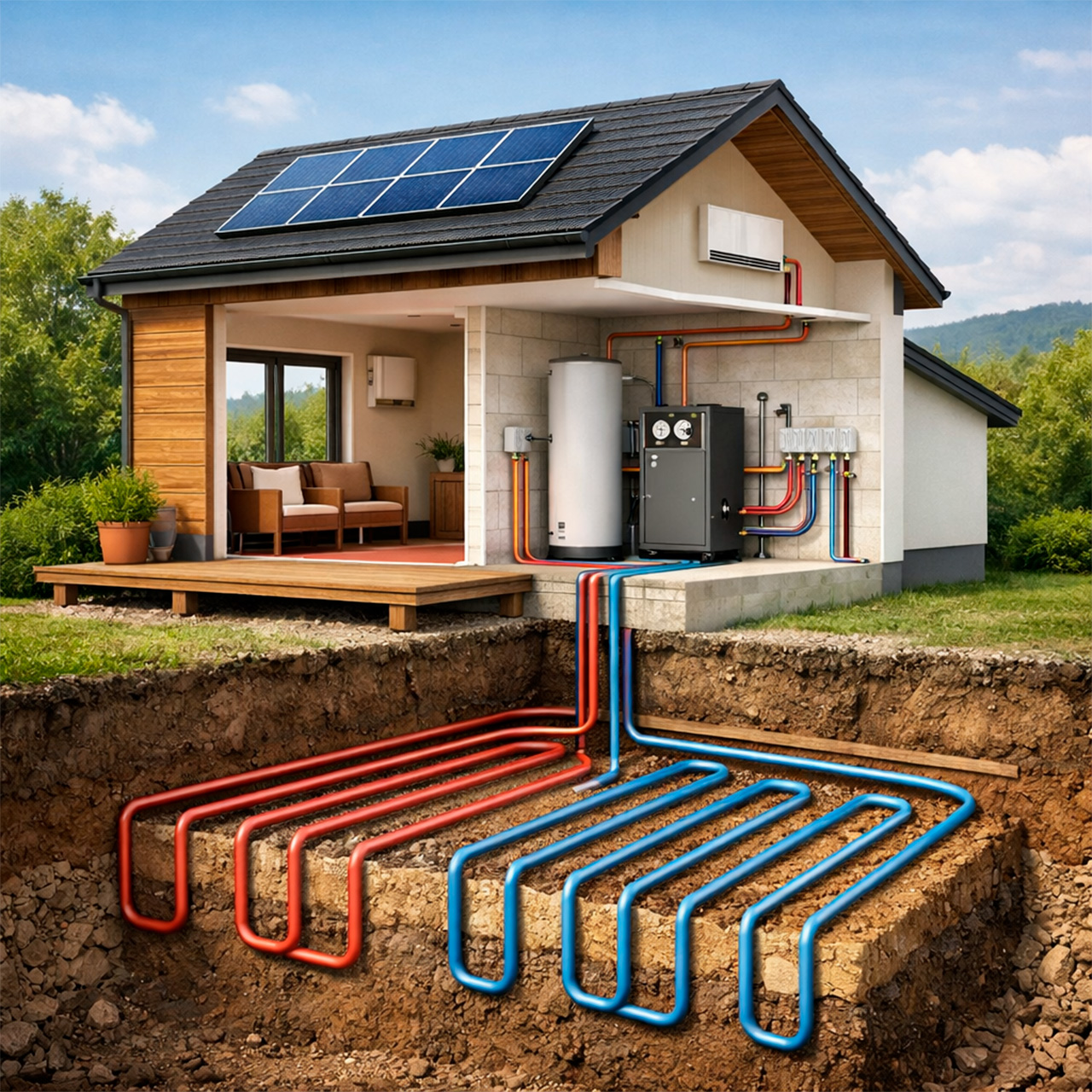
The use of geothermal energy has been gaining popularity in recent years. This technique harnesses the heat stored underground to heat and cool homes year-round. At a depth of 10–20 meters, the ground temperature remains stable between 15°C and 18°C, allowing for heating in winter and cooling in summer through a system of pipes, compressors, and condensers.
It is one of the most efficient technologies with the best long-term performance. However, its installation is complex and requires a significant initial investment, making it particularly suitable for new construction or complete renovations. Furthermore, not all areas have suitable geothermal conditions, so a preliminary study is essential.
Estimated investment: between €15,500 and €32,500 depending on the square footage and condition of the property.
AEROTHERMAL ENERGY
Aerothermal energy works using an air-to-water heat pump that extracts energy from the outside air to generate heating, cooling, and domestic hot water. It doesn’t produce heat, but rather transfers it, making it an efficient and versatile system.
One of its major advantages is that it doesn’t require land, so it can be installed in both apartments and houses. Installation is quick, and its initial cost is more affordable than that of geothermal energy, although its efficiency depends on the outside temperature.
Estimated investment: between €8,000 and €18,000.
PELLET BIOMASS
Pellet biomass is another increasingly popular and widely used renewable energy generation system. Pellets, which are primarily made from compressed wood waste, are used in stoves to provide heating and hot water. It is considered a renewable method because the CO₂ released during combustion is the same amount that trees used to produce the wood, resulting in a neutral CO₂ balance.
It is an attractive option for single-family homes, provided there is a flue and space to store the pellets. If a complete boiler solution is desired, the installation is more complex and is generally better suited for new construction.
Estimated investment: from €2,000 to €10,000, depending on whether only a stove is needed or a complete system with a flue is required.
SYSTEM COMBINATION
All the systems mentioned can be combined to cover 100% of a home’s energy needs. For example:
– Photovoltaics + aerothermal energy
– Small wind turbines + photovoltaics
– Geothermal energy + solar thermal energy
However, installing multiple systems without a prior study can increase the project’s cost and lengthen the payback period. The key is to analyze the actual needs of the home, the climate, the intended use, and the available budget.