Basque farmhouses: history, architecture, and the present day
If you have traveled through the Basque Country, Navarre, or the French Basque Country, in addition to enjoying its green landscapes, mountains, and cuisine, you have probably come across a Basque farmhouse during your visit. These traditional buildings, known in Basque as baserriak, are an essential part of the Basque rural landscape and represent one of the most authentic expressions of the culture and history of this region.
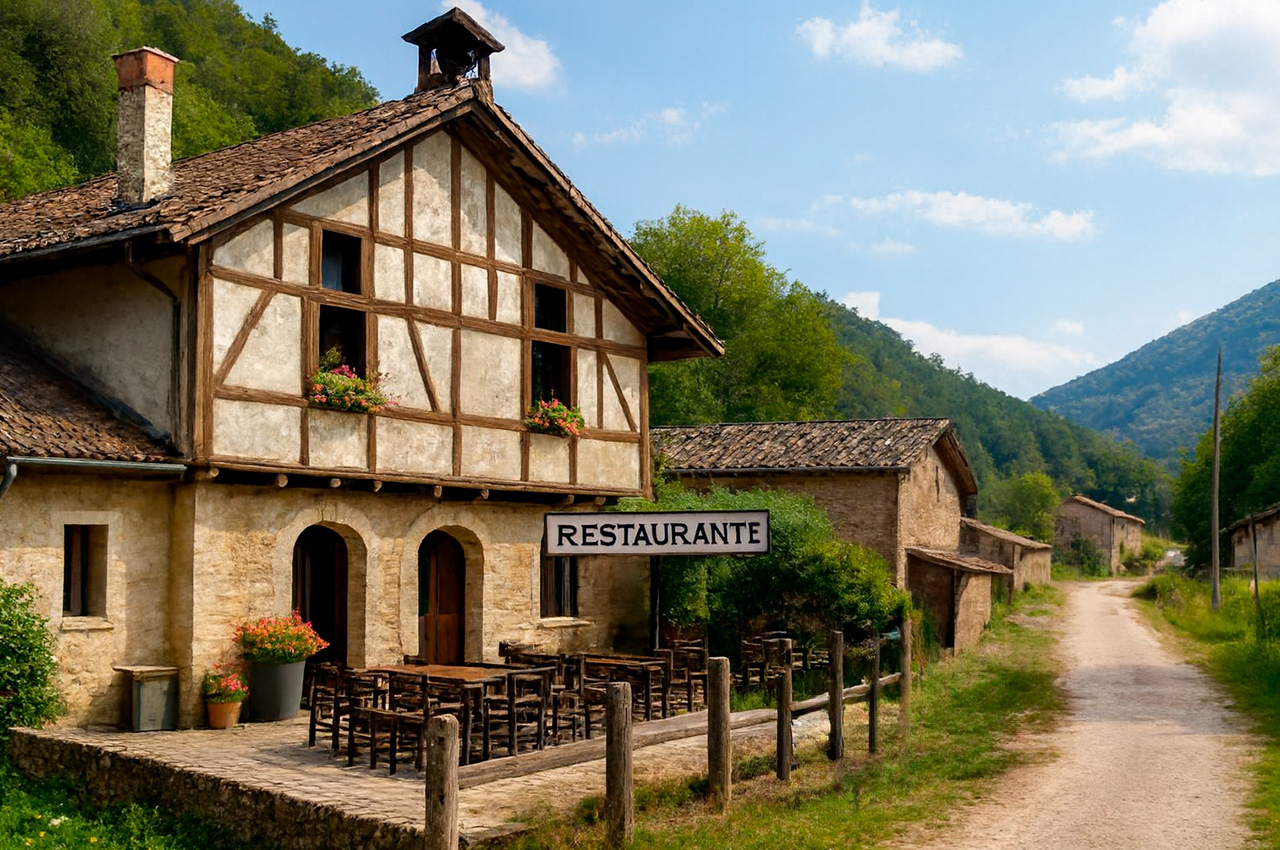
Farmhouses are the quintessential traditional Basque building. They are usually rectangular and compact in shape, with a sober and functional architecture. Historically, these buildings not only served as dwellings, but also as work centers for families engaged in farm work. They were the center of family and productive life, from caring for livestock to making products such as cider and cheese. Today, however, it is difficult to find a Baserri that has been preserved in its original state, as many have been adapted to modern times, transforming them into rural houses, restaurants, or contemporary dwellings.
History of Basque farmhouses
The origin of farmhouses dates back to the 12th and 13th centuries, when they began to emerge in response to the need to establish stable family units in rural areas. These farmhouses became the epicenter of economic activity for peasant families, who lived off the land and livestock. One of the most unique characteristics of farmhouses is that each one had its own name, usually linked to the surname of the family that lived there. This name not only identified the property, but also represented the lineage, honor, and reputation of the family, which had to be preserved for future generations. Hence, many Basque surnames include the term “etxe,” which means “house” in Basque.
During the Middle Ages, feudal lords granted land to peasants as a reward for their loyalty and work. In this context, farmhouses began to proliferate as a symbol of stability and self-sufficiency. The 15th century marked the heyday of these constructions, coinciding with the reign of the Catholic Monarchs. The pacification of internal conflicts and the economic boom of the time allowed many families to improve their homes, moving from wooden huts to more robust and durable stone buildings. This transformation was not only a practical necessity, but also a desire for social prestige.
With the arrival of the Industrial Revolution in the 19th century, there was a radical change in the social and economic structure of the Basque Country. Many people left the countryside to move to the cities in search of employment in factories. As a result, numerous farmhouses were left uninhabited or abandoned, falling into oblivion and disrepair.
Structure of the Basque farmhouses
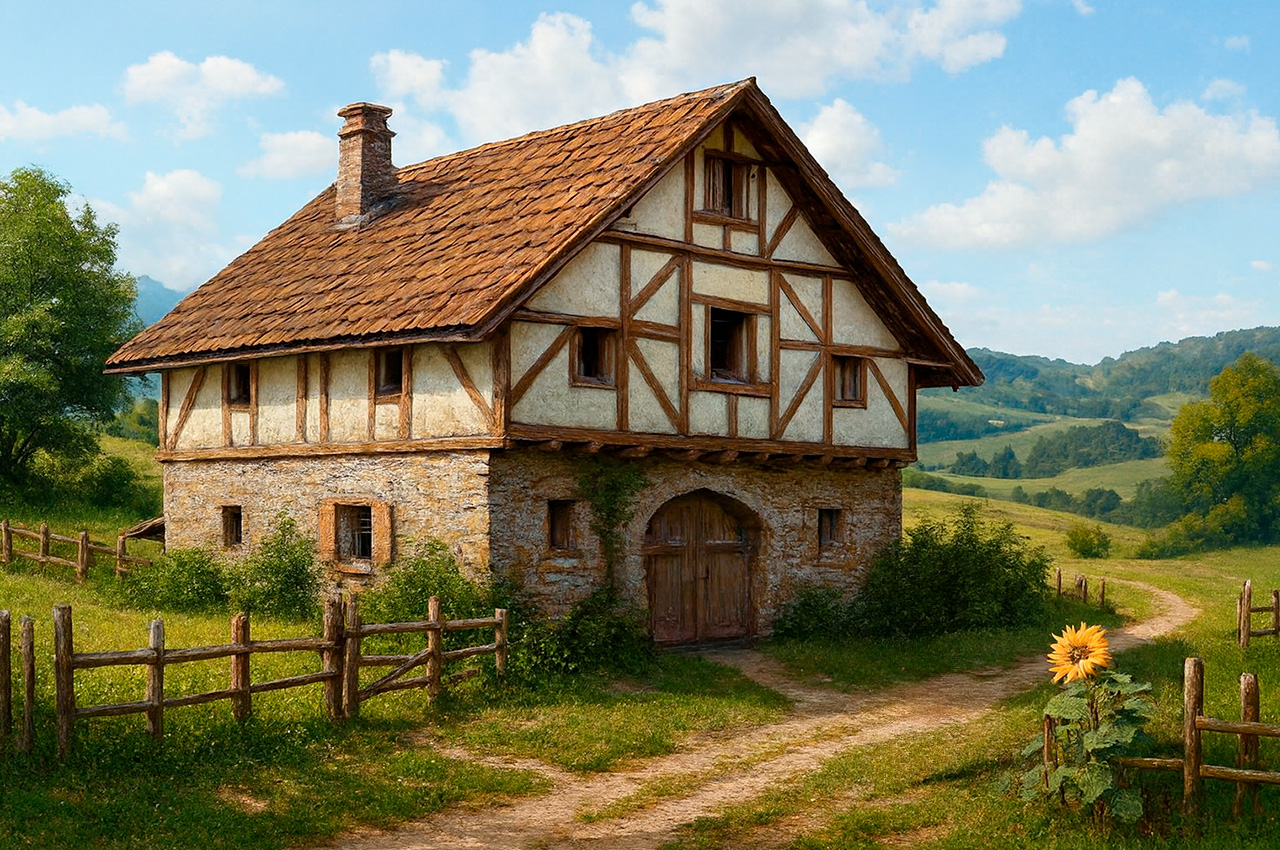
From an architectural point of view, traditional Basque farmhouses have their roots in Gothic architecture. They were built with the help of French and German architects who introduced advanced structural carpentry techniques. One of the most notable features of these buildings is their self-supporting structure, a kind of wooden skeleton that allows the building to stand even without walls. This technique not only ensured the solidity of the building, but also allowed for great flexibility in its design.
Each farmhouse was unique, as its design was adapted to the specific needs of the family living there. The type of crops, the number of animals, the size of the family, and the economic activities to be carried out were all taken into account. In general, the farmhouses were isolated, surrounded by fields and pastures, and had up to three floors. The ground floor was used for animal stables and the family home, while the upper floors were used to store the harvest, tools, and other agricultural products.
As farming techniques improved and production increased, so did the size of the farmsteads. Later, barns, granaries, and cellars were built to store products such as cider, which was made by hand by many families. These spaces were not only functional, but also reflected the economic and social growth of peasant families.
The rebirth of farmhouses today
In recent decades, there has been a renewed interest in Basque farmhouses. Many of them have been renovated and modernized, respecting their original structure but adapting them to the needs of contemporary life. This transformation has given these buildings a second life, as they now house rural guesthouses, restaurants, cultural centers, ethnographic museums, and even luxury tourist accommodations.
The boom in rural tourism has been one of the main drivers of this revitalization. Visitors seek authentic experiences, and farmhouses offer just that: an immersion in traditional Basque life, surrounded by nature, history, and culture. Sleeping in a baserri, tasting local products made on the farm itself, or participating in agricultural activities are increasingly popular experiences.
Furthermore, in a global context marked by concerns about sustainability and the circular economy, farmhouses have found a new role as centers for local and organic food production. Many families have returned to small-scale farming and livestock breeding, opting for traditional and environmentally friendly methods. This not only contributes to the conservation of the rural landscape, but also strengthens Basque cultural identity and promotes a more sustainable way of life.
Basque farmhouses are not simply old buildings; they are living witnesses to a way of life that has endured for centuries. They represent the connection between humans and the land, between tradition and modernity. Although many have been transformed, their essence remains: community work, respect for nature, and pride in one’s roots.