Ground floor or multiple floors: What to choose?
When you decide to build a house, one of the first questions you may ask yourself is whether to build it with one floor or several floors. Each option has its advantages and disadvantages, depending on your needs and the land. Therefore, it is very important to keep in mind some factors that may influence this decision.
COST
In principle, single-story houses tend to have a higher cost per square meter, as they require a larger foundation and roof to cover the entire living area. This entails more materials, more labor, and more time to build. Each additional meter of foundation and roof represents an expense that quickly accumulates in the final budget.
However, building a two-story home also entails specific financial considerations. Although they may seem more economical due to their smaller land area, we must keep in mind that the design of a vertical house involves more complex structures and the inclusion of stairs, which not only add to the construction complexity but also add additional costs in both materials and technical design. The safety of the stairs, their aesthetics, the space they occupy, and the necessary finishing touches also influence the total investment.
ENERGY EFFICIENCY
From an energy efficiency perspective, two-story homes offer certain advantages over single-story homes. Being more compact and having less surface area exposed to the outside (especially on the roof), heat or cold loss is lower. This makes them more efficient in terms of thermal insulation and can translate into lower long-term energy costs.
However, this does not necessarily mean lower heating or cooling costs. In homes with more than one floor, distributing heat or air conditioning can become a challenge, as hot air tends to rise and accumulate on the upper floors. This phenomenon can generate temperature differences between levels and require the use of more powerful or even independent air conditioning systems per floor, which increases both consumption and maintenance costs.
In contrast, single-story homes allow for more even heat distribution. Air circulates better through spaces at different levels, which promotes balanced air conditioning. Furthermore, underfloor heating systems or central heating are more efficient on a single level. Therefore, the choice of home type must consider not only the initial cost but also future consumption and energy sustainability.
LAND
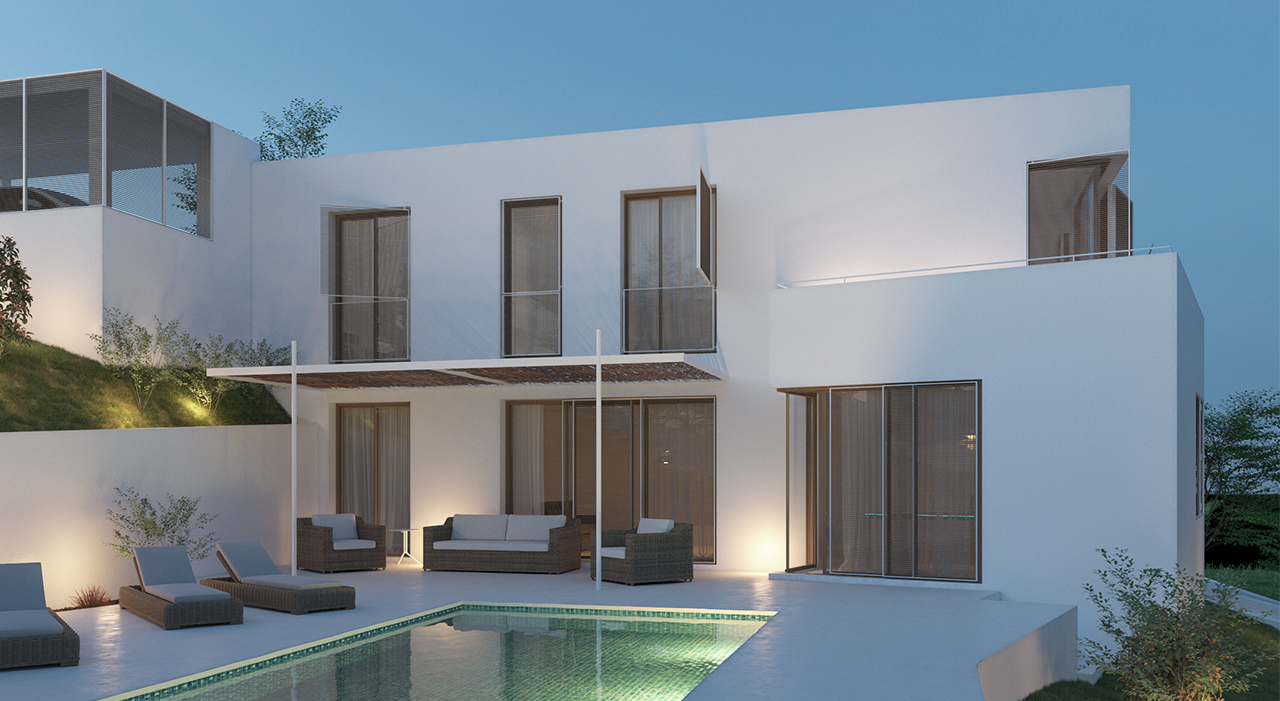
The available land is a determining factor when deciding what type of home can or should be built. If you have a large plot without planning restrictions, a single-story house may be an ideal option, as it allows for a more spacious layout, facilitating access and views from all rooms to the outside.
Conversely, on small plots or with building restrictions, it is much more efficient to build higher, taking advantage of the permitted volume. Homes with two or more floors allow for increased usable area without expanding the footprint on the land. This not only maximizes the available space but also leaves more room for gardens, patios, or even a swimming pool.
The slope of the land also plays a significant role. On sloping terrain, building a stepped or multi-level house can be the most logical and economical solution, allowing it to adapt to the topography without excessive earthworks.
ACCESSIBILITY AND FUNCTIONALITY
One of the greatest advantages of single-story homes is their accessibility. Without stairs, all spaces are on the same level, which facilitates mobility, especially for the elderly, young children, or individuals with disabilities. This feature also enhances the home’s functionality, as movement between rooms is more fluid and direct.
Single-story homes are also more suitable for those who want a home that will last a lifetime, that is, a home that can be enjoyed throughout all stages of life without the need for costly renovations in the future.
PRIVACY
The tiered layout of two-story homes allows for a natural separation of common areas from private areas. Social areas such as the living room, dining room, and kitchen are usually located on the lower floor, while bedrooms, studies, or rest areas are located on the upper level. This is especially useful for large families or when guests are frequently entertained.
On the other hand, ground-floor homes must be planned with special care to maintain a certain level of privacy, since all spaces are on the same level and any movement or sound can be easily perceived throughout the home.
MAINTENANCE
Home maintenance also varies depending on the type of construction. In single-story homes, cleaning and general maintenance tasks are simpler. Access to windows, roofs, or facades is easier and safer, allowing for minor repairs without the need for special equipment or outside professionals.
Multi-story homes, on the other hand, typically require greater effort in cleaning and maintenance. Constantly going up and down stairs can be tedious, and accessing windows or roofs on the second floor requires more resources.
VIEWS AND NATURAL LIGHT
One of the biggest draws of two-story homes is the views. If the lot offers attractive panoramic views, an upper floor allows you to enjoy them from balconies, terraces, or large windows. Additionally, the height provides better natural lighting, as upper-floor windows are usually less obstructed by surrounding elements.
However, excellent lighting can also be achieved in ground-floor homes through design strategies such as high ceilings, skylights, or large, strategically positioned windows.
CONNECTION WITH THE OUTDOORS
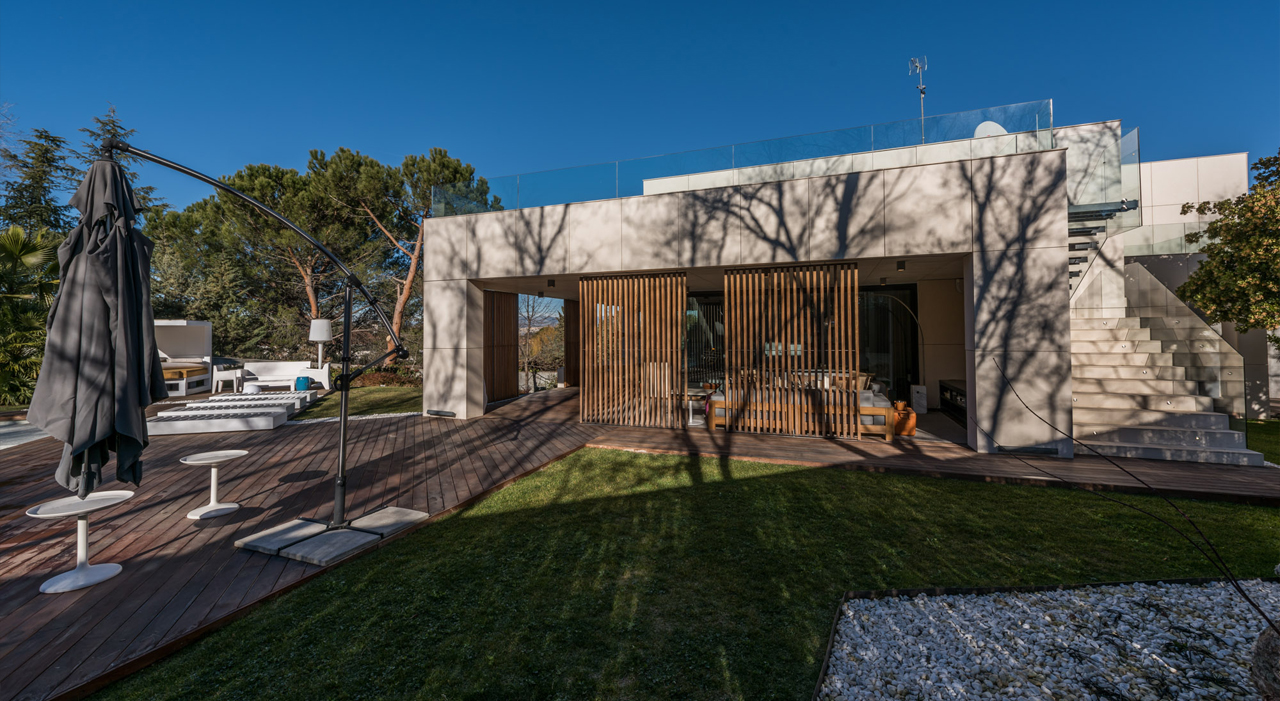
The connection with the garden, patio, or terrace is more direct in ground-floor homes. This proximity allows you to enjoy the outdoors daily, effortlessly go outside for fresh air, and have visual control of the entire exterior environment, which is especially useful with small children or pets.
Even in emergency situations such as fires or evacuations, the ground floor ensures faster and safer exits.
DESIGN AND LIFESTYLE
Two-story homes generally have a larger square footage, an important element if you’re looking for plenty of space. On the other hand, the architectural design is closely linked to the lifestyle of its inhabitants. Two-story homes offer more possibilities for customization: open spaces, double heights, balconies, terraces, attics, etc. This can be attractive to those who value a modern design, with separate spaces for different activities.
However, many people prefer the horizontality of a single-story home, with a more organic layout, no vertical obstacles, and a more natural integration between indoor and outdoor spaces.
Choosing the ideal home type depends on many factors: budget, terrain, family needs, future plans, and personal style. Both options have advantages and challenges, and the key is finding the balance between practicality and desire.