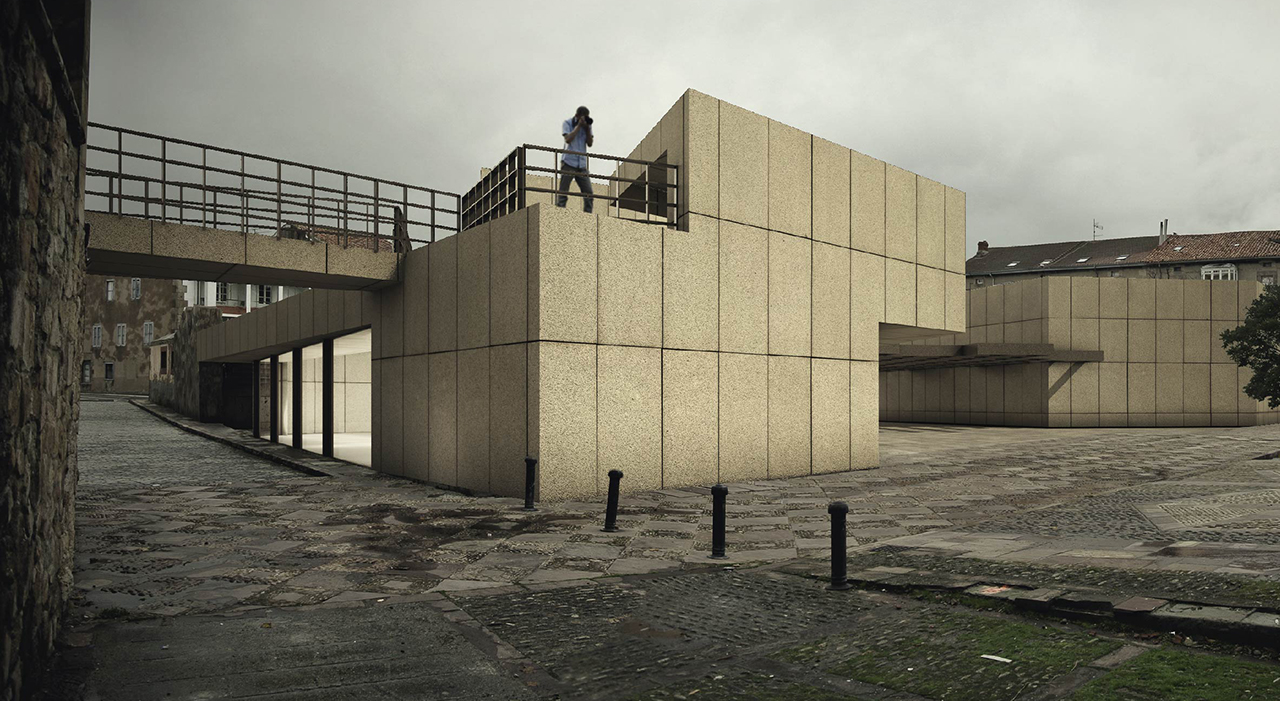
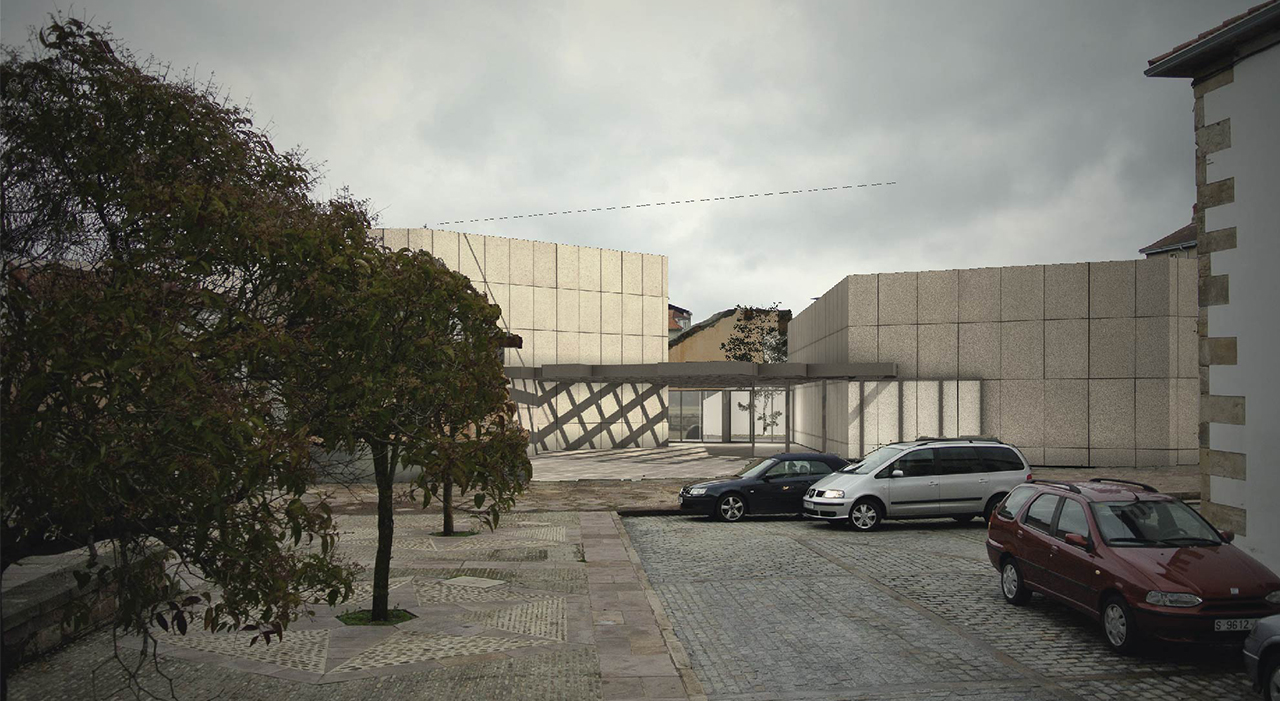
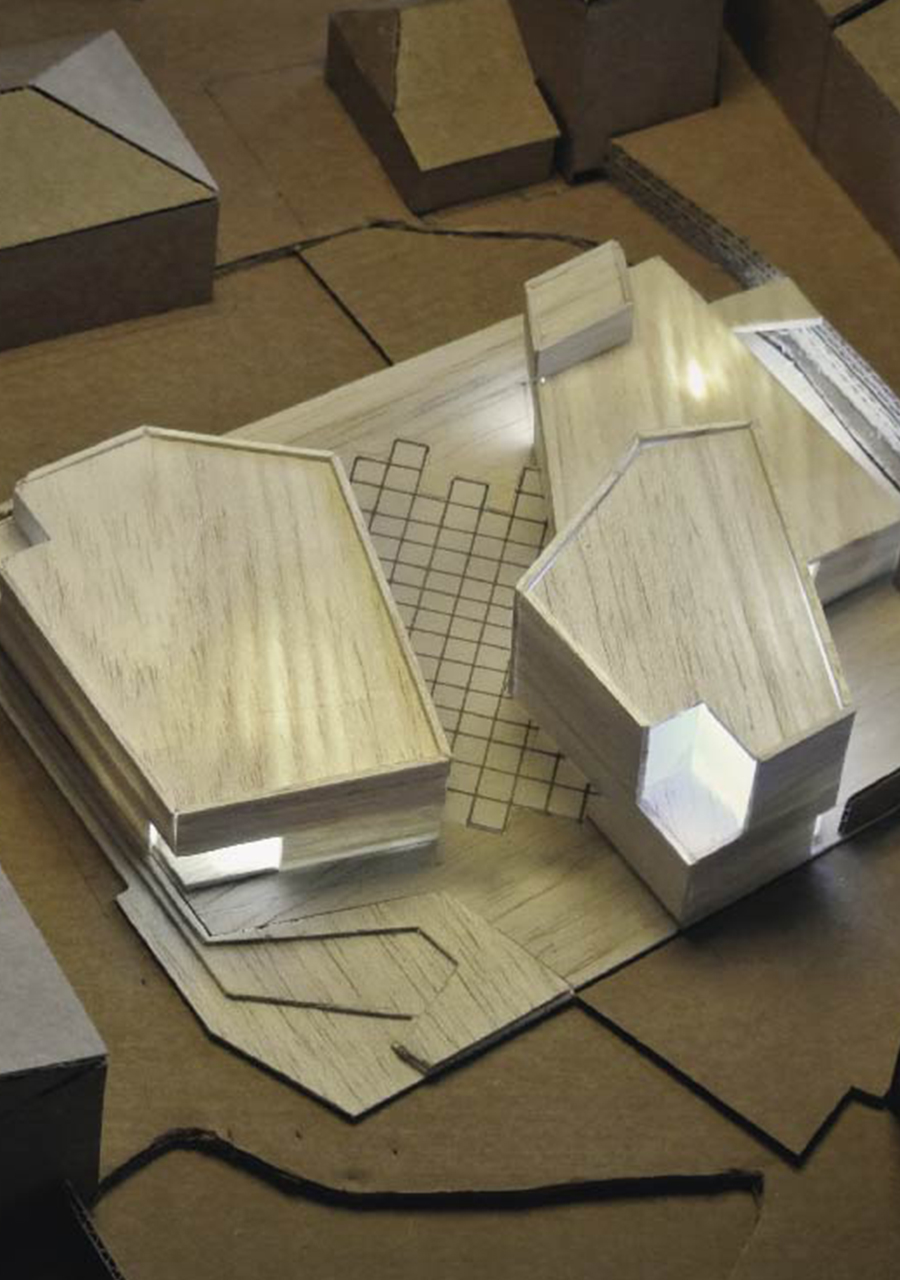
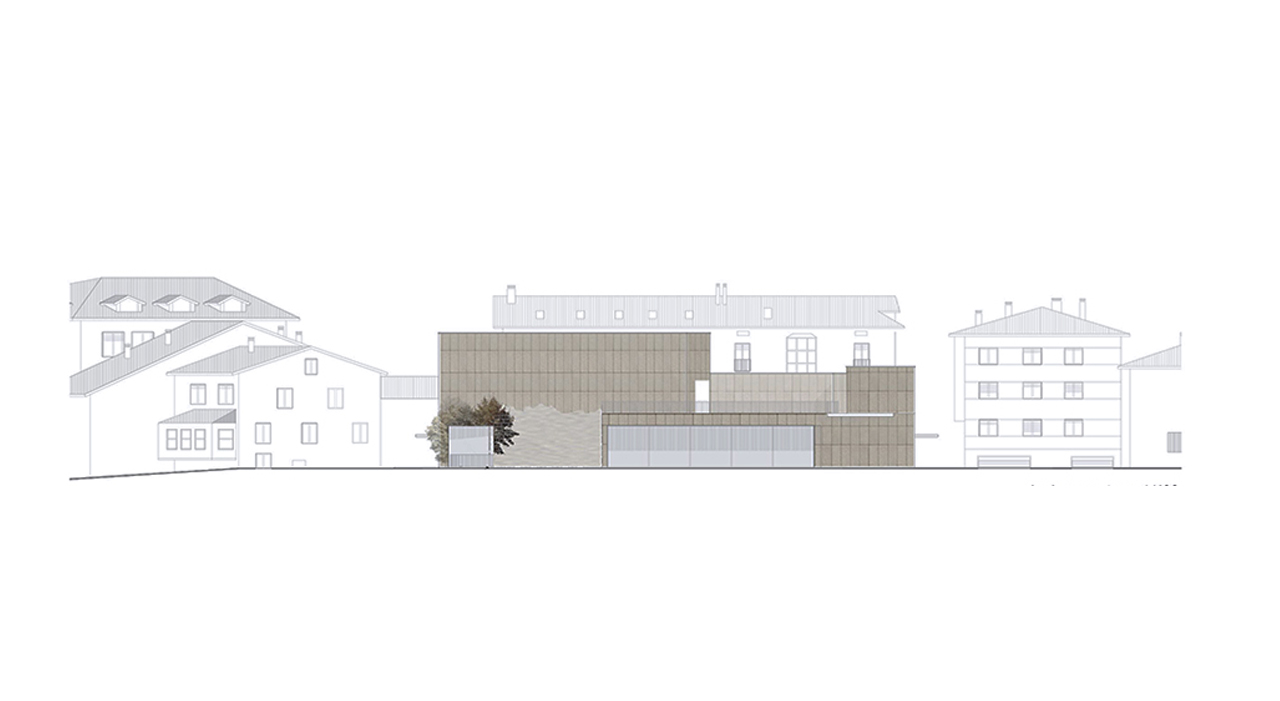
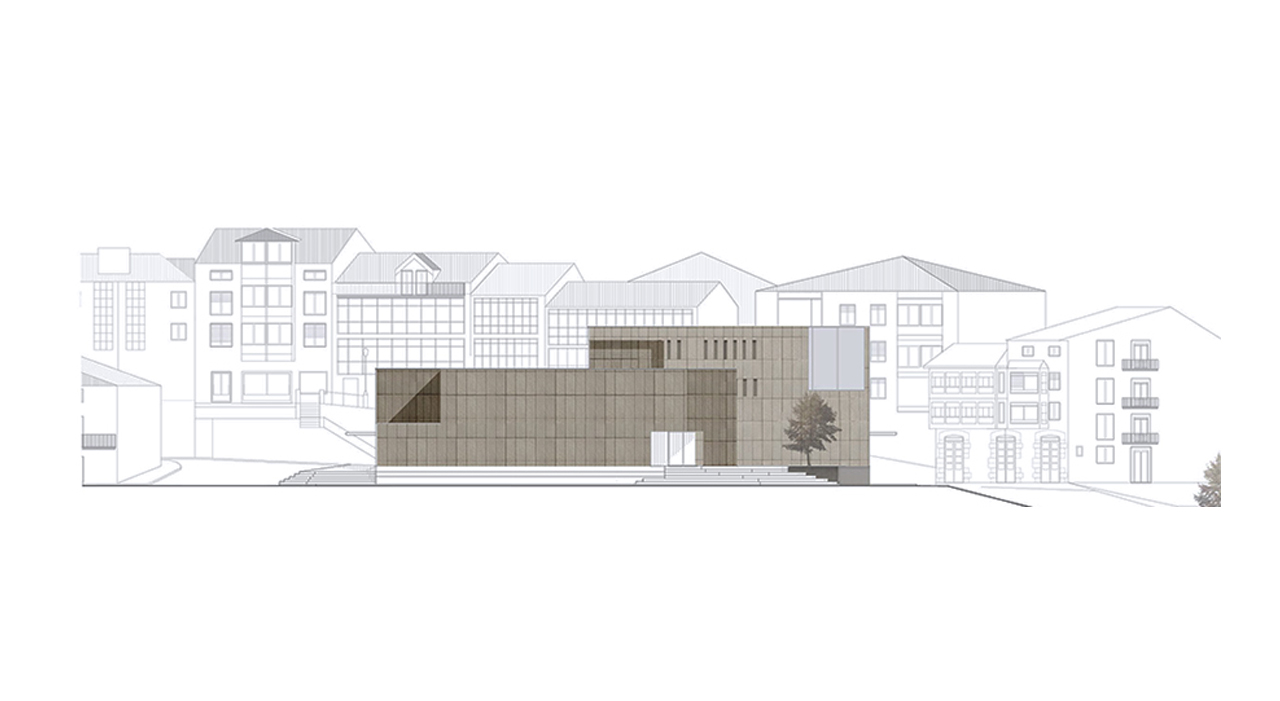
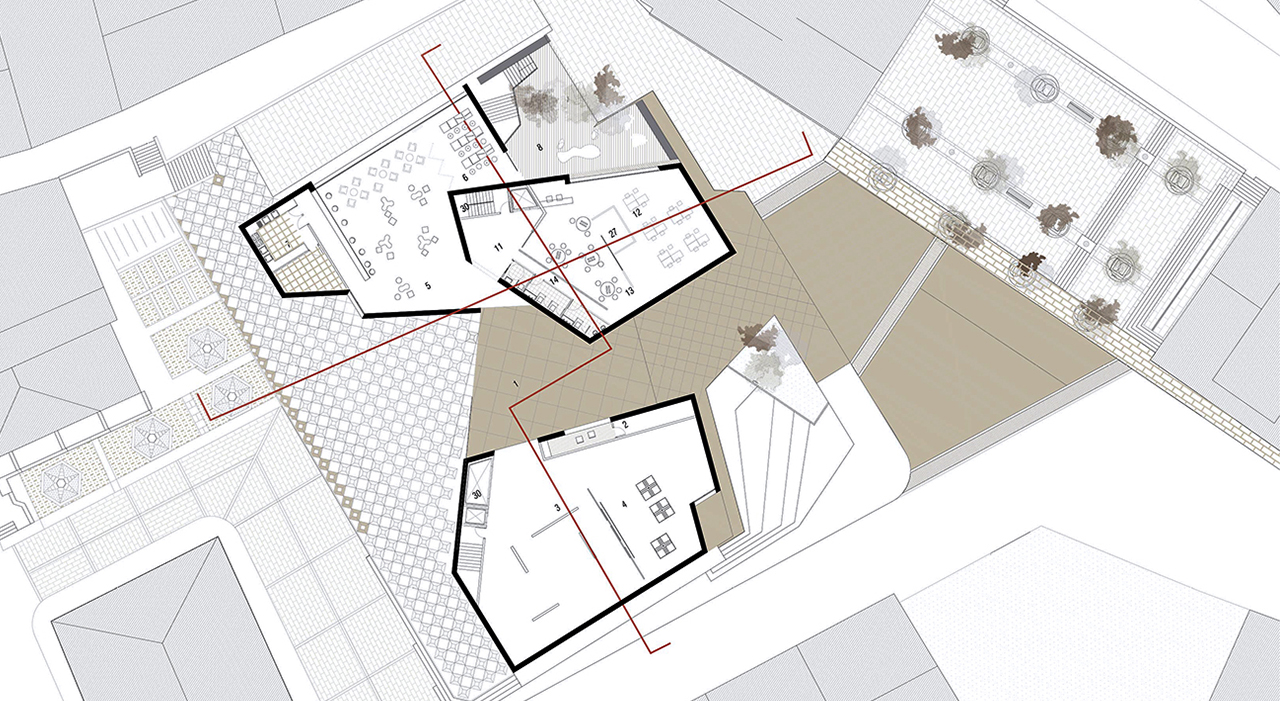
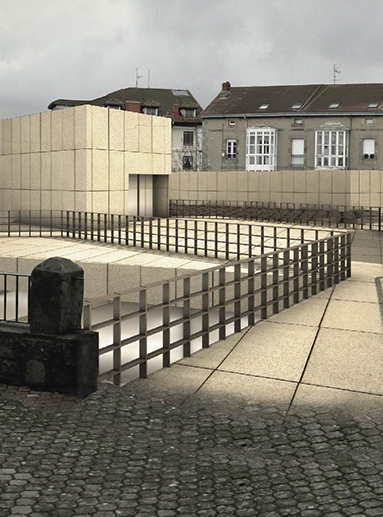
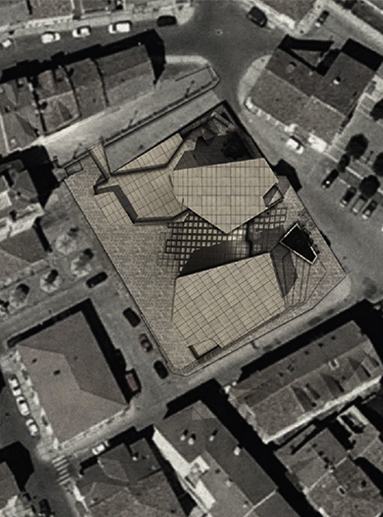
The market square of Reinosa starts at its lowest point on Juan José Ruano Street (southeast) until it meets the stone masonry wall that holds up Sol Street (northwest). Although the site inherited from the old market is a rectangle on a perfectly defined flat surface, the new building navigates the irregularity of its surroundings on all three axes. Throughout its journey, it transforms, fitting into the urban structure that surrounds it, absorbing the irregular layout of the surrounding architecture, connecting existing open spaces, eliminating unevenness, creating perspectives, and preserving open views.
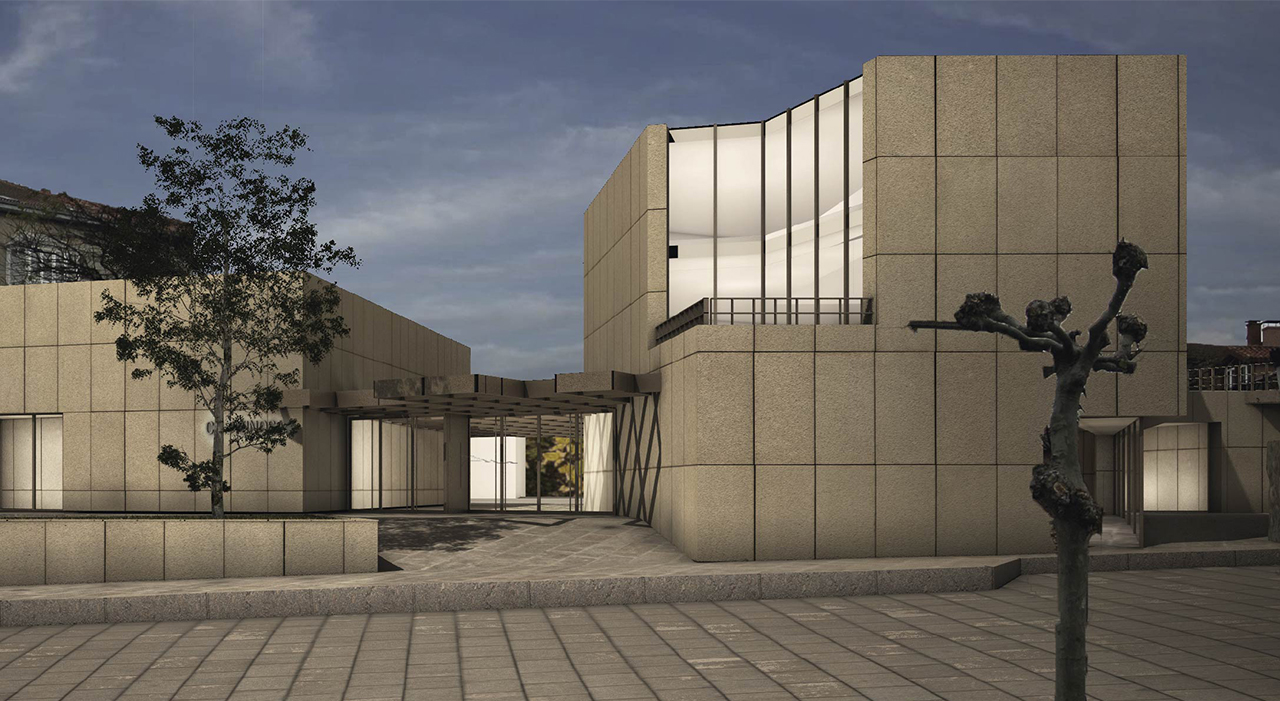
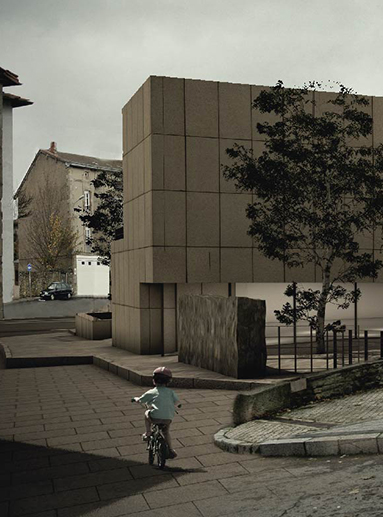
The old market, which presided over the place for so many years, has not entirely disappeared. Remnants of its walls are preserved at the northern end as an imprinted mark, reminding us of the site’s boundary and helping create an intimate open space, a defined garden. The building materializes as part of the ground from which it emerges, covered with local sandstone, invoking the architecture that forms the old town of Reinosa.
The volumes resemble large stone blocks that have rolled downhill and become trapped in this broad open space within the urban fabric. The center will share uses with Casa de Cultura located in the “La Casona” building, support the extensive program of Teatro Principal, and expand the municipal children’s offer. But beyond this, the new socio-cultural center of Reinosa will be a meeting place where the town will share leisure and culture, whether it is summer or winter. Thus, the plaza regains its original use, even before the market, as a place of meeting and celebration for the city.
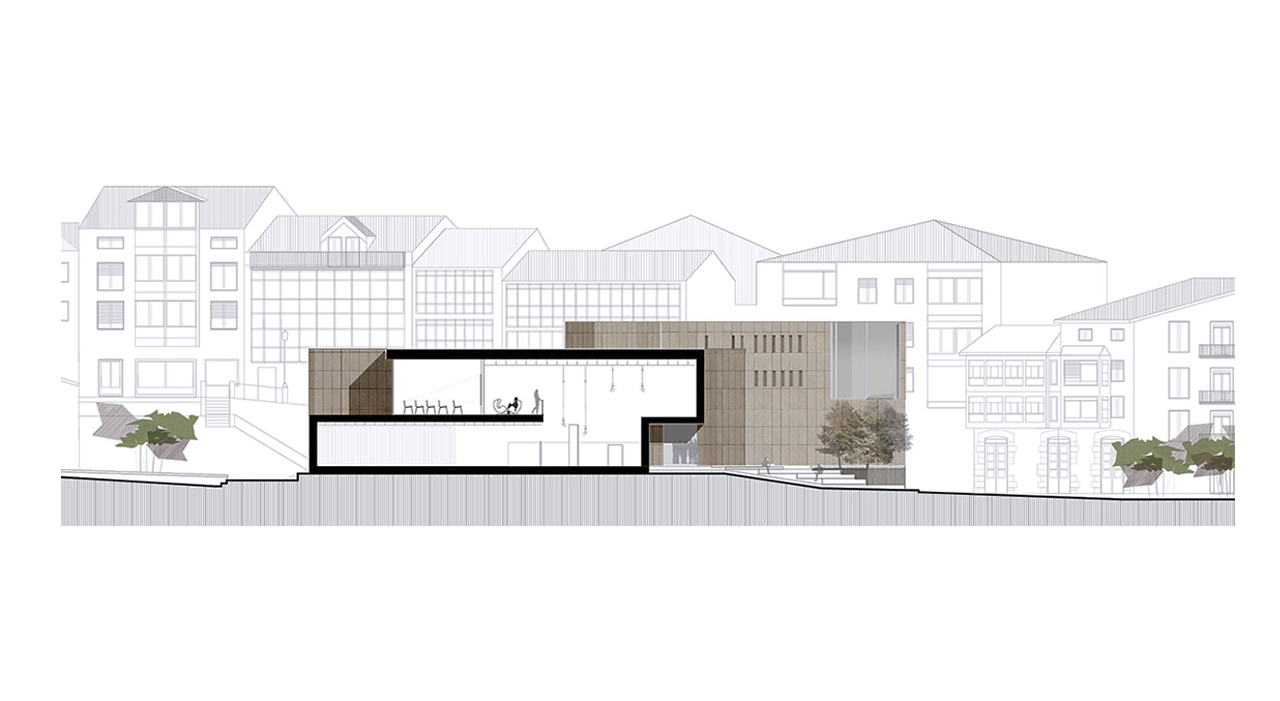
The program is distributed into two distinct volumes. The first volume houses the larger rooms: the exhibition hall, with an entirely open-plan and free space, and the multipurpose room with greater free height, giving it a more multifunctional character. Additionally, combining these two rooms can create a larger space with numerous possibilities. The second volume contains the rest of the program. A library and media library, along with the cafeteria, occupy the ground floor, directly relating to the patio that encloses the remains of the old market wall. The second floor hosts the educational program, with theoretical classrooms and workshops for various courses and activities, leaving the top floor, more private, for the center’s administration. A space has also been created for rehearsal rooms for groups and/or soloists, located in the basement for soundproofing reasons.
Between the two volumes, as an interstice between solid particles, the entrance to the complex emerges, with access from the east and west at street level, avoiding architectural barriers. This intermediate space between interior and exterior serves as the building’s lobby and the covered area of Plaza de Abastos. This space is covered by a suspended metal structure and glass, making the lobby a bright space protected from the sun’s rays.