Construcción y diseño de viviendas/casas colectivas en Torrejón de Ardoz, Madrid

Lignus Collective Housing

Site: Torrejón de Ardoz, Madrid
Competition: 2014

Modern cities, having surpassed the threshold of the 21st century, face new economic, social, and environmental challenges that require a new urban model. A model that speaks a different language, where efficiency, sustainability, and balance chart the course for growth and development. To achieve minimal energy use, the design and construction of zero-energy buildings differ significantly in their formal appearance from conventional buildings.

In conventional design buildings, the emphasis is typically on minimizing initial construction costs. In the EEC (Zero Energy Building) approach, every decision about the critical selection of each building subsystem is evaluated in terms of its future energy demand consequences, utilizing life cycle energy analysis, and accepting an increase in initial construction costs if this can reduce energy demand and operating expenses. In addition to using renewable energy, zero-energy buildings are also designed to use energy gained from other sources, including appliances, efficient lighting, and the metabolic heat of people. From this contextual analysis emerges the Lignus Collective Housing Project.

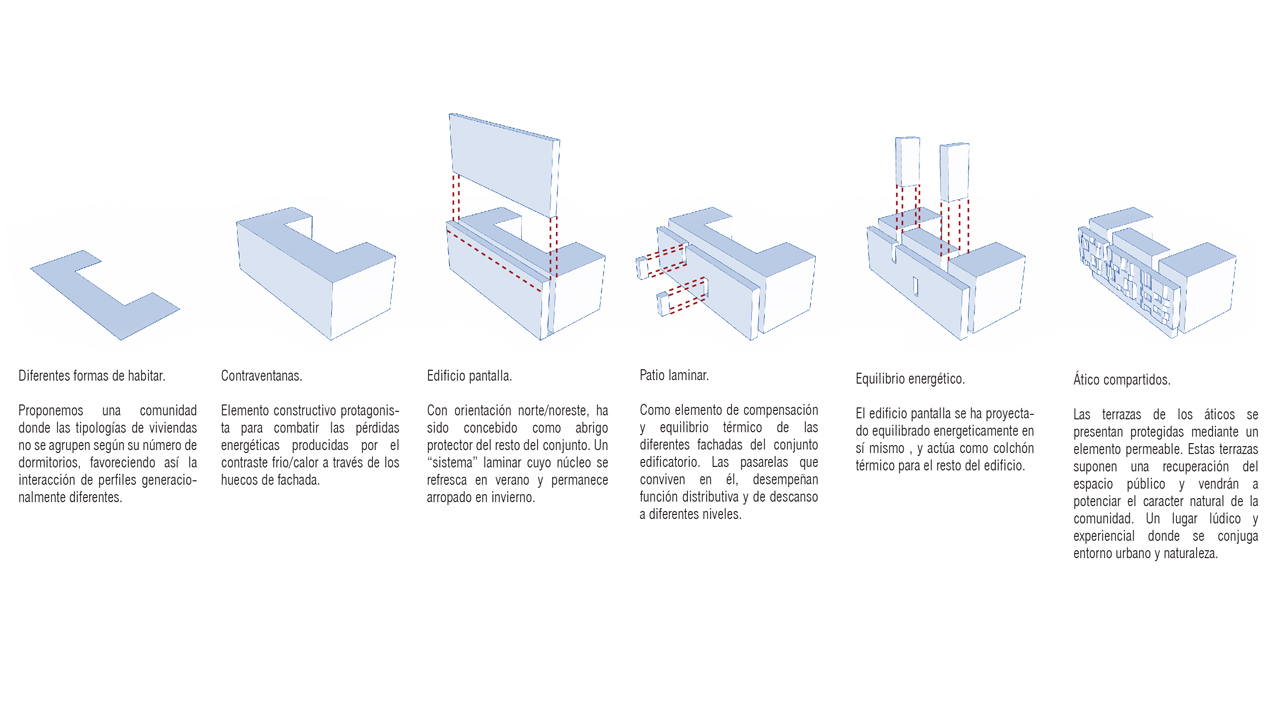
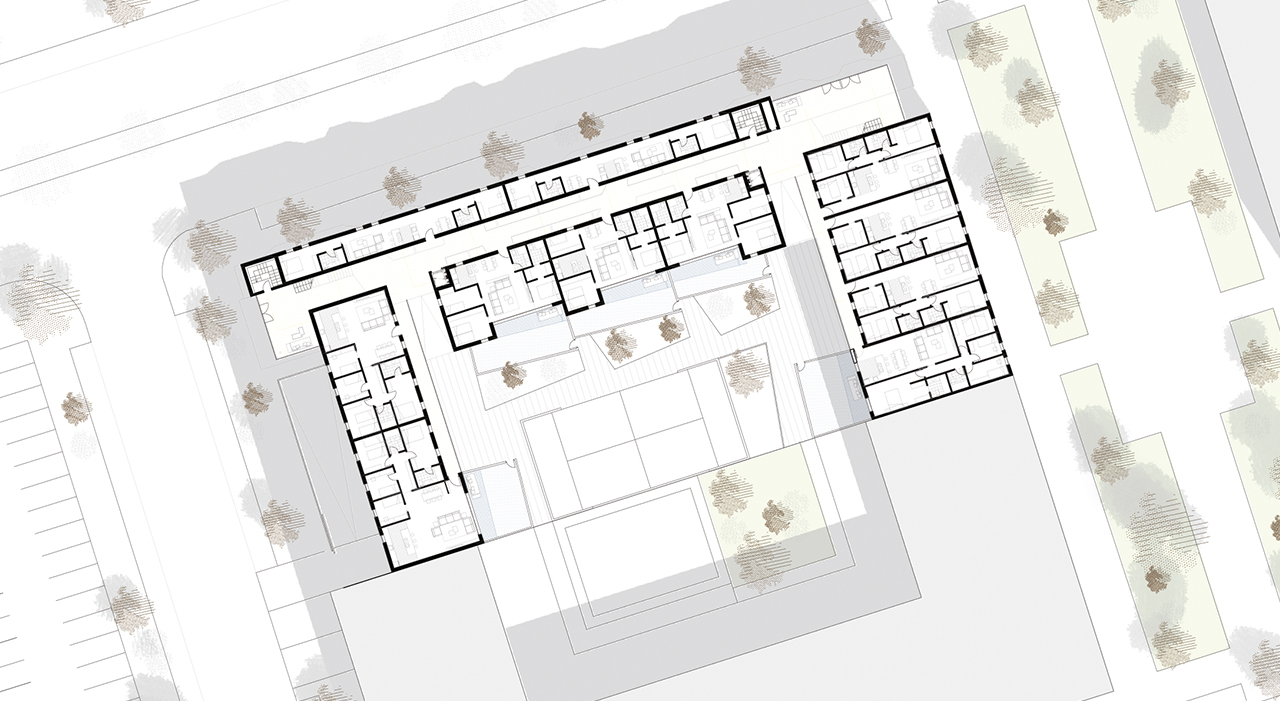
At Angulo Architecture, we present the Lignus Collective Housing project, located in Torrejón de Ardoz, which proposes a housing design whose basis lies in the adaptation of the same to the comfort and health of its occupants, through maximum innovation, environmental respect, and balance, creating a community where housing typologies are not grouped according to the number of bedrooms, thus promoting the interaction of generationally different profiles.

The shutters will be the main construction element to combat energy losses caused by the cold/heat contrast through the facade openings.

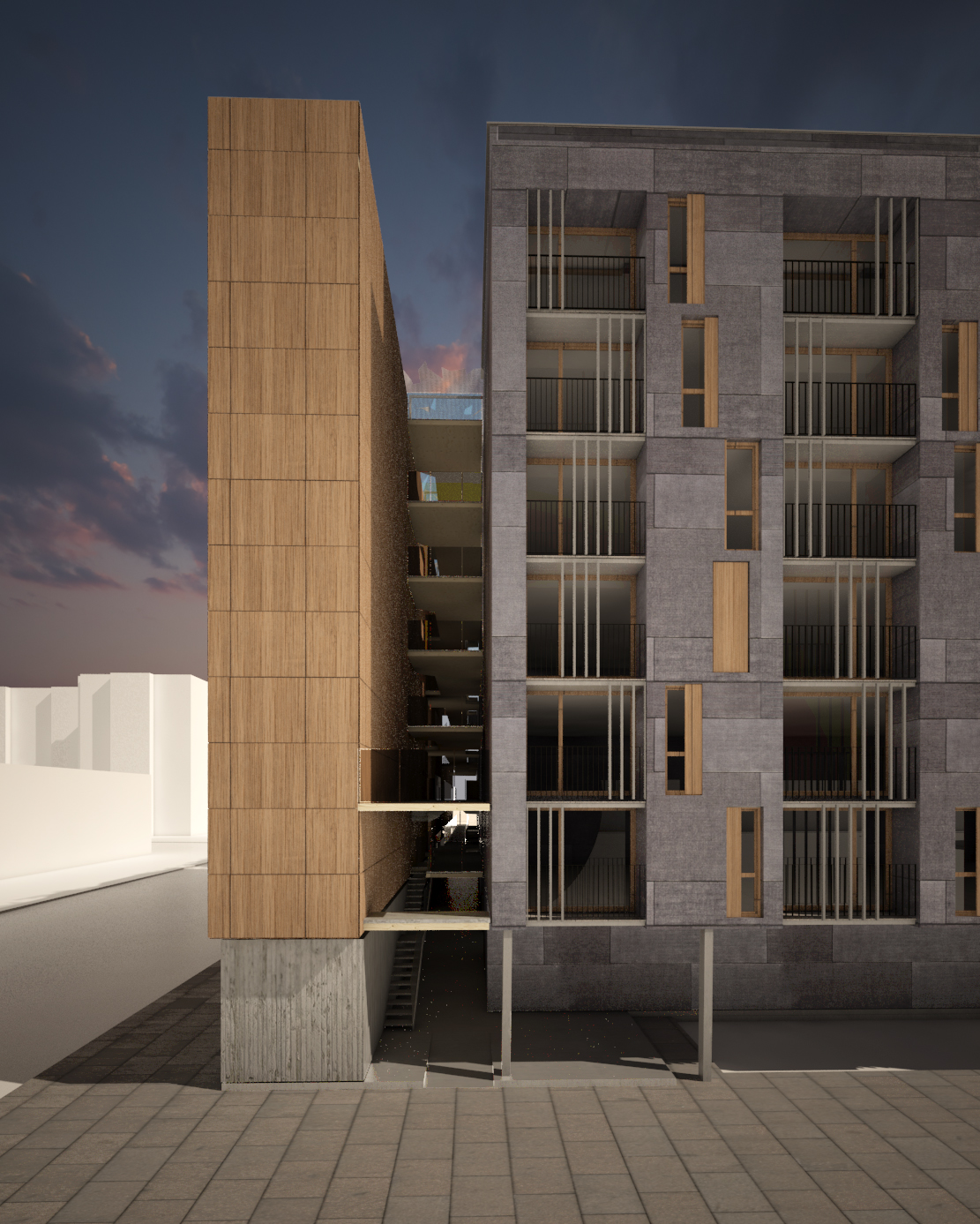
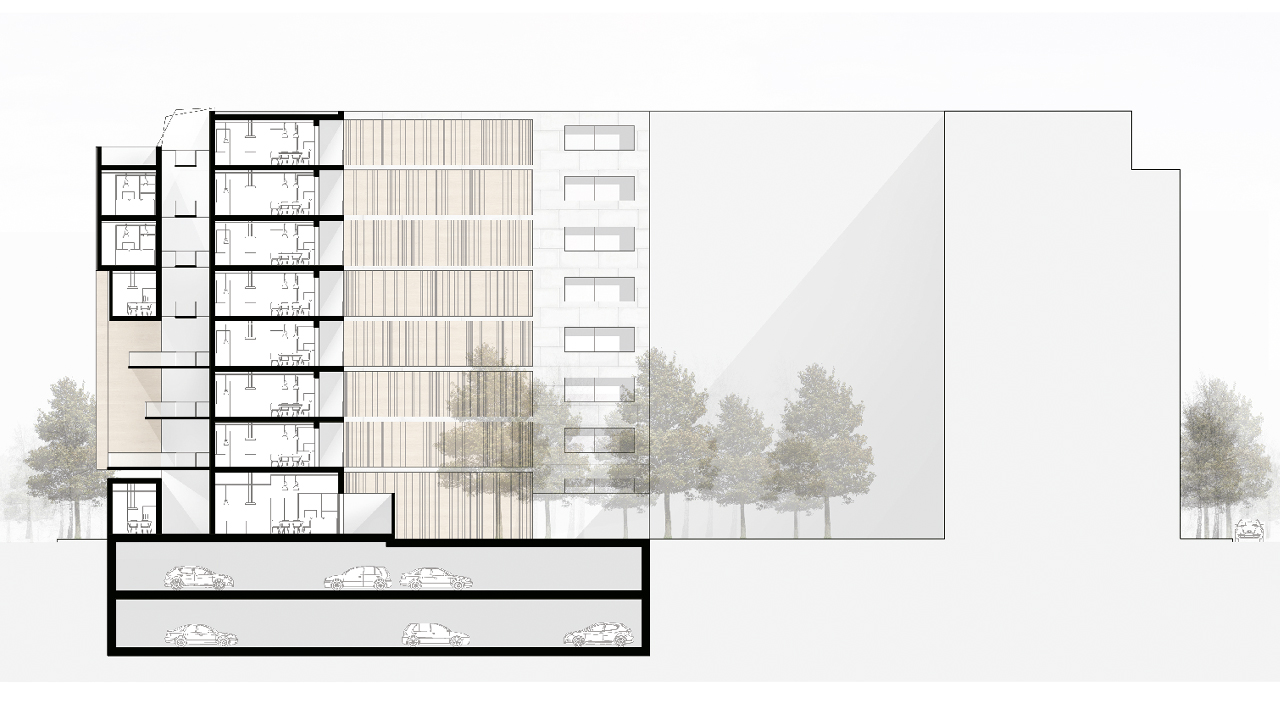
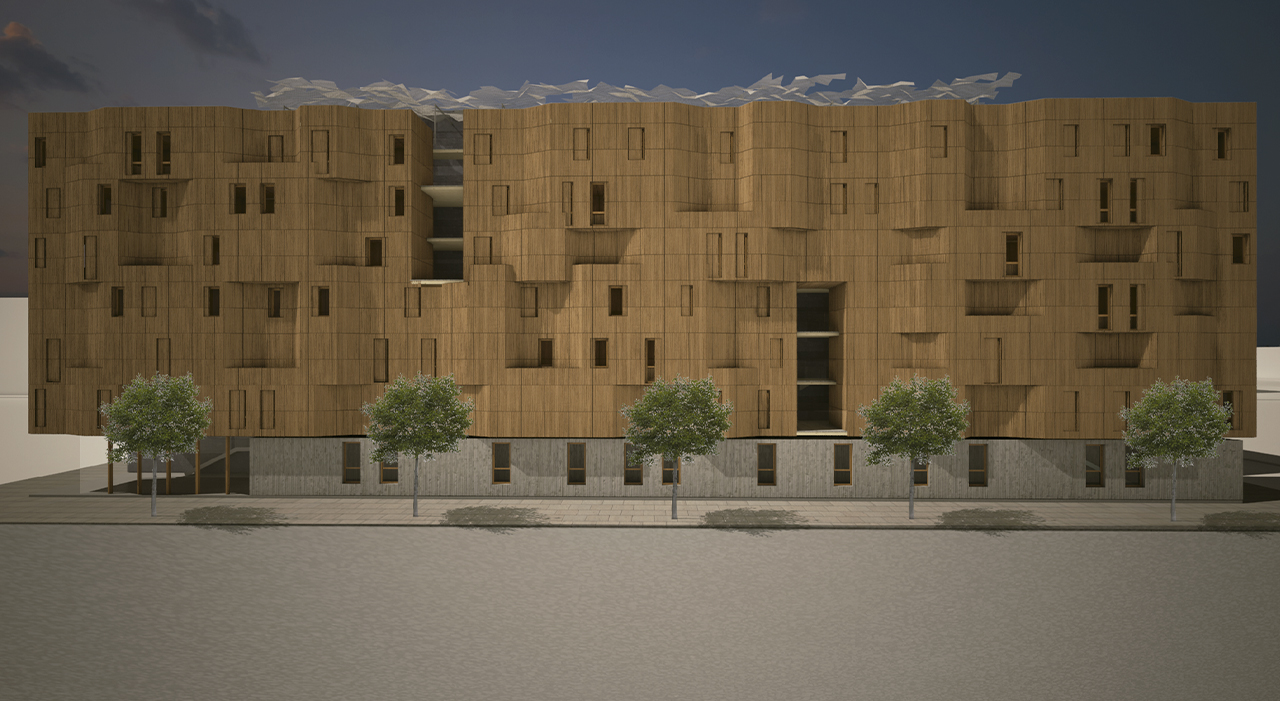
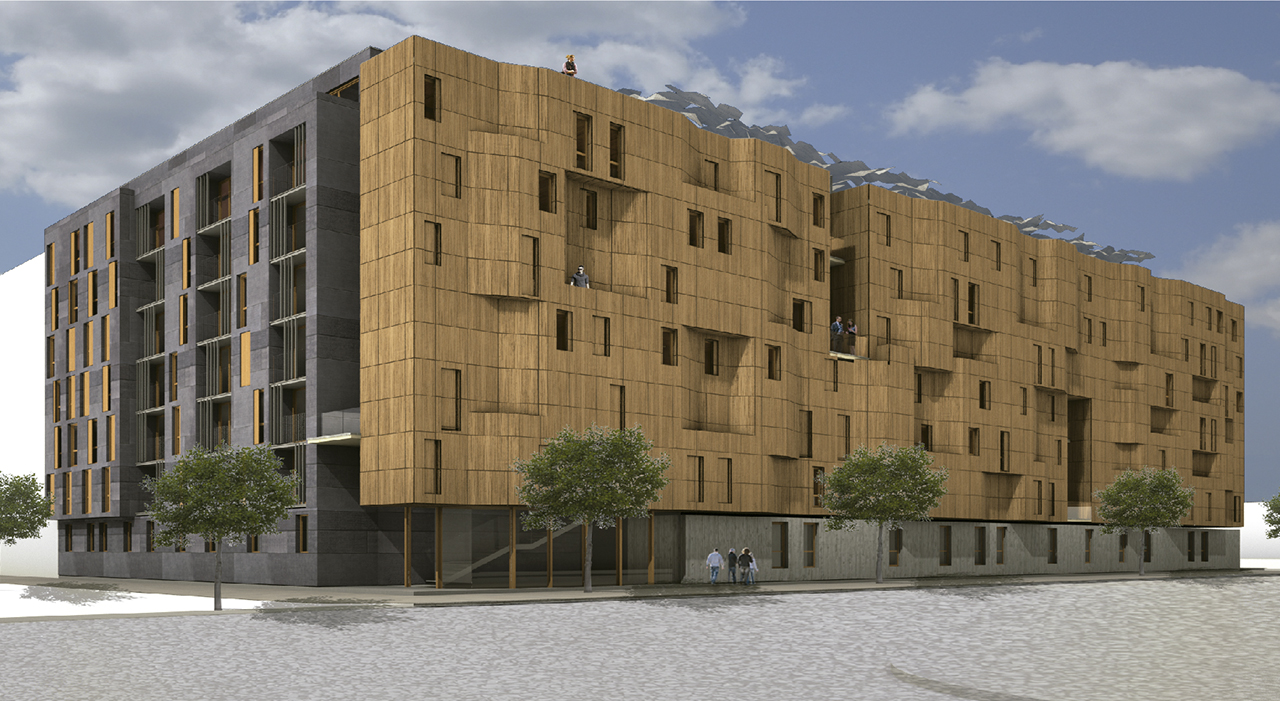
The building features a screen building that protects itself from the exterior as if it were the bark of a tree and, therefore, also protects the rest of the building: it is conceived as a protective layer for the rest of the building, a laminar “system” whose core is cooled in summer and remains insulated in winter. The screen building is designed to be energetically balanced in itself and acts as a thermal buffer for the rest of the building. Its exterior appearance, rough and seemingly arbitrary in geometry, and finished in wood, resembles tree bark.

Two large cracks appear in it, two deep cuts in the tree’s surface, which allow an aesthetic improvement of the facade, lightening its overall appearance and enabling a visual connection between the different floors of the gallery and the outside.

On the roof of the laminar block, a communal area is created, representing a recovery of public space and enhancing the community’s natural character.

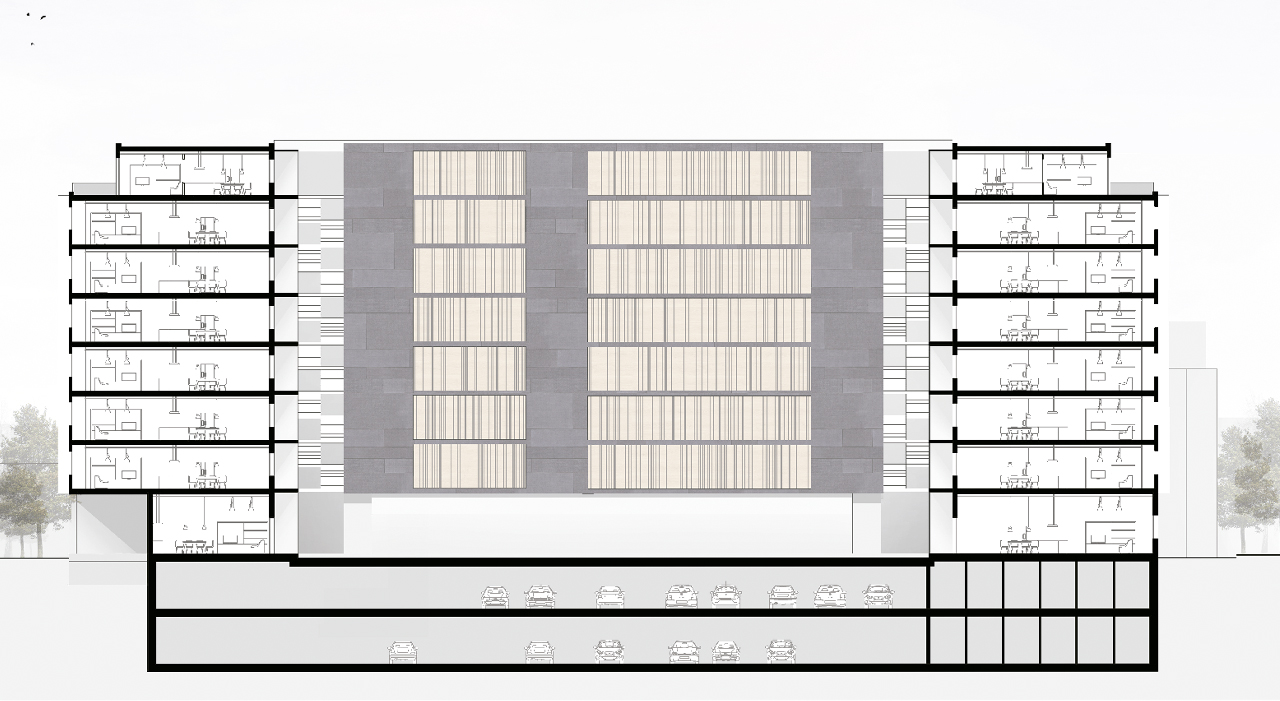
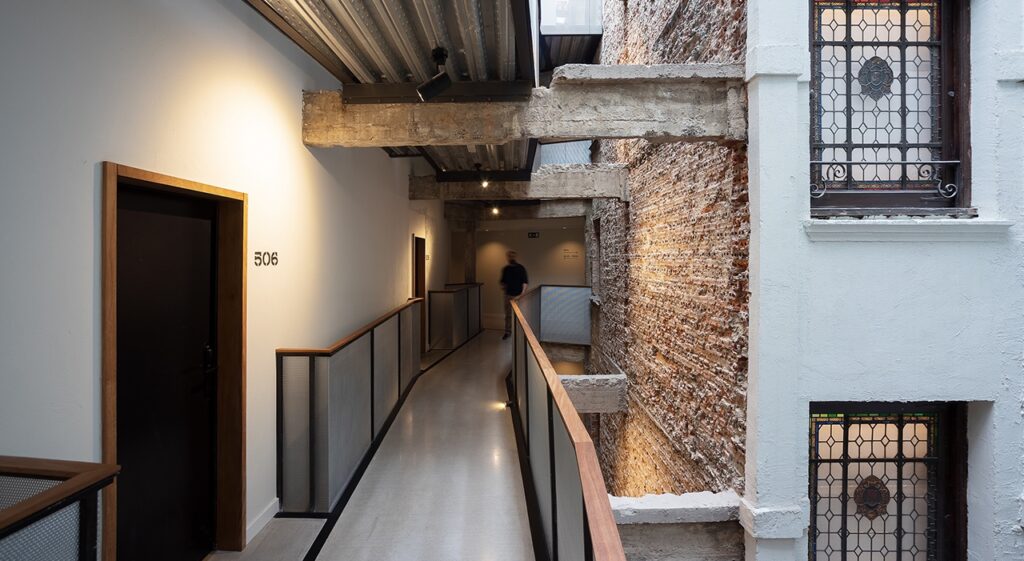
A recreational and experiential place where the urban environment and nature are combined. The laminar courtyard will serve as an element of thermal compensation and balance for the different facades of the building complex. The walkways within it serve as distribution and rest areas at different levels.
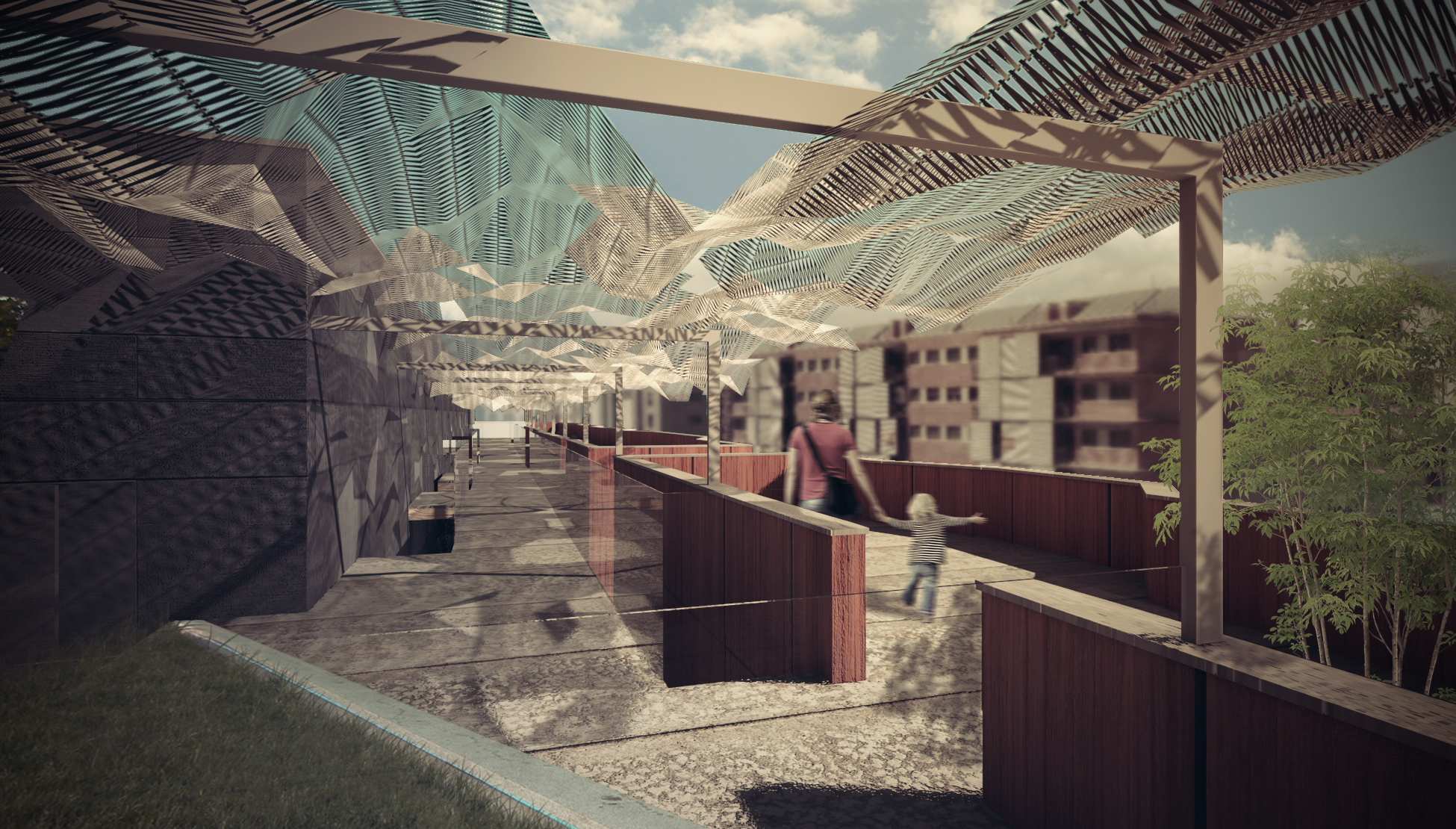
These terraces represent a recovery of public space and will enhance the natural character of the community. A playful and experiential place where urban environment and nature are combined

Roberto Santiago

Architect


Construcción y diseño de viviendas/casas colectivas en Torrejón de Ardoz, Madrid

Construcción y diseño de viviendas/casas colectivas en Torrejón de Ardoz, Madrid

Información sobre el proyecto

Project title
Lignus Housing
Site
Torrejón de Arroz, Spain
Project Competition
2014
Programa
Collective housing
A Arq Team
Borja Angulo, Roberto Santiago, Jon Arostegi, Javier Pose.
Plot surface
3500 m²
Total plot surface
14250 m²

Can we do anything for you?

Our projects

  1. Hospitality 5
  2. Restaurant-Bar 2
  3. Single-family housing 7
  4. Interior design 5
  5. Collective housing 2
  6. Public 5
  7. Industrial building 7
  8. Product Design 3