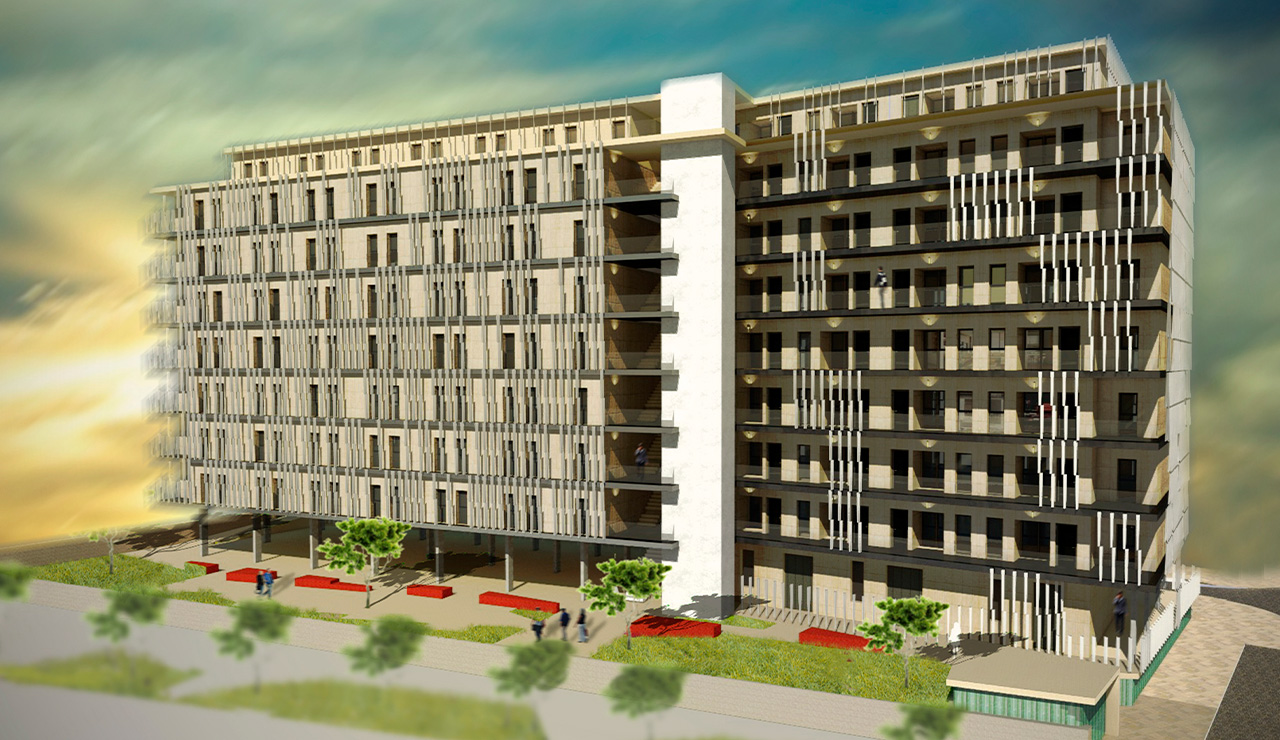
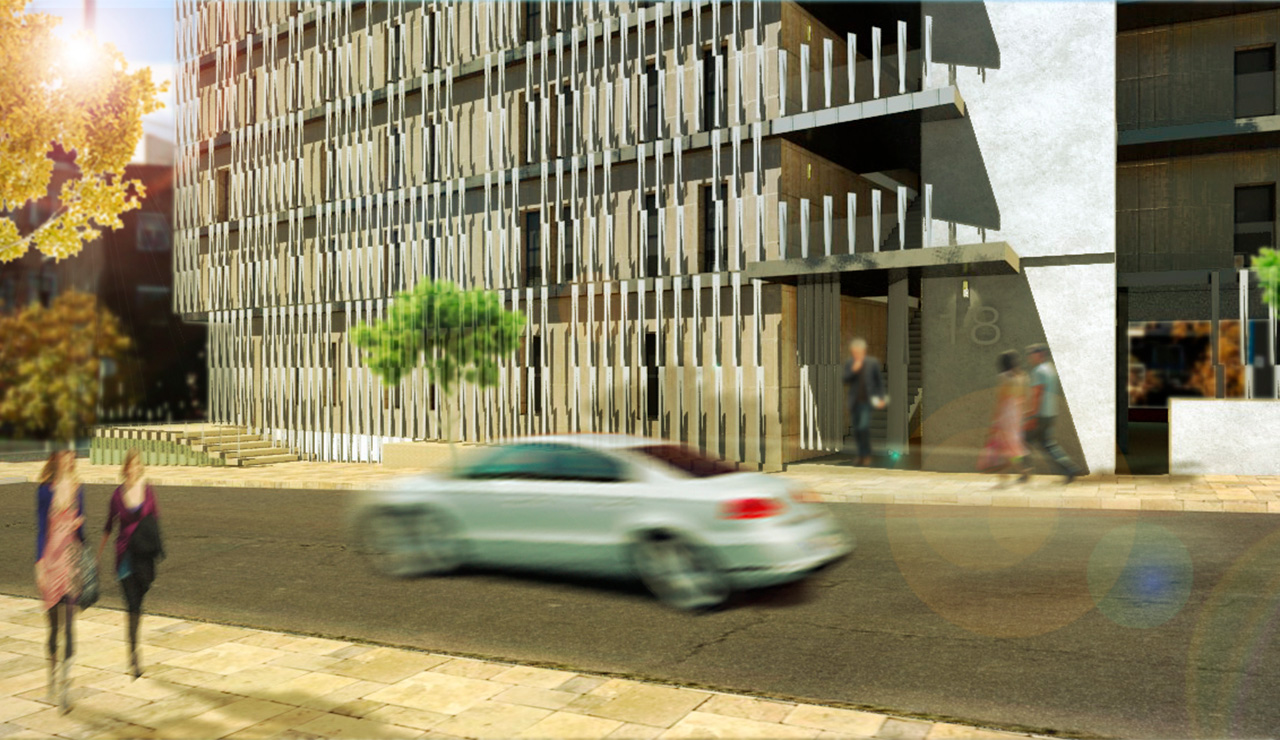
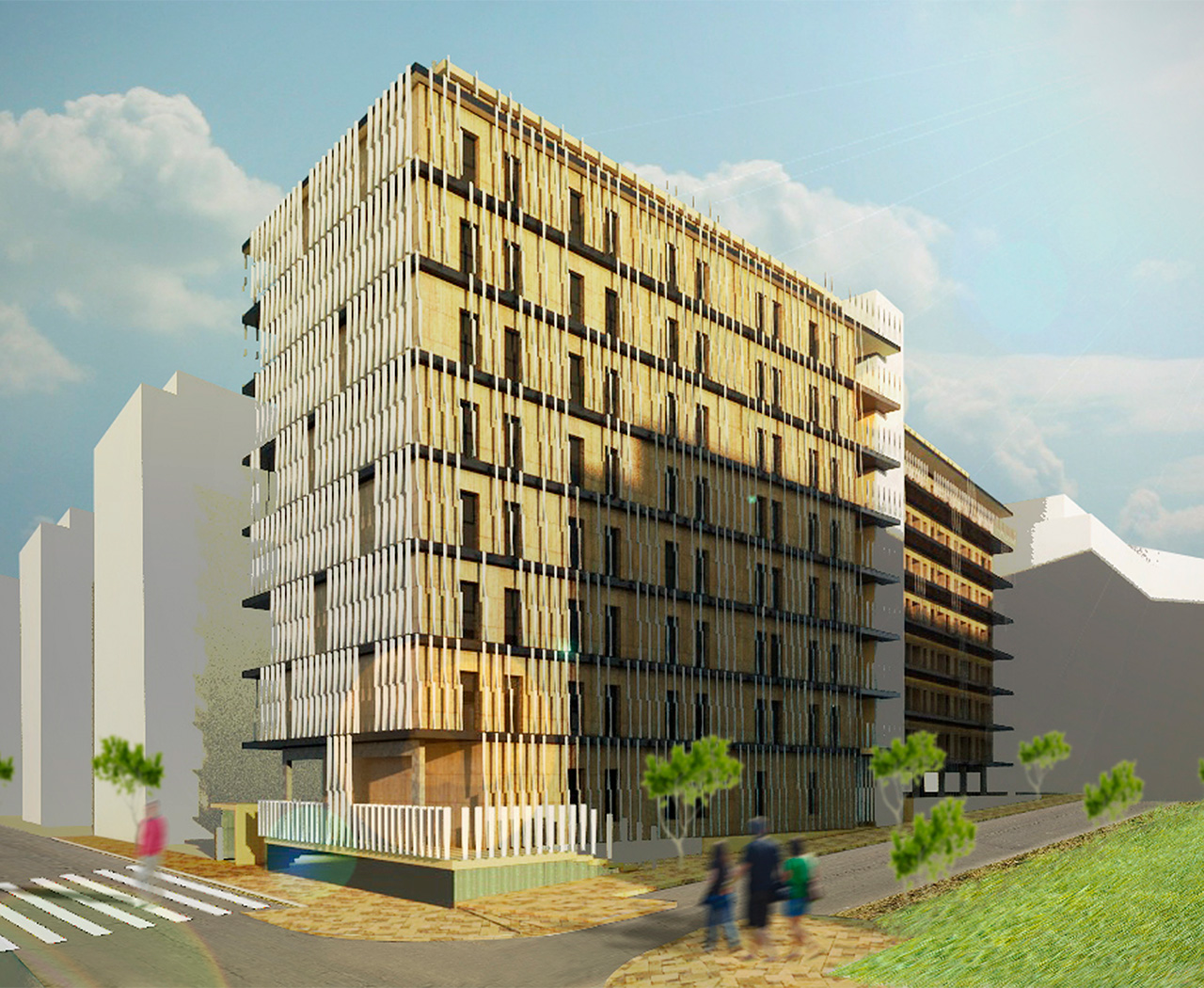
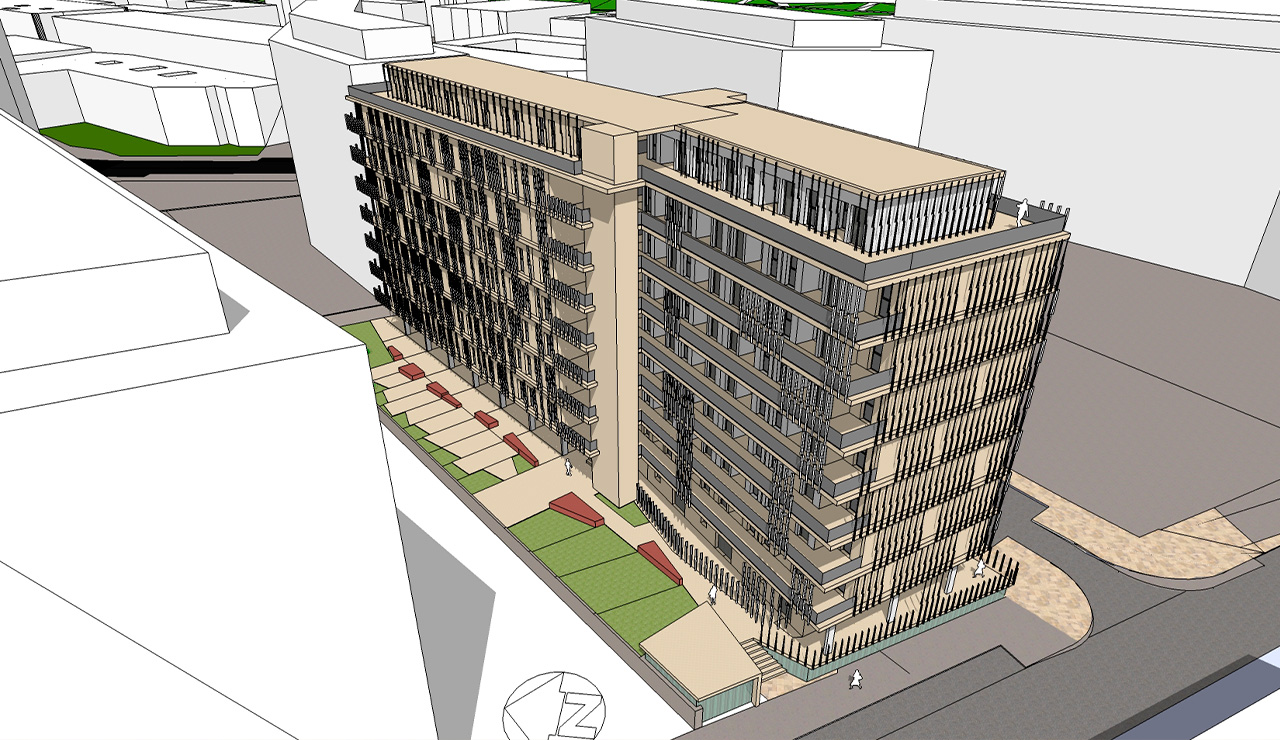
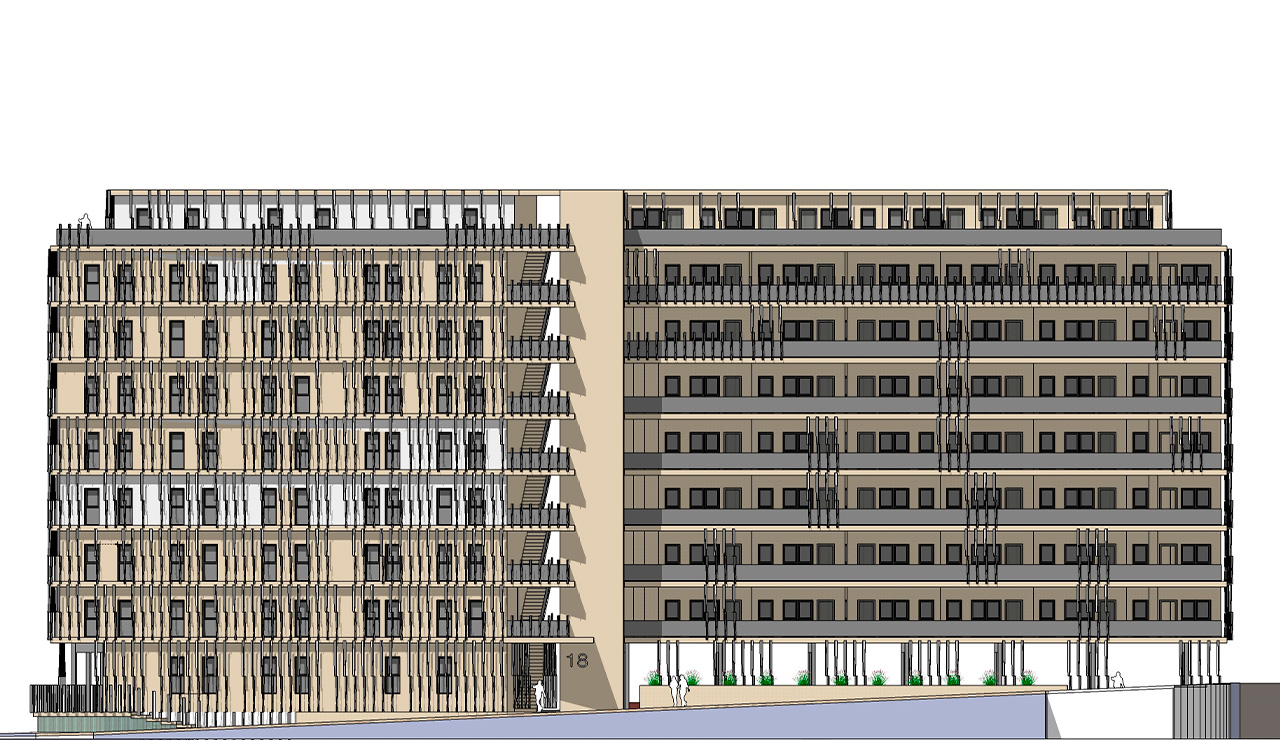
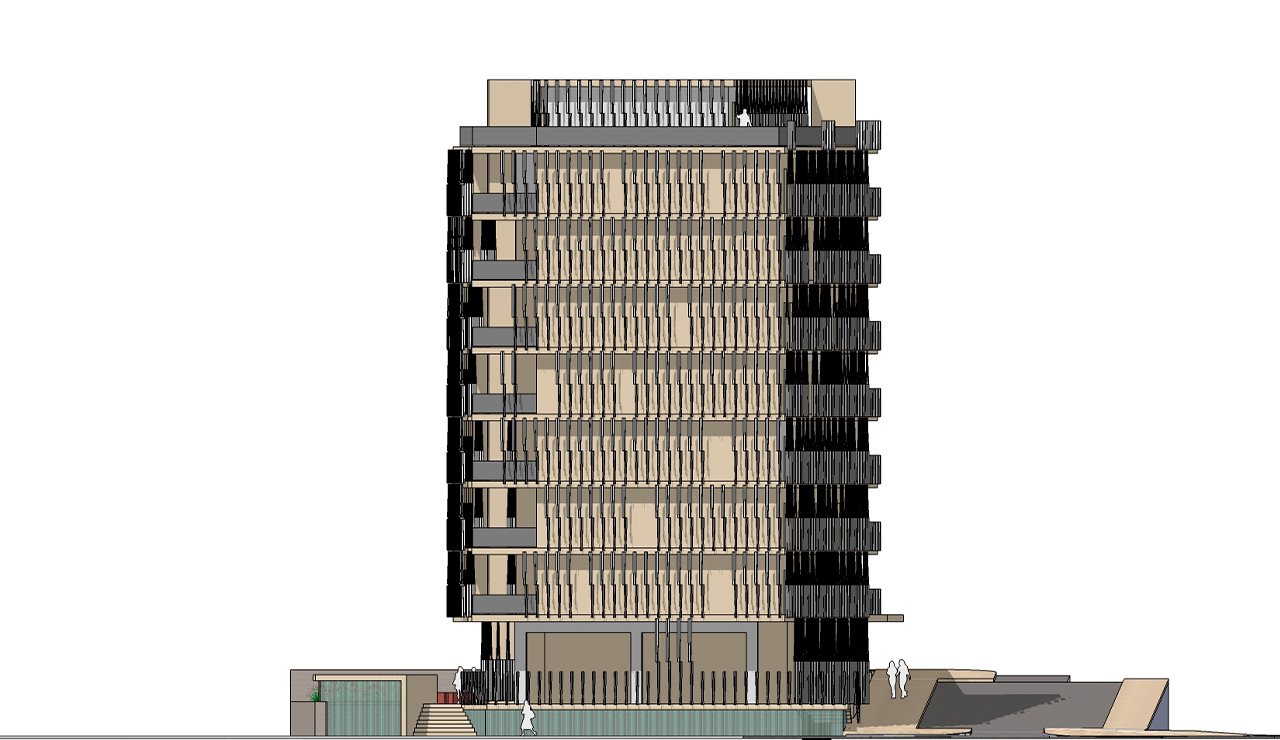
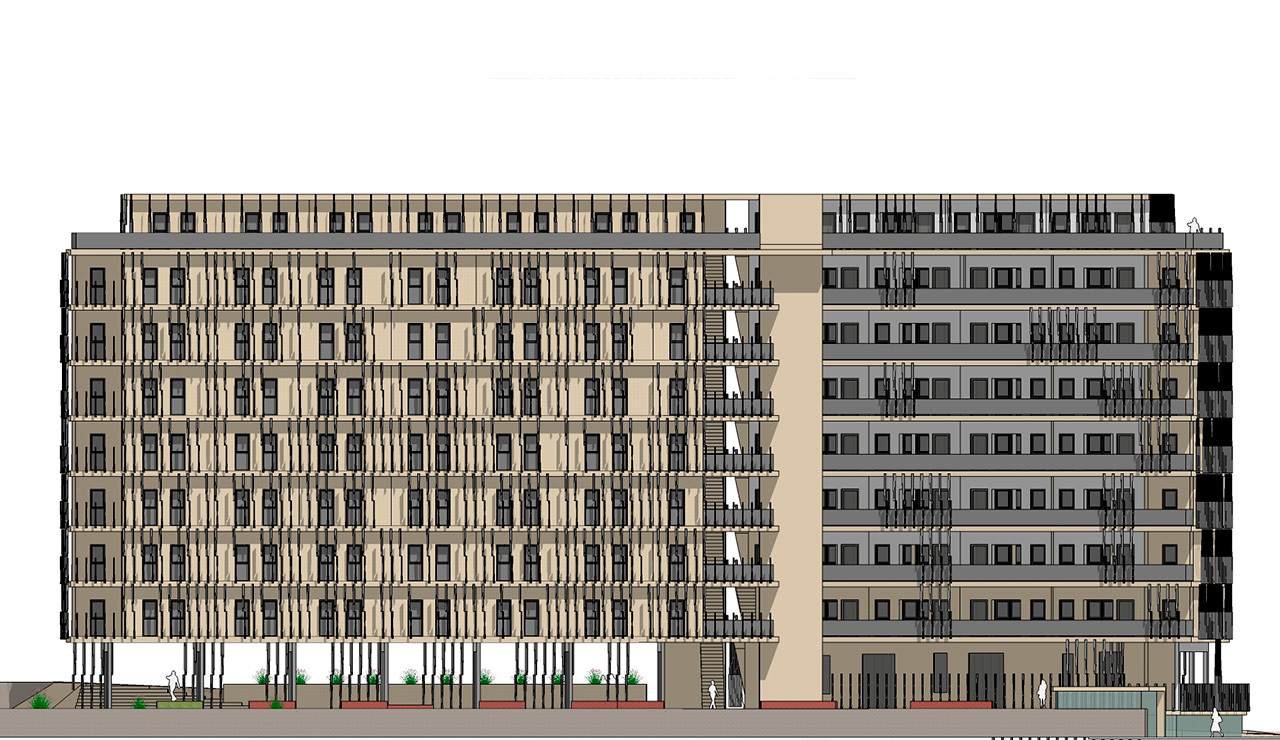
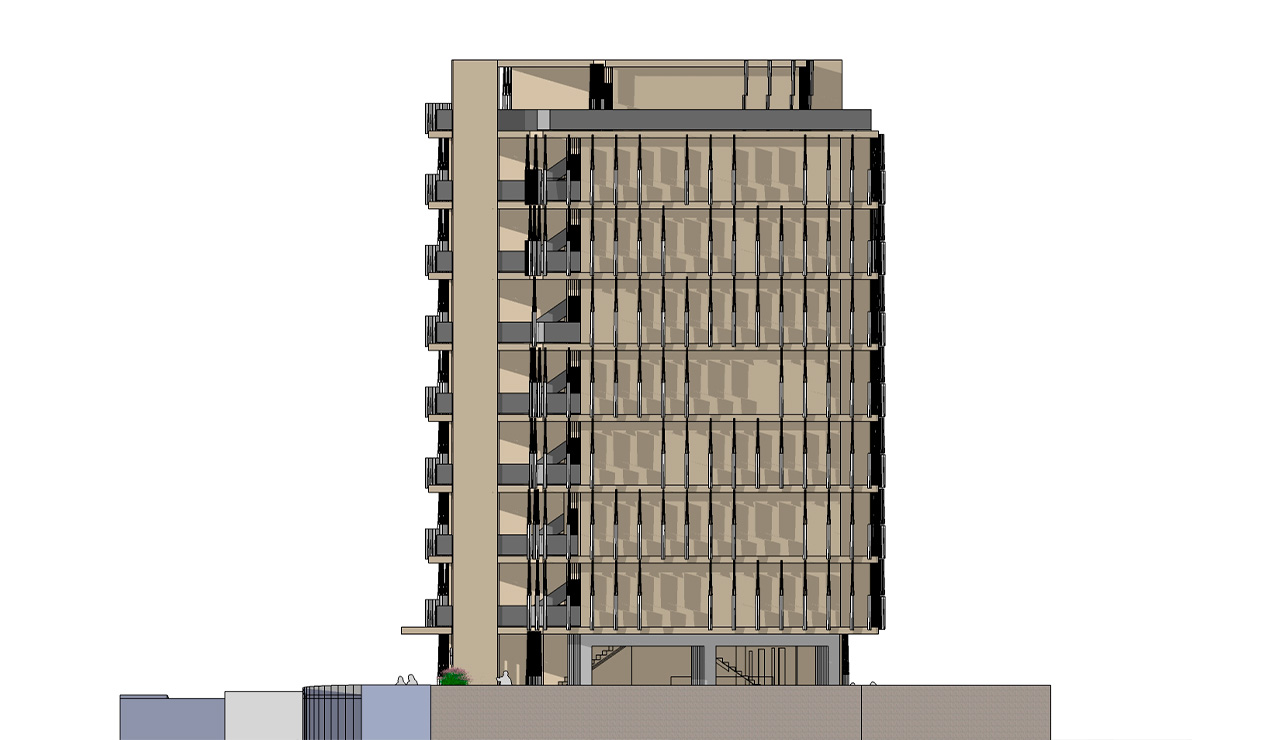
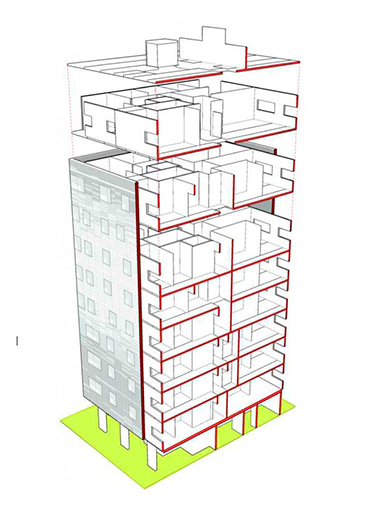
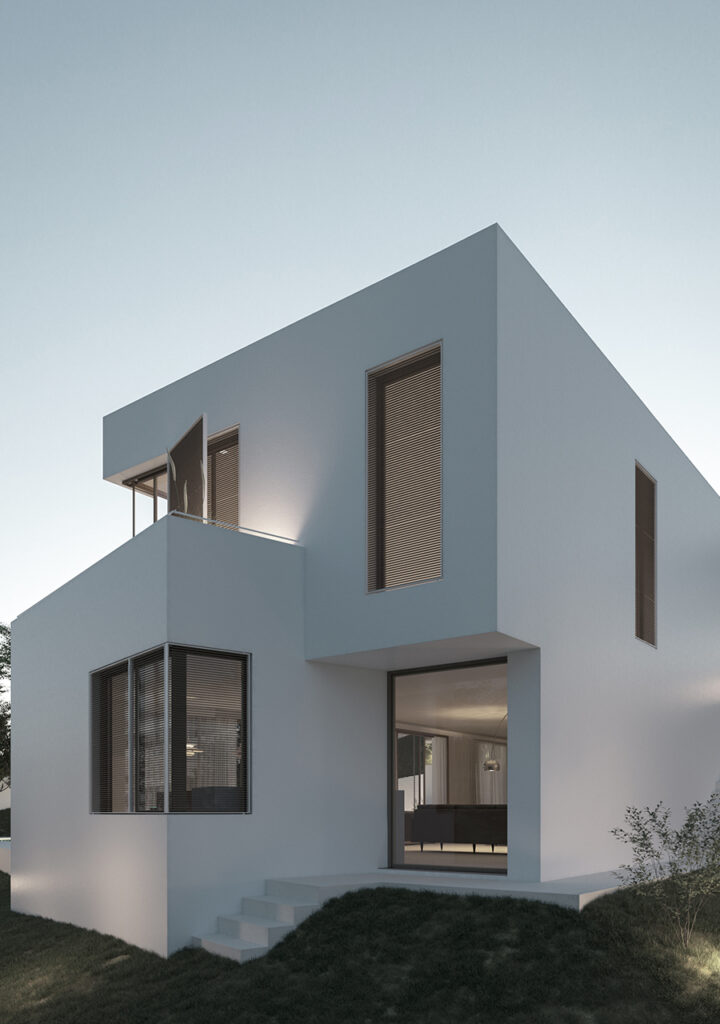
The plot has a 3-meter longitudinal slope, so an intermediate access at street level is proposed, avoiding a stepped building that would complicate construction and the use of stairs and elevators. This creates a plinth that elevates the southeast end of the building, providing privacy to the ground-floor apartments.
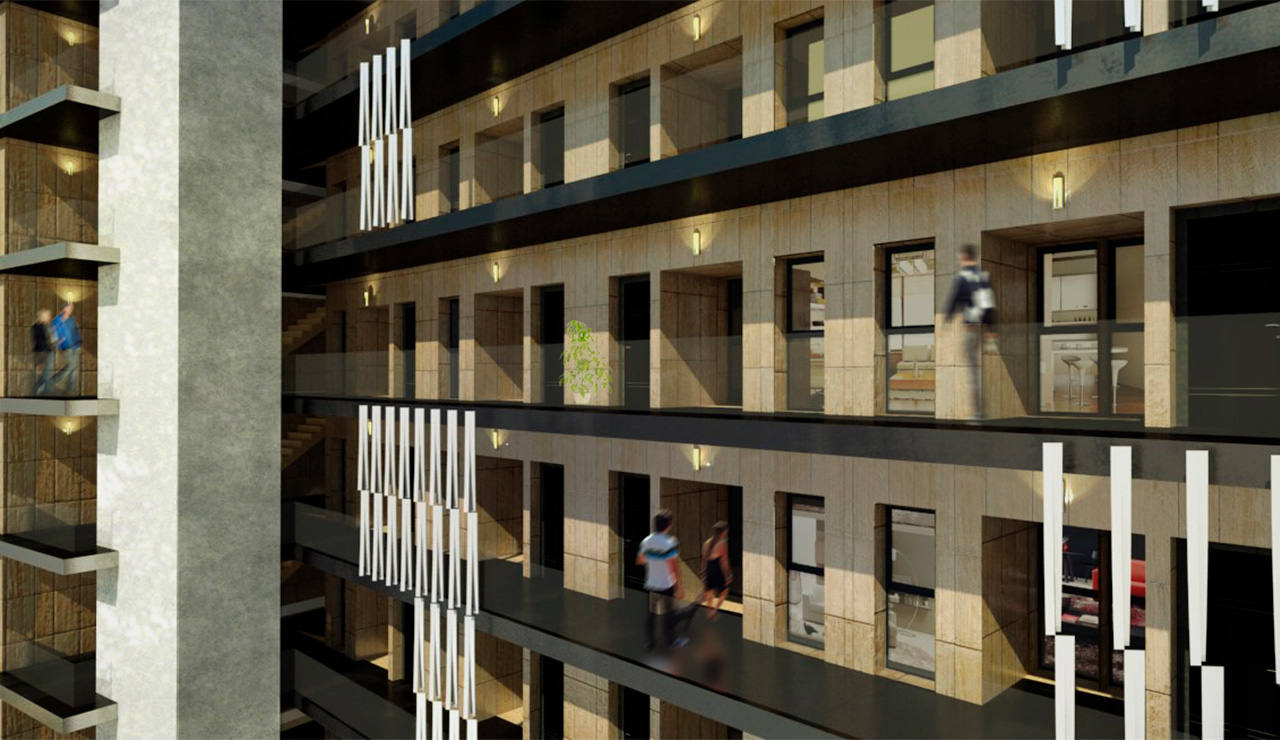
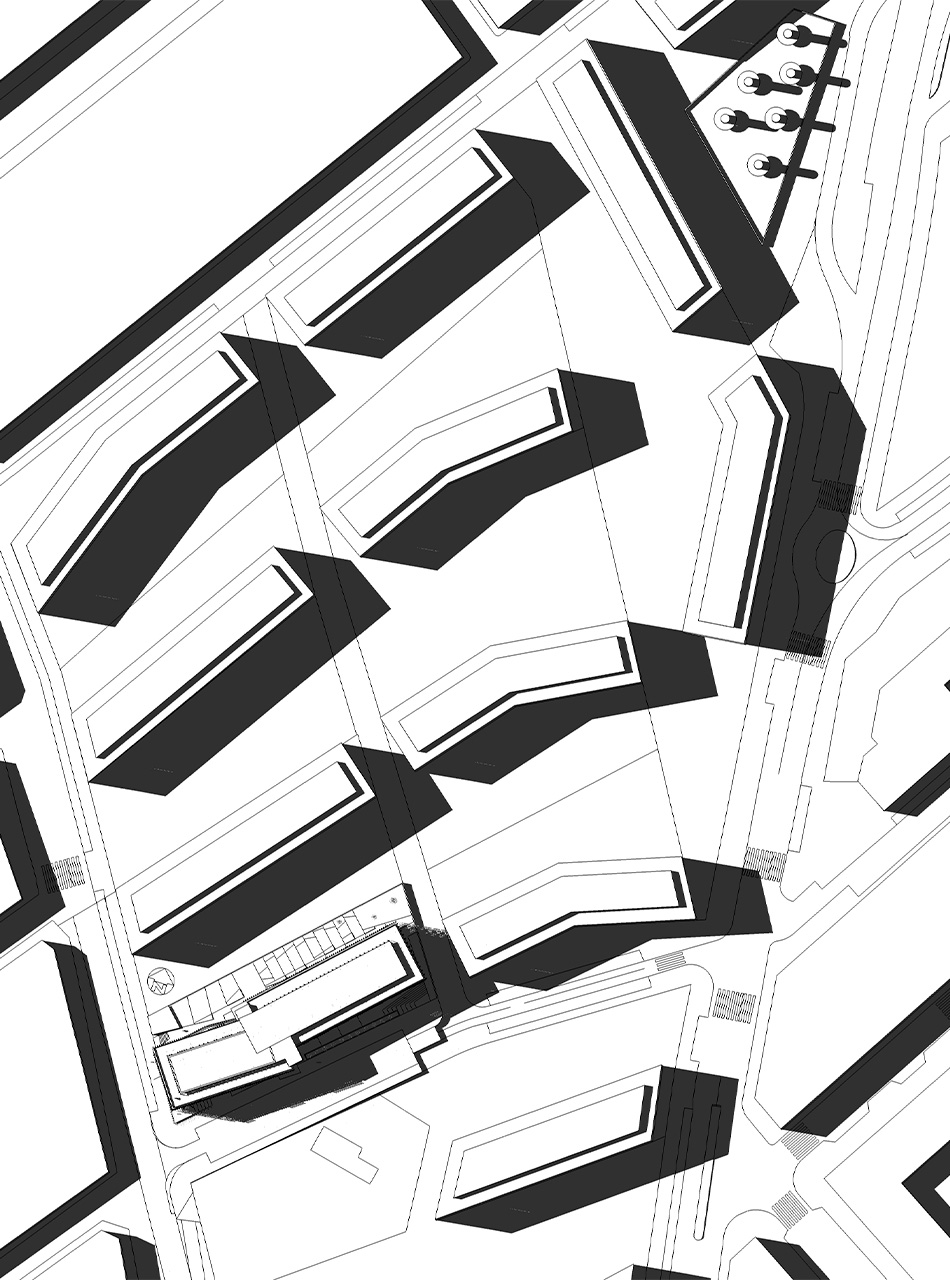
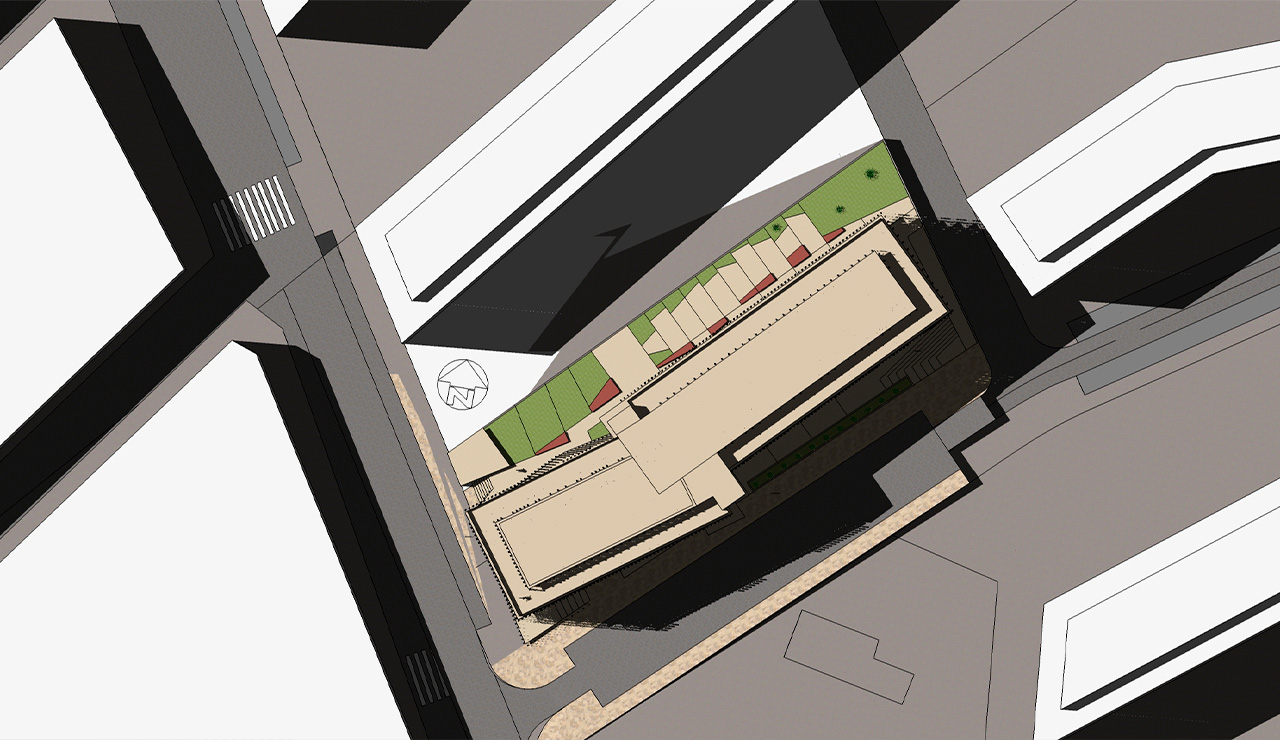
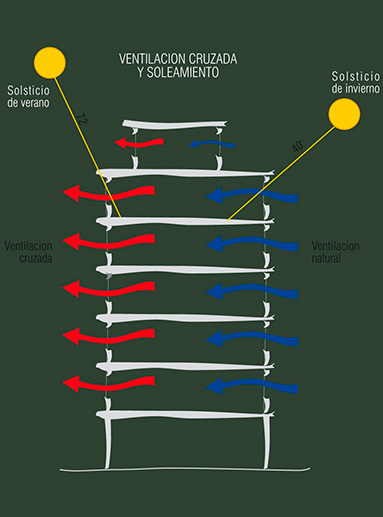
The volume is divided into two blocks with a vertical communication core as its axis. This arrangement improves the orientation of the apartments and allows the building to open up toward San Diego Avenue, adopting its alignment. The vertical cores are protected between the two volumes, remaining cool in summer and warm in winter.
The housing layout includes two-bedroom units in the northeast block and on the three lower floors of the southwest block. The five upper floors of the southwest block are designated for three-bedroom apartments. Accessible apartments are located on the ground floor, and eight one-bedroom apartments are planned for the attic. In total, 103 apartments are planned, exceeding the minimum requirement of 100.
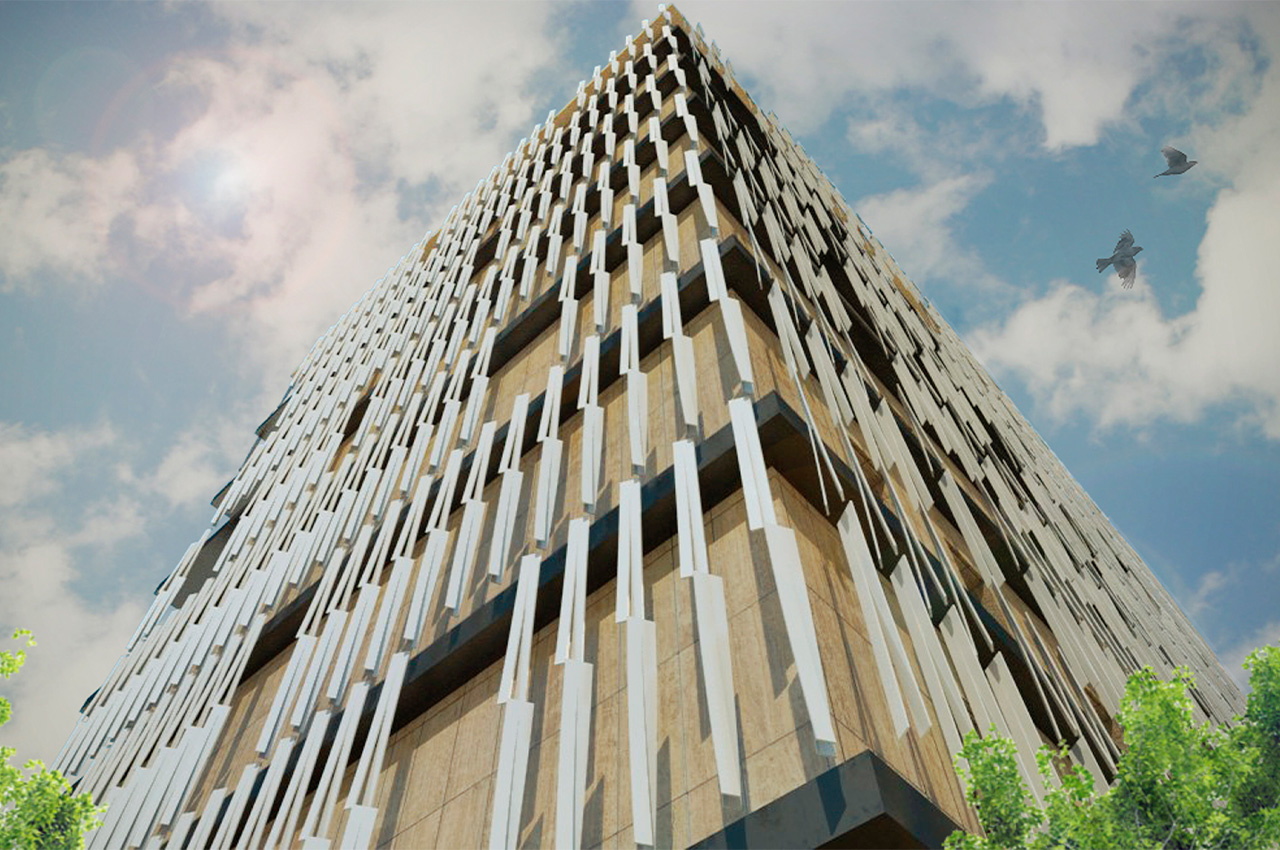
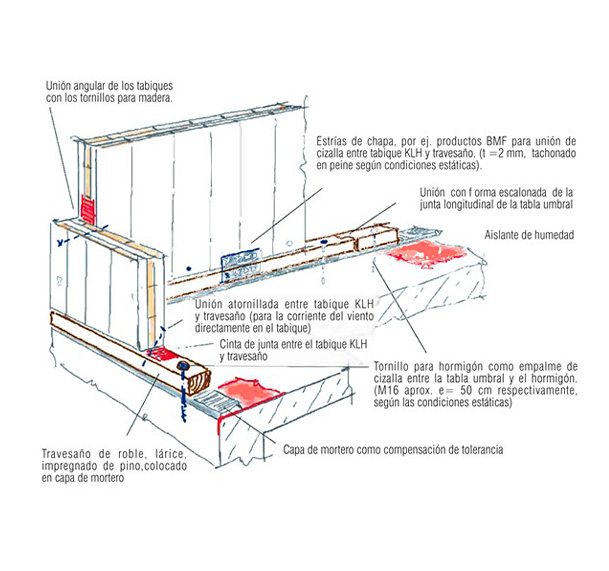
Regarding the cladding, the cross-laminated timber panels serve both structural and enclosure functions. The sequence of materials on the façade resembles a lightweight ventilated façade with ceramic tile. Thermal insulation is provided on the exterior of the panels, laid out in battens, although there is flexibility to also place it on the interior.
Finally, it should be noted that Wooden Made is based on two key sustainability certifications: Passivhaus and nZEB. The Passivhaus standard seeks to reduce heating and cooling energy requirements by up to 75% compared to conventional construction, through rigorous design and precise execution that ensures that theoretical values are met in reality. A well-insulated envelope, air infiltration control, and mechanical ventilation with heat recovery are proposed, balancing economy and efficiency.