Bultaco Outdoor Corner
Site: Barcelona
Competition: 2015. First prize
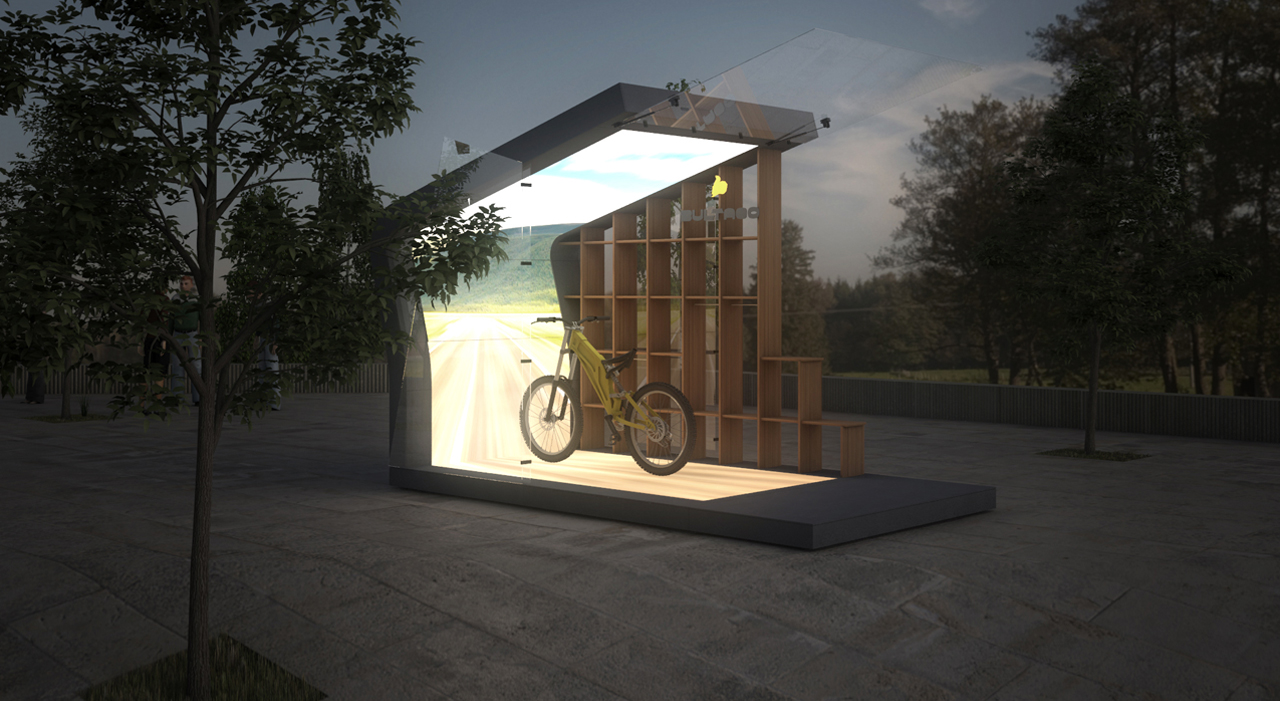
The Bultaco Outdoor Corner project emerged as an innovative proposal that aims to transcend the traditional concept of a store by creating a space based on experiential, sensory, and emotional design. The main goal is to offer users a unique experience where they can enjoy, interact, and connect with the essence of the Bultaco brand, while fostering the creation of small experiences that revolve around the values and history of the company. Thus, sales are not the focus but a consequence of this enriching experience.
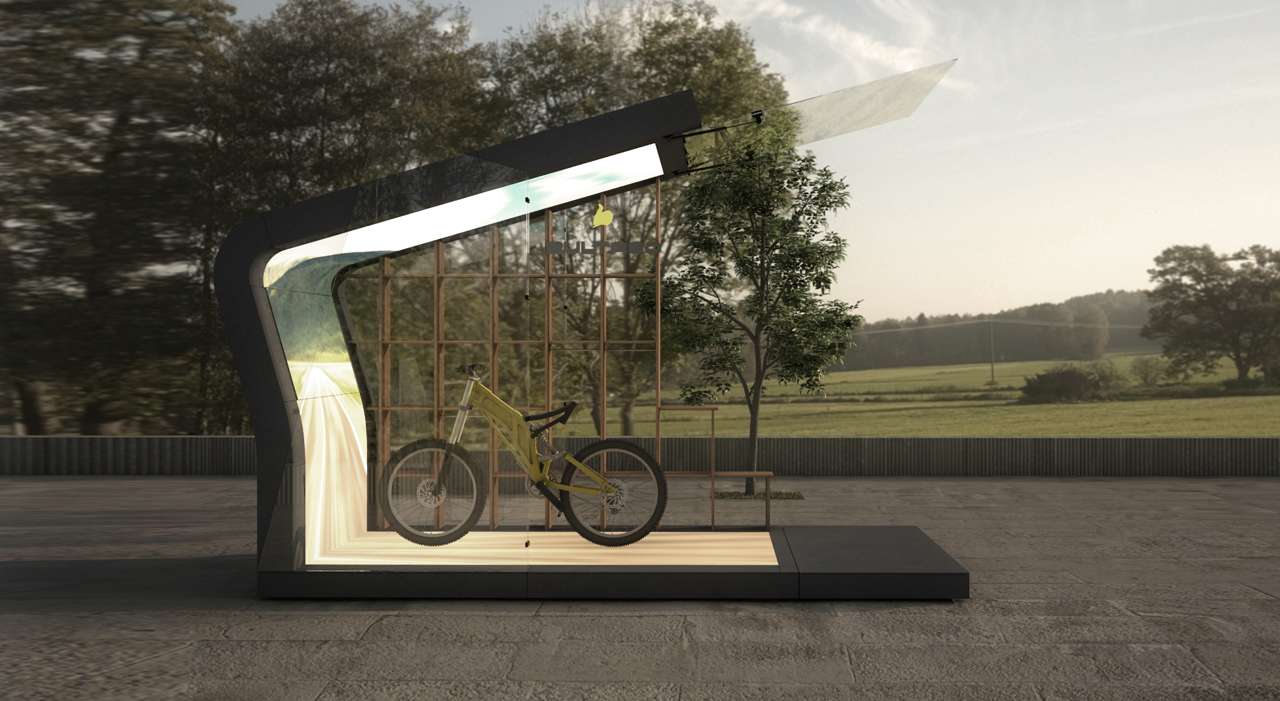
The stores are designed to be much more than points of sale, transforming into cultural spaces and references for excellence in design. In this sense, a multipurpose area equipped with a tiered seating system is included, allowing for the organization of various events and exhibitions. This approach aims to attract a diverse audience and generate a constant flow of people, thereby spreading the history and values that have defined Bultaco from its beginnings.
Among the activities proposed by our studio, Angulo Arquitectura, are the creation of the “Bultaco Lab,” a laboratory dedicated to innovation and experimentation, as well as forums and workshops focused on relevant topics such as road safety and piloting. Product presentations, workshops, streaming broadcasts through “Bultaco TV,” and other initiatives aimed at strengthening the connection with the public are also considered.
The architecture and design of the space are intended to encourage interaction, creativity, and active participation from visitors, offering a flexible, adaptable, and modern environment. This approach allows the stores to become authentic meeting points, where enthusiasts, experts, and curious individuals converge to celebrate Bultaco’s legacy and innovative future.
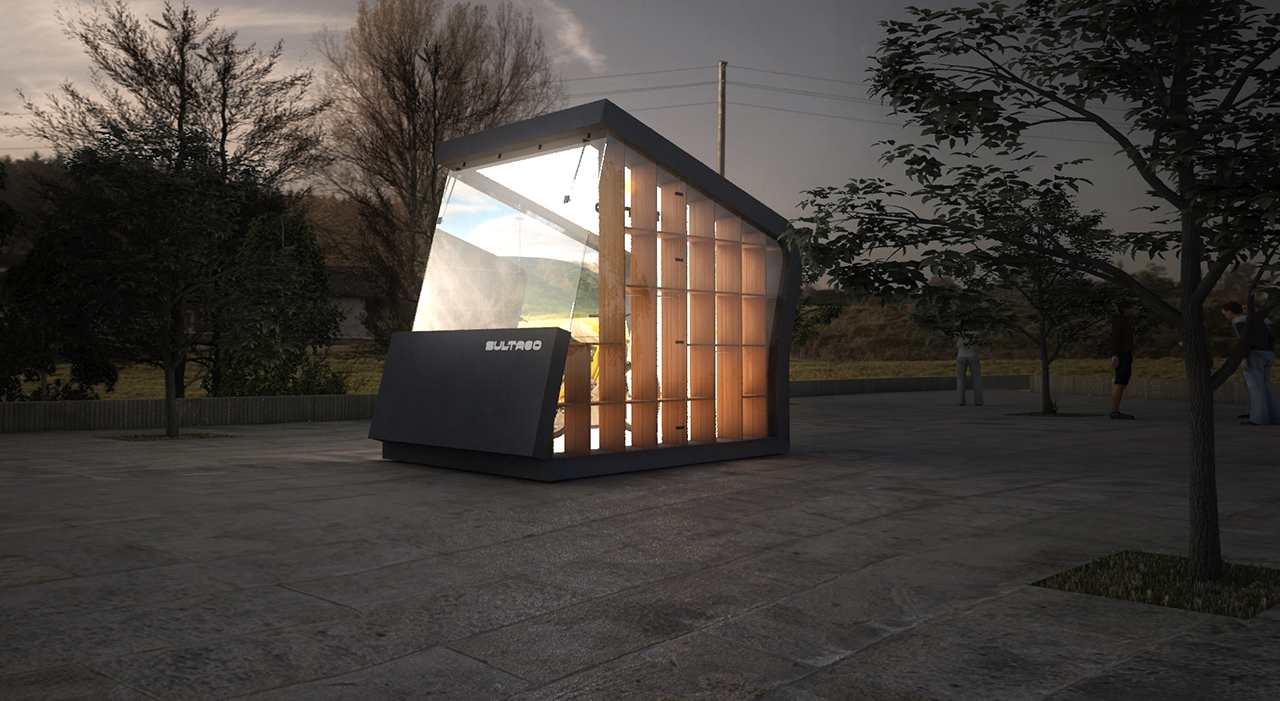
The modular system is taken as the compositional core, proposing configurable designs (compositional flexibility) that per se, generate a close interaction with the customer, thereby achieving a living and timeless language under the “Smart design” prism.
Conceptually, it is a modular “item,” extrapolable and exportable to different scales to meet various program needs under the same language:
- Competition Tent
- Pop up
- Space Trade
- Show Stand
- Corner
- Store/Flagship
The modules will feature touch screens based on interactive video mapping techniques. This is a variant of “augmented reality” where the viewer has the possibility to interact with the projected elements. This generates a 180º visual envelope that activates the user’s sensory capabilities. Along these lines, it would be feasible to monitor the user’s personal data, allowing the customer to see their configurations reflected in the graphic design of the motorcycle.
Dynamic and versatile premises, ever-changing. With the ability to surprise the customer-user
Architect
Can we do anything for you?
Información sobre el proyecto
- Project title
- Bultaco Outdoor Corner
- Program
- Shop
- Site
- Worldwide
- Competition
- 2015
- Construction
- 2016
- Angulo Arq Team
- Borja Angulo, Jon Arostegi, Roberto Santiago
- Plot surface
- Variable
- Total plot surface
- Variable