Amorebieta Music School
Site: Amorebieta, Bizkaia.
Competition: 2016
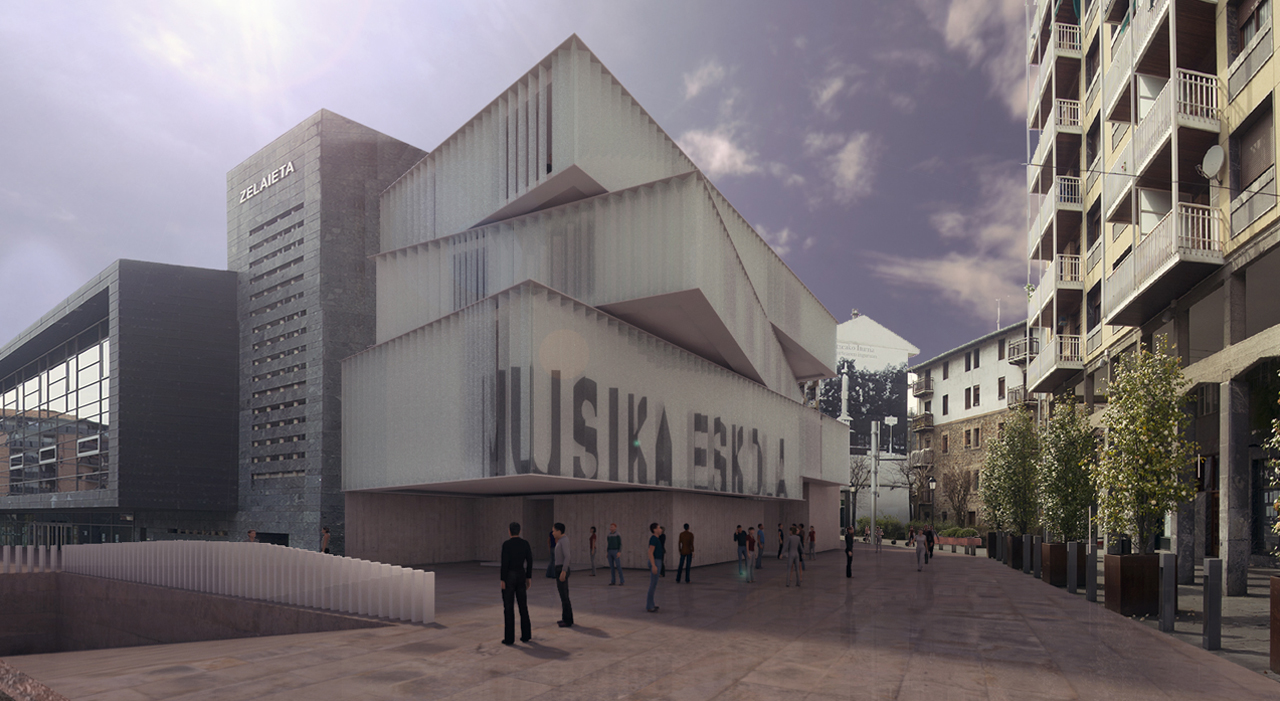
The Amorebieta School of Music project stems from an architectural proposal that combines dynamism, urban integration, and a close relationship with music as an inspiring element of the design. The building is conceived as a large “bellows skin” whose movements and folds evoke the gesture of playing an accordion, establishing a direct connection between architecture, rhythm, and artistic expression.
This idea responds to the characteristics of the site and its relationship with different key points in the urban environment, such as Zelaieta Square, Txiki Otaegi Street, and the distant landscape. The project thus seeks to generate a continuous dialogue between the new cultural facility and the historical and contemporary context that surrounds it.
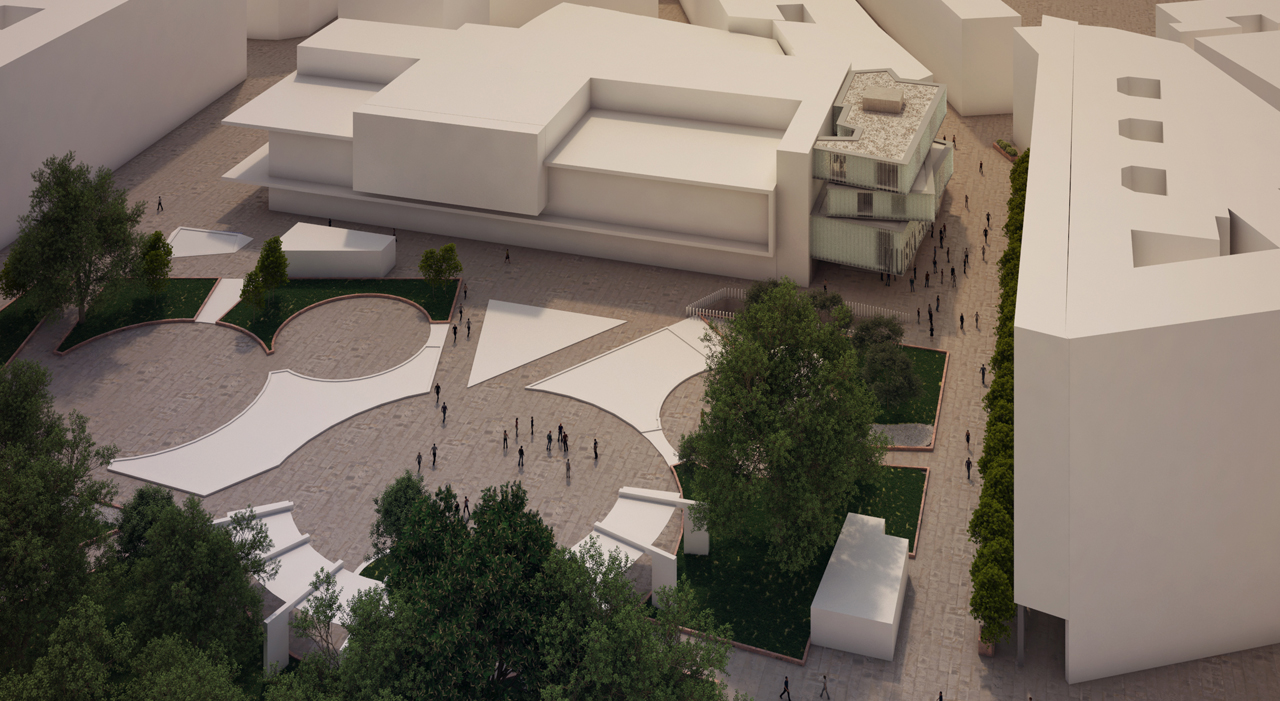
A Building Integrated into the Urban Fabric of Amorebieta
The School of Music is located in a complex urban environment where historic buildings and contemporary facilities, such as the adjacent sports center, coexist. This situation shapes the architectural proposal and results in a composition capable of relating harmoniously to the different scales and architectural languages present on the site.
The building directs its main views towards Zelaieta Square and Txiki Otaegi Street, integrating naturally into the public space and reinforcing the connection between architecture and city.
An open and connected access to Zelaieta Square
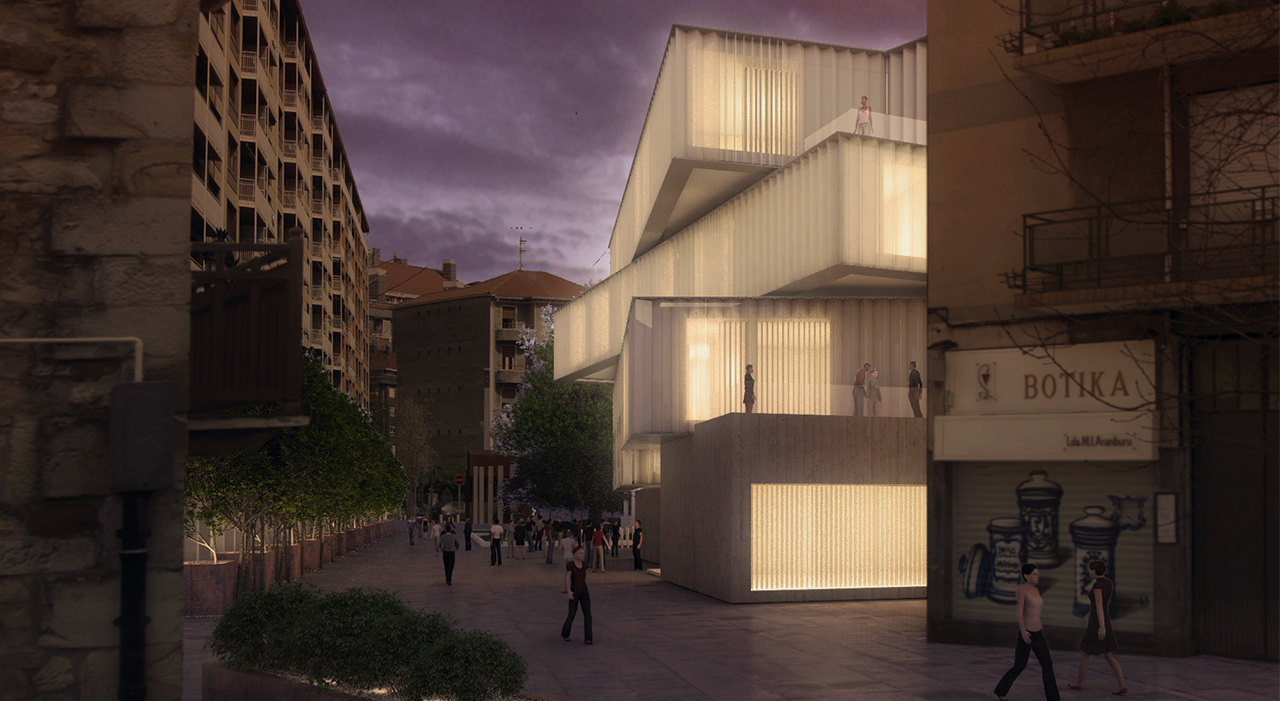
The main entrance to the school is located on Txiki Otaegi Street, becoming the organizing axis of the project. The ground floor is set back to create an open passageway that directly connects the street to Zelaieta Square.
This transitional space acts as an extension of the public space and fosters a relationship between the building and the urban environment. In addition to improving accessibility, this opening reinforces the public and cultural character of the school, inviting citizens to participate in and explore the space.
Dynamic architecture inspired by music
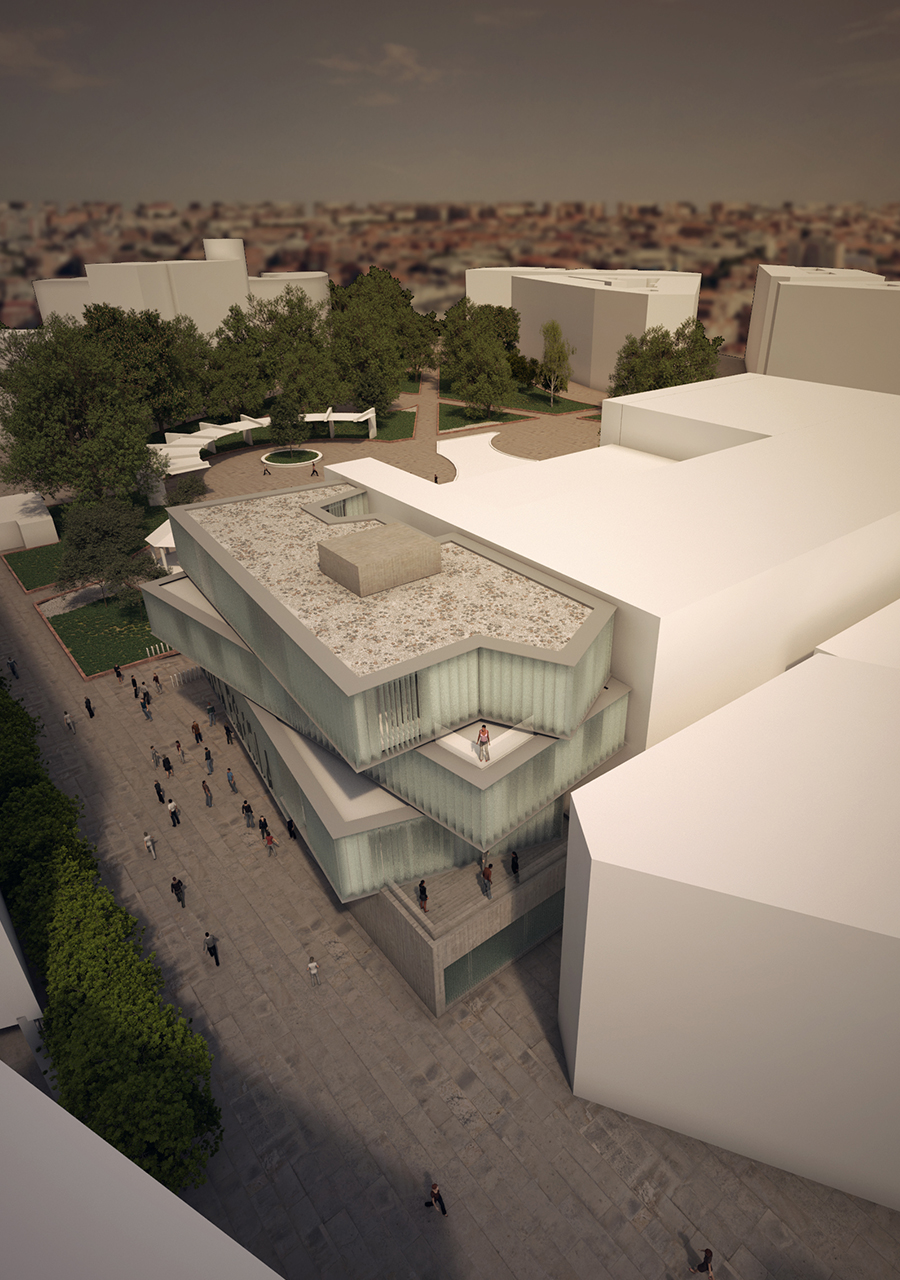
On the upper floors, the building adopts an undulating and contoured geometry that enhances the views towards the square and the urban landscape. This architectural movement lends dynamism to the building’s volume and reflects the creative and expressive energy associated with music.
The façade thus becomes a living and changing element that interacts with the light, movement, and activity of the city, reinforcing the building’s contemporary identity.
Open, Bright, and Versatile Educational Spaces
The interior design of the Amorebieta School of Music is conceived to foster learning, creativity, and interaction among users.
The interior spaces are organized flexibly to adapt to different educational, cultural, and musical activities. The influx of natural light, enhanced by the building’s orientation and the forms of the architectural envelope, creates warm and welcoming environments that improve comfort and the user experience.
The school is thus conceived as a space open to culture, capable of functioning both as an educational facility and as a meeting place for the community.
Architecture, Culture, and Public Space
With this project, Angulo Arquitectura presents a contemporary architecture linked to culture and public space, where design, city, and music are integrated into a single experience.
The Amorebieta School of Music not only meets the functional needs of an educational facility but also becomes a new urban and cultural meeting point for the town, reinforcing the relationship between architecture, creativity, and community.
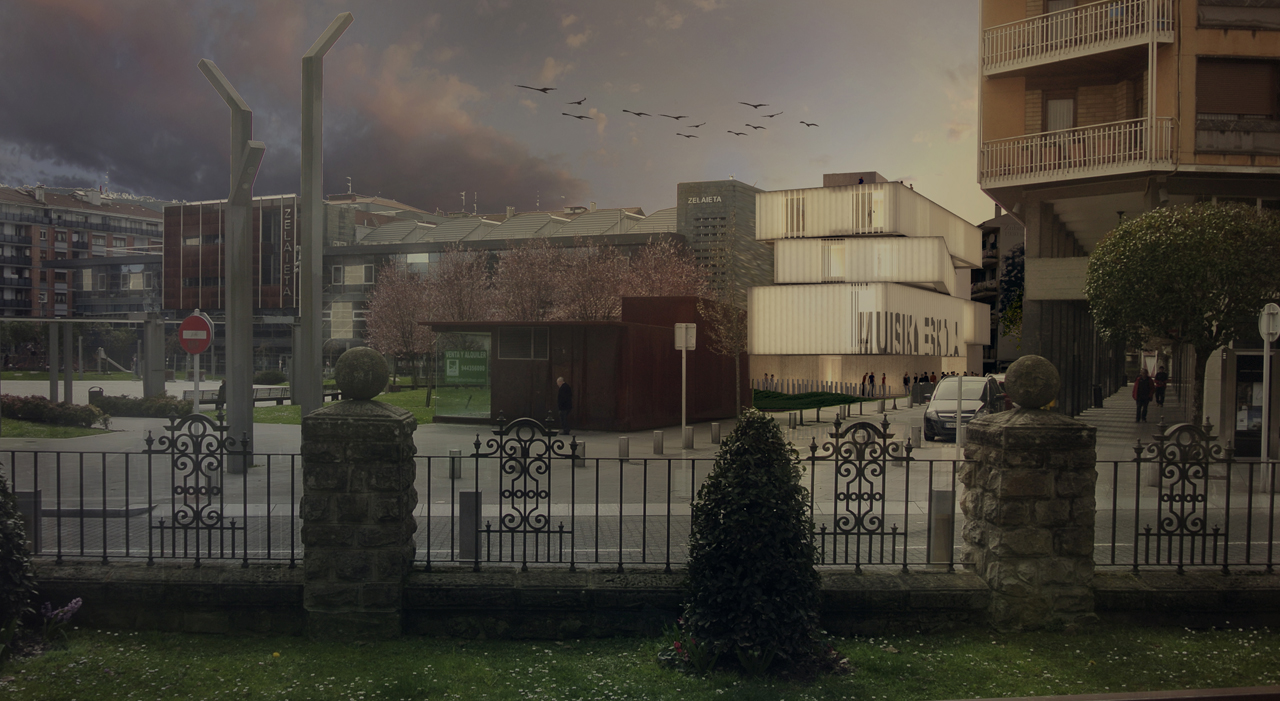
The upper floors ‘sway’ in search of views to and from the square, so that the building becomes part of both the square and the street
Architect
Información sobre el proyecto
- Project title
- Escuela de Música
- Program
- Escuela de Música
- Site
- Amorebieta, Spain
- Competition
- 2015
- Construction
- --
- Angulo arq Team
- Borja Angulo, Roberto Santiago, Jon Arostegi
- Plot Area
- 1100 m2
- Total Built Area
- 8200 m2