Diseño para concurso del National Centre for Contemporary Art en Moscú

National Centre for Contemporary Art

Site: Moscow, Russian Federation.
Competition: 2013

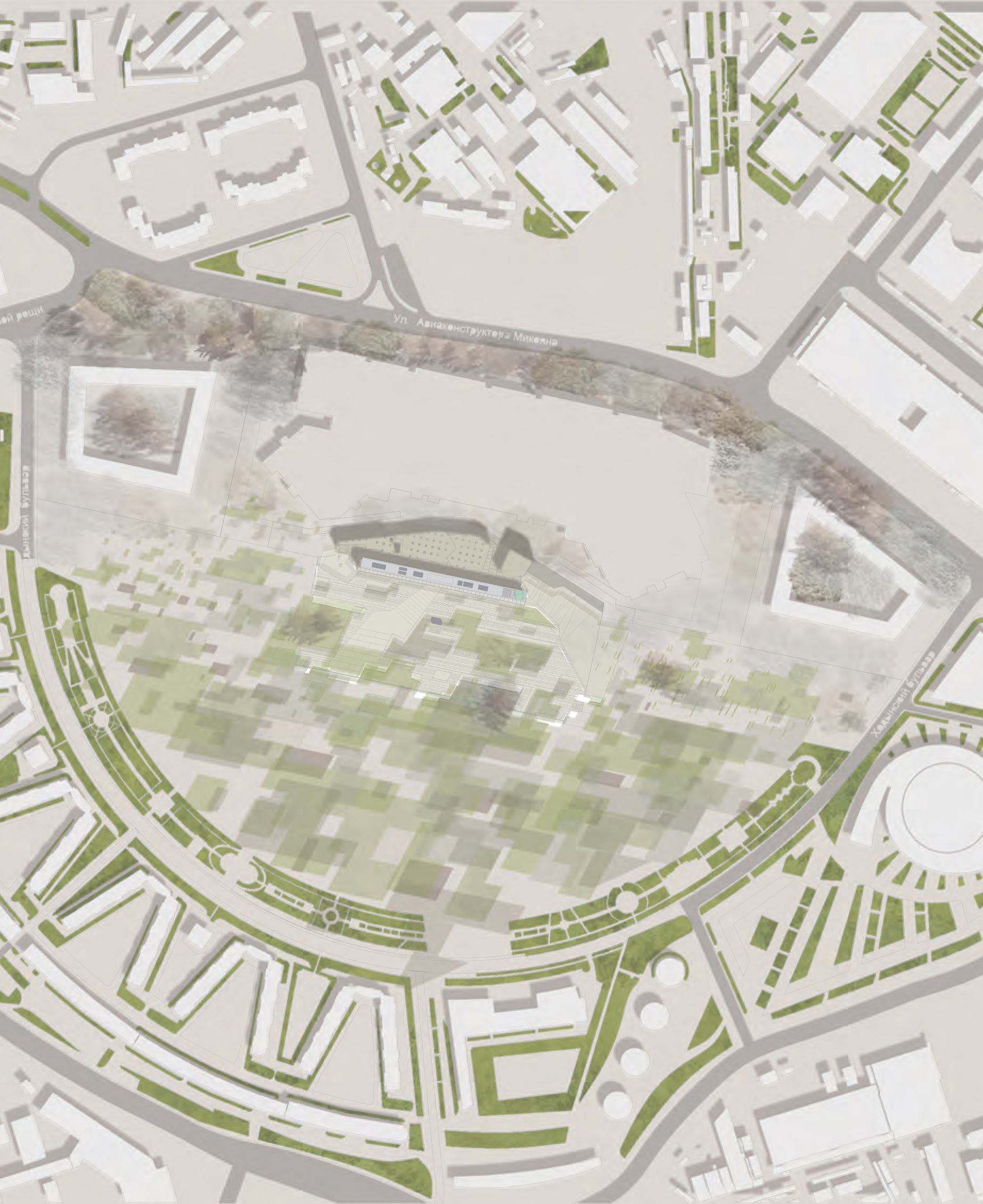
The project for the New National Center for Contemporary Art Moscow (NCCA Moscow) is located next to Khodynskoye Pole Park, in the northwest of the city. This site has a significant urban and cultural history, having hosted exhibitions, public events, and Moscow’s first airfield, which remained operational until 2003.

Following the closure of the former airport, the area underwent a transformation into a large park surrounded by housing, amenities, and new cultural spaces. It is within this context that Angulo Arquitectura developed the proposal for NCCA Moscow, conceived as a building open to the city and dedicated to contemporary art.
Diseño para concurso del National Centre for Contemporary Art en Moscú

A Building Designed to Connect with the City

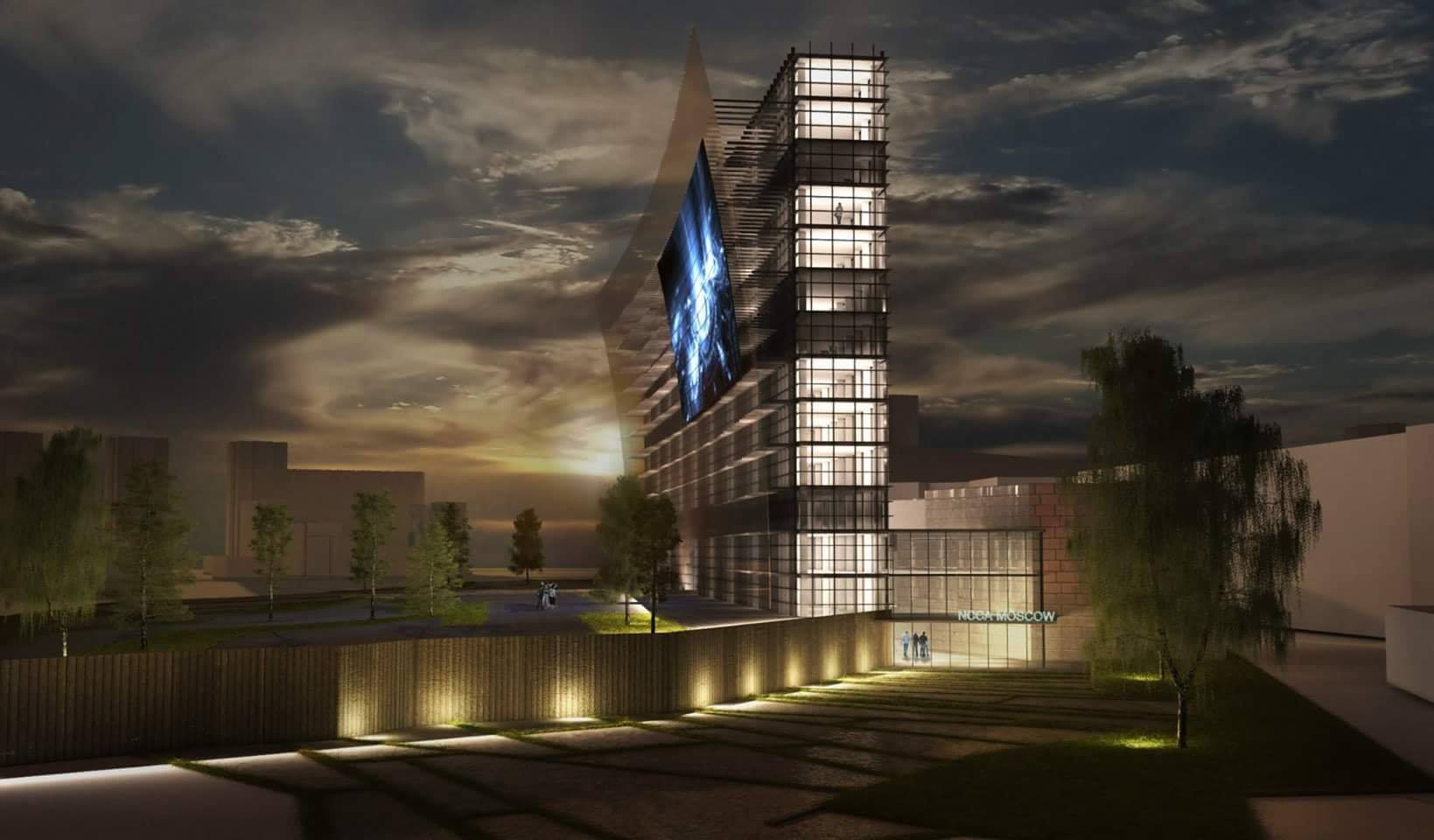
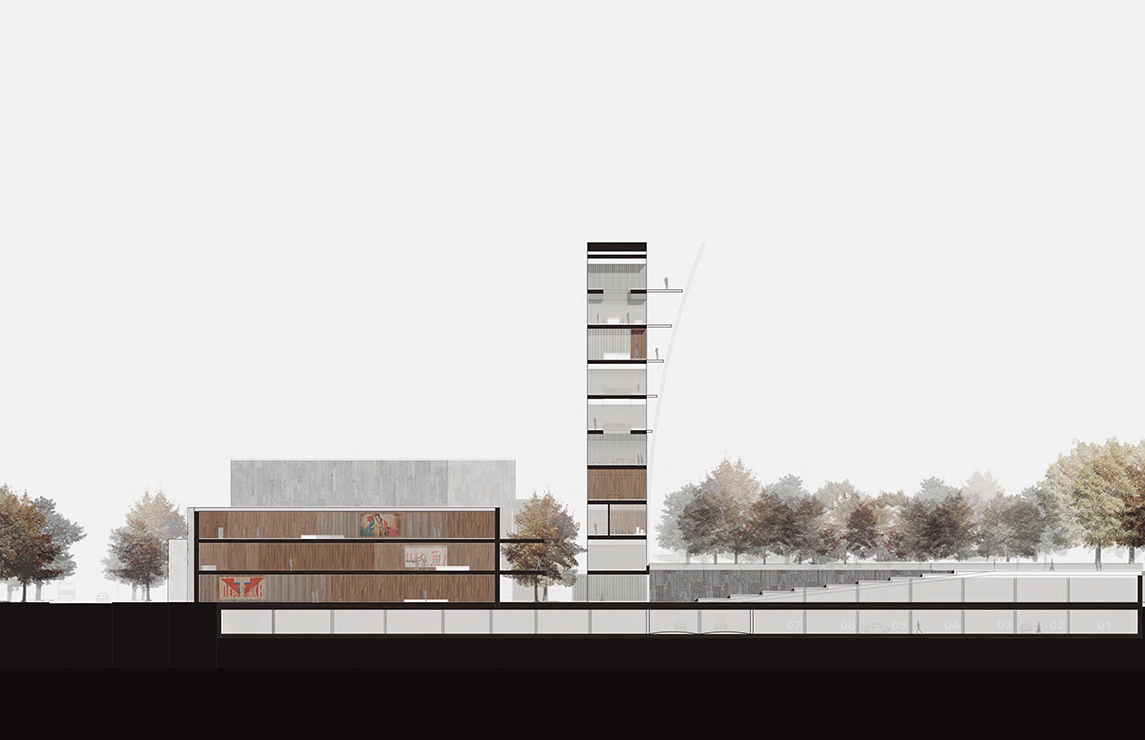
The site has a very direct relationship with the park, although the two spaces are separated by a road. To resolve this situation, the project proposes a building that acts as a visual landmark and as a connection between the public space and the cultural center.

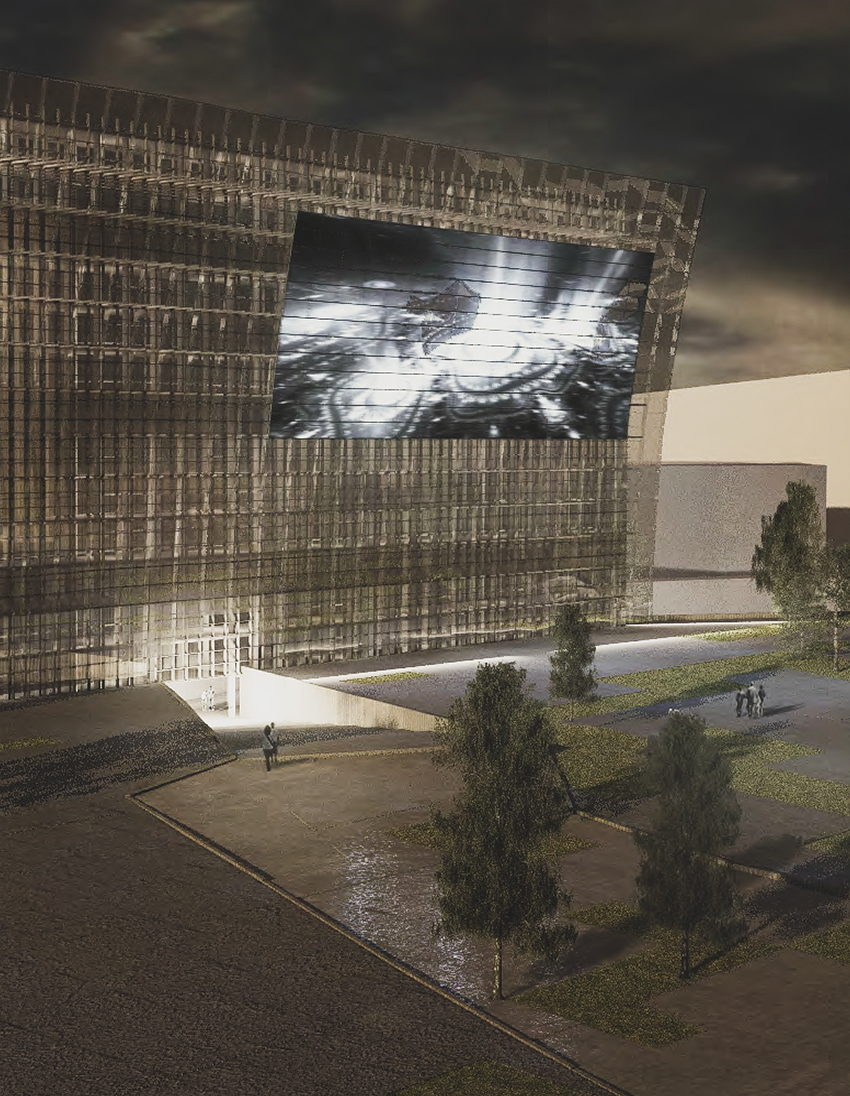
The design is inspired by the geometric forms of Russian Suprematism, creating an architecture of simple lines and clear volumes. The main building rises from a base and presents itself to the park as a large vertical screen that attracts attention and guides visitors inside.

Its curved facade creates a more approachable and dynamic image, reinforcing the relationship between the building, the plaza, and the people who move through the surrounding area.

The Plaza as a Meeting Place

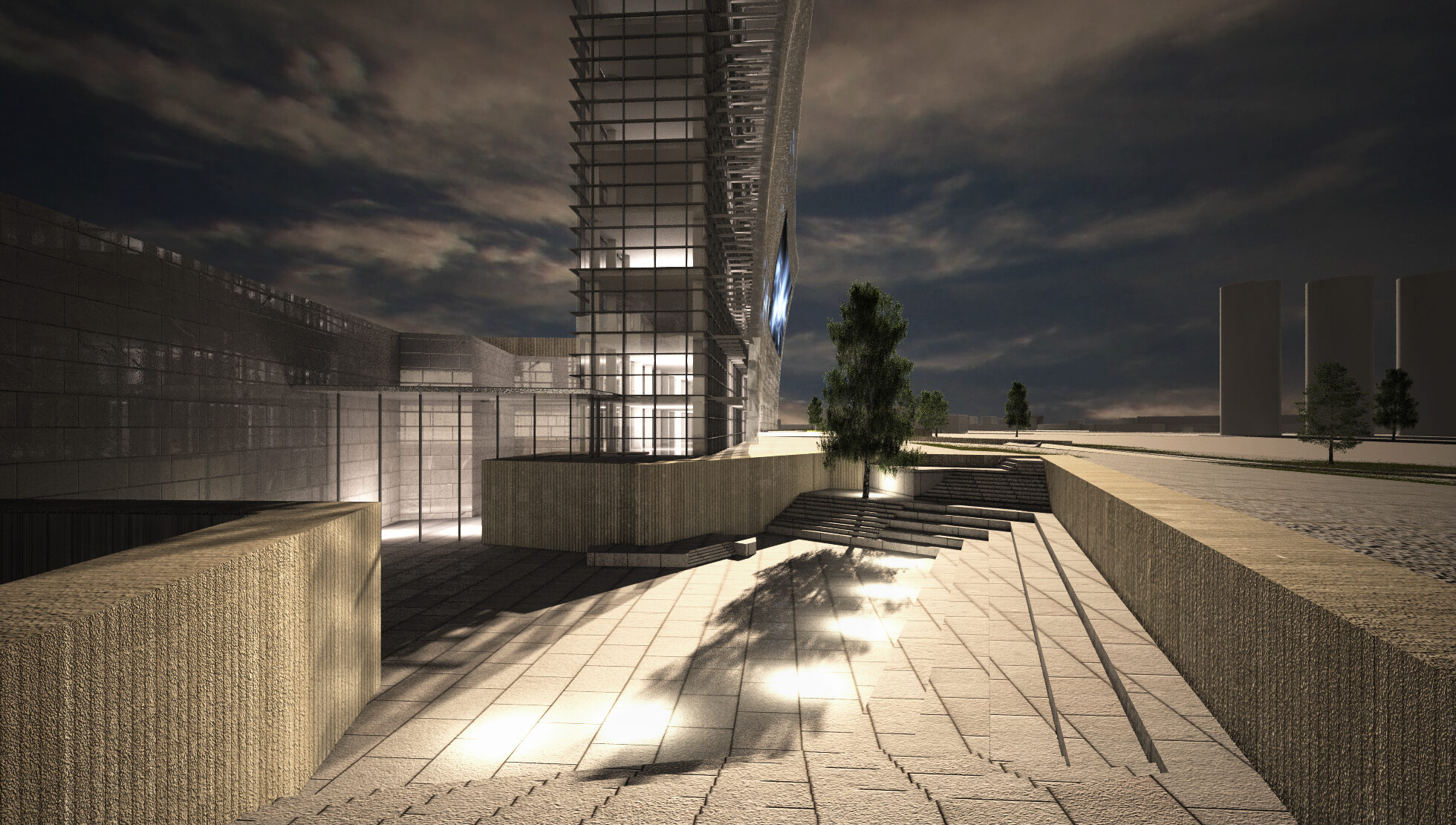
The exterior plaza functions as a natural transition between the park and the interior of the NCCA Moscow. This open space is designed to host cultural activities, events, and gatherings related to contemporary art.

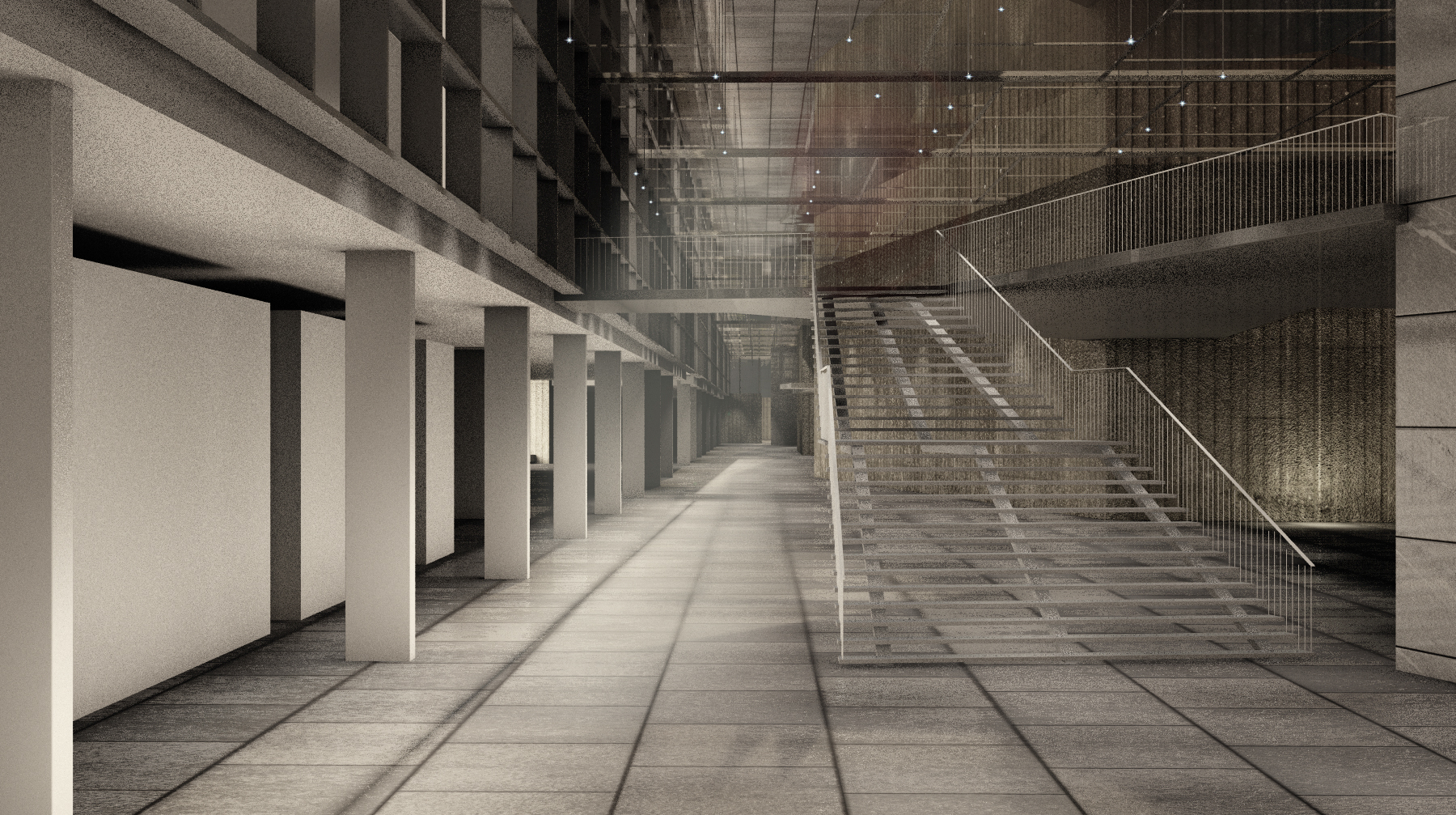
The main entrance is through the building’s large vertical volume, as if it were an urban gateway leading to the interior atrium. This large central space organizes the flow of visitors and connects the different rooms and uses of the cultural center.

The aim is for the visitor experience to begin in the public space itself and continue seamlessly inside the building.

Open, flexible, and light-filled spaces

The exhibition halls and main auditorium are located in the rear volumes of the building, with more flexible forms that adapt to the site and create different intermediate spaces for visitors to move around.

The lower floors concentrate the more public uses, open to visitors, while the upper floors house more private and administrative areas with separate entrances.

The central atrium provides light and acts as a meeting place for people, art, and architecture, becoming the heart of the project.

Contemporary architecture for a new cultural space

With this project, Angulo Arquitectura proposes a contemporary cultural center capable of integrating into Moscow’s urban transformation and fostering a close relationship between the city, art, and public space.

The NCCA Moscow is conceived as an open, dynamic, and accessible place, where the architecture complements the cultural experience and transforms the building into a new meeting point for the city.

The big screen, a tribute to the seventh of the arts, attracts all eyes around the park that precedes it, and that is behind it the program of the New Center for Contemporary Art, NCCA Moscow
Borja Angulo
CG Architec

Diseño para concurso del National Centre for Contemporary Art en Moscú

Diseño para concurso público de escuela de música en Moscú

Información sobre el proyecto

Project title
National Centre for Contemporary Art
Program
Museum
Site
Moscú, Federación Rusa
Competition
2013
A Arq Team
Borja Angulo, Oihane Arbaiza, Ana Martín, Jon Arostegi
Plot surface
1100 m²
Total built surface
8200 m²

Can we do anything for you?

Our projects

  1. Hospitality 5
  2. Restaurant-Bar 2
  3. Single-family housing 7
  4. Interior design 5
  5. Collective housing 2
  6. Public 5
  7. Industrial building 7
  8. Product Design 3