The Resurgence of Brutalism
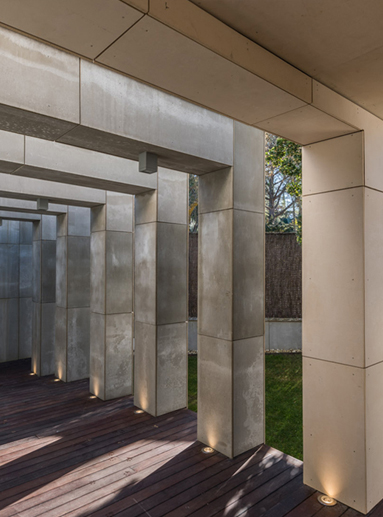
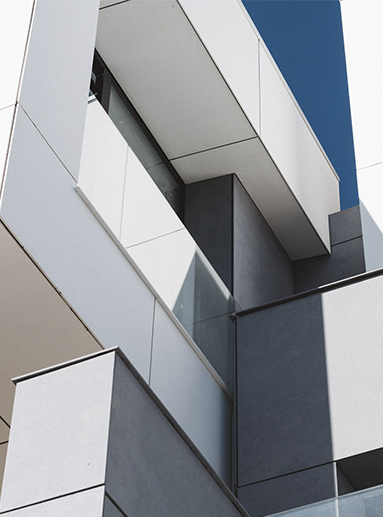
In recent years, Brutalism has experienced an unexpected resurgence. This architectural style, born in the 1950s as a reflection of the harsh times brought on by war, is characterized by the use of raw materials with an austere and robust aesthetic. Elements such as reinforced concrete without finishes or ornamentation, straight lines, and cubic shapes dominate Brutalist buildings, where functionality takes precedence over all other aspects.
What was once criticized for its coldness and supposed lack of visual appeal is now reemerging with a new appreciation for the authentic and simple, thus appreciating the essence of each material. In a society saturated with artifice and excessive decoration, Brutalism seems to respond to a new aesthetic sensibility that values the sincerity of materials and structural purity. This architectural style has repositioned itself as a popular trend not only in urban buildings but also in the design of interiors and public spaces.
History and Evolution
Brutalism originated in the influence of the Swiss-French architect Le Corbusier, who promoted the concept of *béton brut*, which translates as “raw concrete.” This principle emerged in response to the urgent need for reconstruction after the devastation caused by World War II. In a context where thousands of buildings had been destroyed and cities needed efficient solutions to provide housing and public spaces, Brutalism became an economical and functional alternative.
Throughout the 1950s and the following years, this architectural movement began to gain popularity in various parts of the world. Its simplicity of execution, low cost of materials, and ease of construction led to its widespread adoption, especially in state infrastructure projects, government buildings, universities, and social housing blocks.
Essential Characteristics
Brutalism is distinguished by a series of structural and aesthetic elements that make it a unique style. Among its most representative characteristics are:
Use of reinforced concrete
This material is the very essence of this architectural style. Constructions are made with reinforced concrete, which creates a robust and raw appearance, showcasing its texture and roughness. In addition to this material, steel, brick, and glass are widely used in this type of construction.
Emphasis on functionality
The practical utility of the structure prevails over ornamentation. Spaces are designed to fulfill their purpose efficiently, without unnecessary visual distractions. Brutalism was born with the aim of facilitating housing construction in the post-war period, so the main focus was on practicality and rational room layout.
Structural simplicity
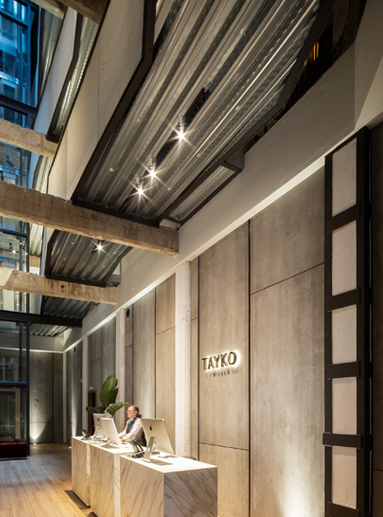
Brutalist constructions are direct and honest, with structural elements such as beams, walls, and sometimes pipes exposed rather than masked by ornamentation and decoration. In addition to creating spacious spaces with the flexibility to adapt to any type of use –
Impressive volume and geometry
Brutalist buildings are often characterized by massive, geometric shapes. Simple lines, solid blocks, and bold proportions give the buildings a striking, compact presence.
Rise of Contemporary Brutalism
Currently, Brutalism is experiencing a revival due to several factors. First, the growing interest in sustainability has driven the adoption of materials, such as concrete, that can be reused and optimized for greater energy efficiency. Furthermore, the simplicity and functionality of Brutalism allow for the integration of eco-friendly practices, such as the use of natural lighting and the incorporation of vegetation into structures.
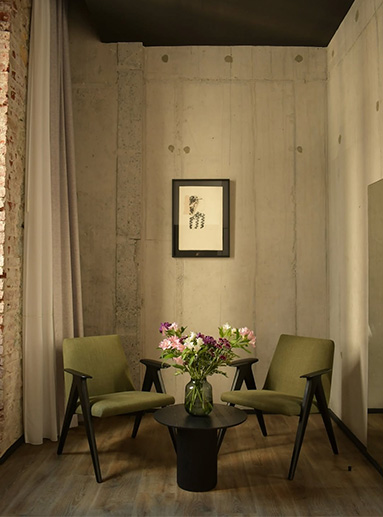
On the other hand, Brutalism has also left its mark on interior design. In contemporary architecture, we see an adaptation of its principles with an aesthetic that combines austerity with comfort. Brutalist interiors often incorporate industrial materials such as steel, glass, and untreated wood, which provides a sense of solidity and authenticity. The minimalist style also aligns with these concepts, emphasizing open spaces, neutral colors, and the elimination of unnecessary decorative elements.
Beyond architecture, the resurgence of Brutalism responds to a broader cultural shift. In a world where excessive production and consumerism have created an overload of visual stimuli, Brutalism offers a respite through its honest and direct approach. Designers, architects, and citizens find in this style an alternative that rejects superficiality and embraces the essence of materials and structures.