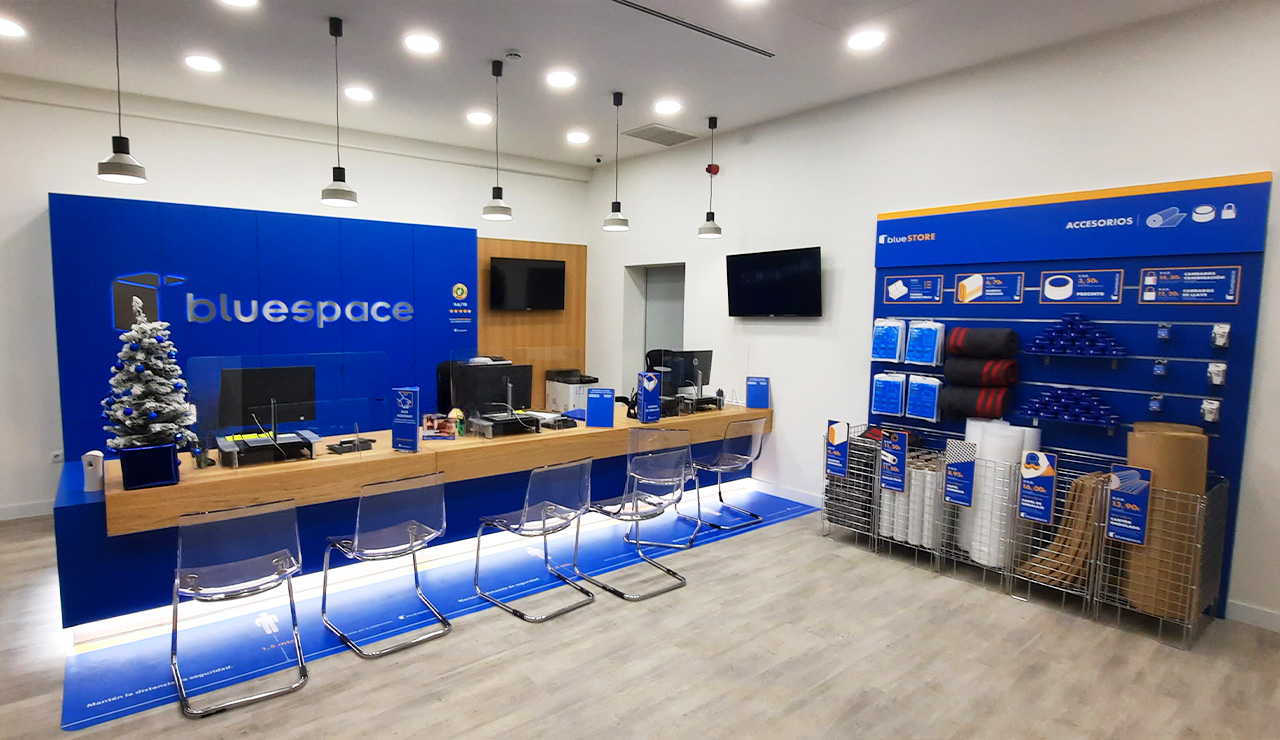
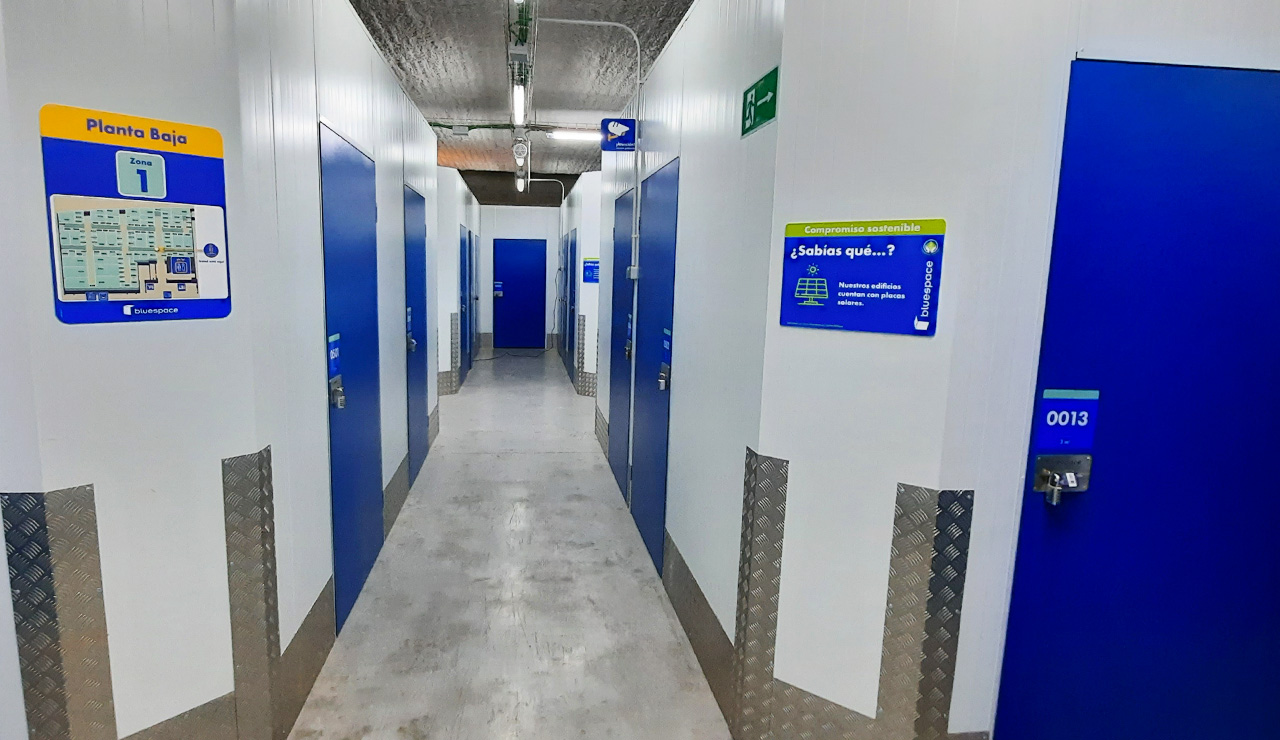
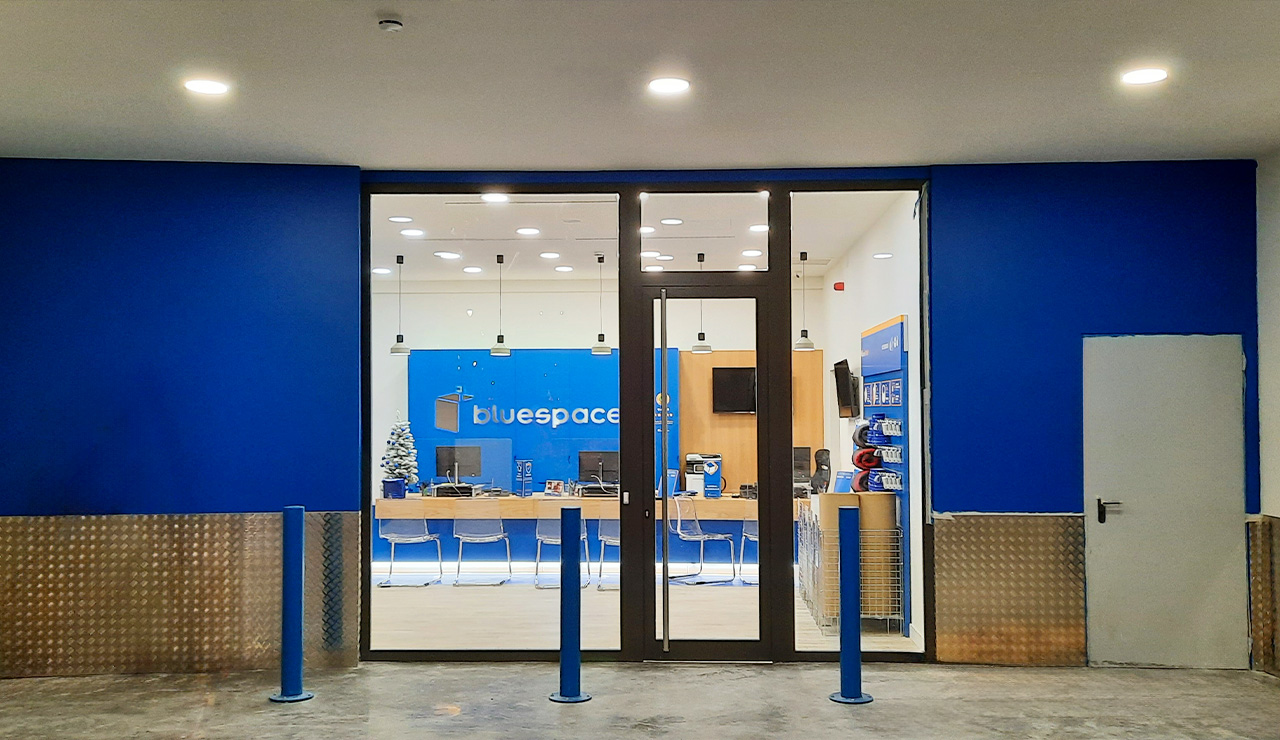
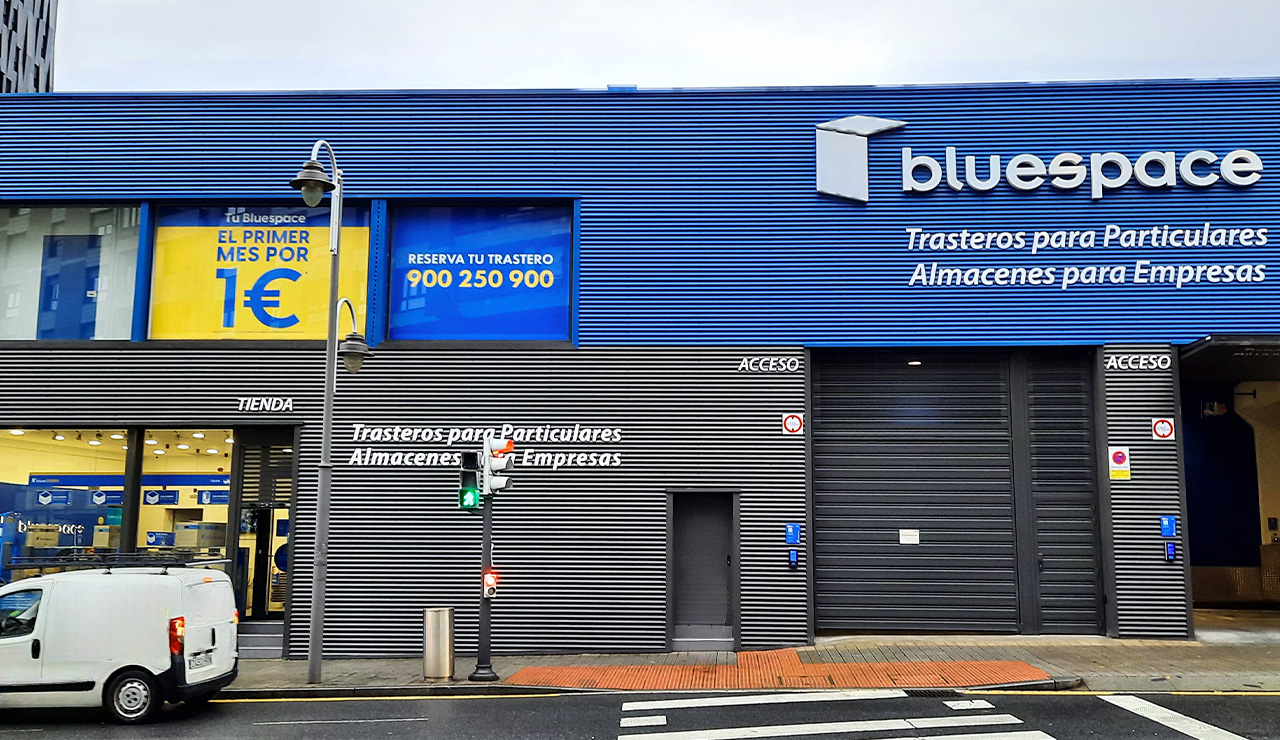
Bluespace specializes in self-storage through the rental of small, individual storage units, known as “boxes,” which vary in size to suit the specific needs of each client. These spaces are designed for both individuals and businesses to store household goods, furniture, files, tools, or other items, provided they are not hazardous materials such as flammable, explosive, or toxic substances. This restriction ensures the safety of all users and the building itself.
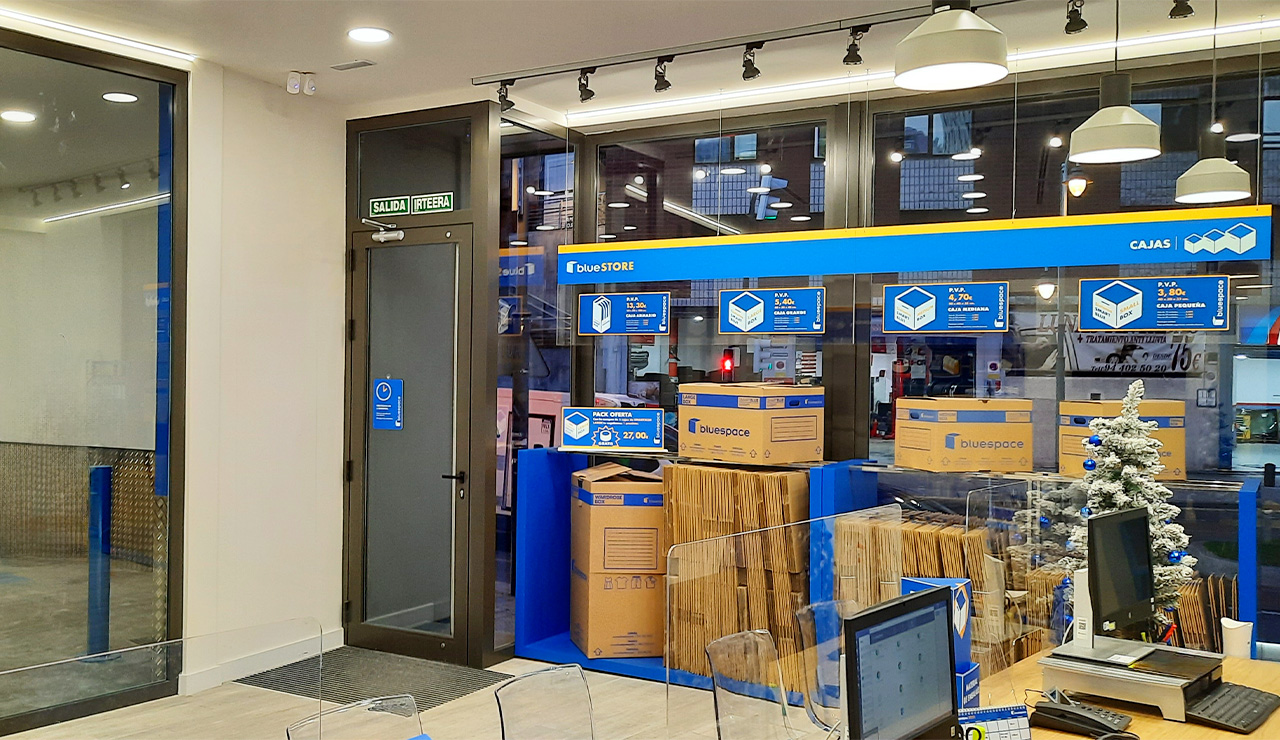
In addition to storage unit rentals, Bluespace offers a complementary service selling packing supplies. Available items include cardboard boxes of various sizes, packing tape, bubble wrap, protective covers, and other useful items for organizing, protecting, and transporting stored items. These products are available exclusively to customers who rent a box, reinforcing the center’s value proposition as a comprehensive storage solution.
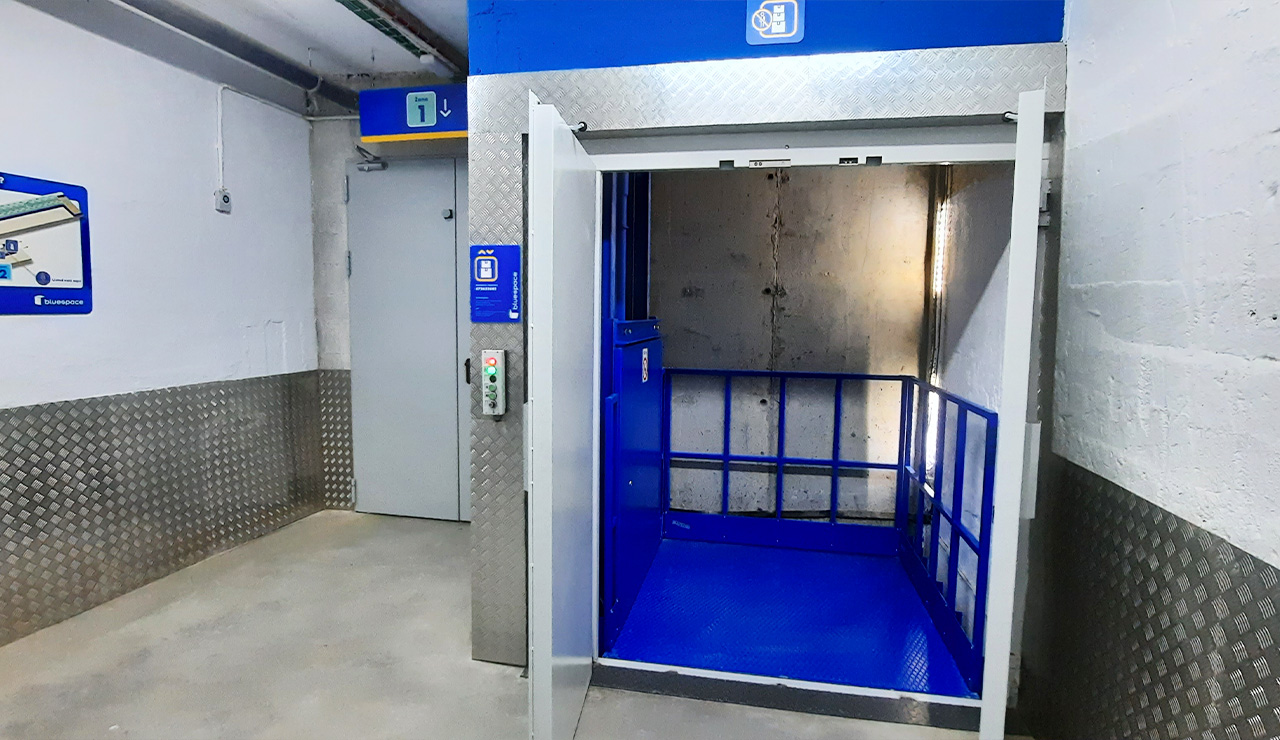
The center’s operations are designed to be completely autonomous. Loading and unloading goods is the responsibility of the tenants themselves, without direct intervention from center staff. To facilitate this, a garage/parking area with available spaces has been provided, allowing direct access to the facilities. A state-of-the-art video surveillance system has also been installed, along with other passive and active security measures, such as access control, alarms, and sensors, guaranteeing the continuous protection of stored goods.
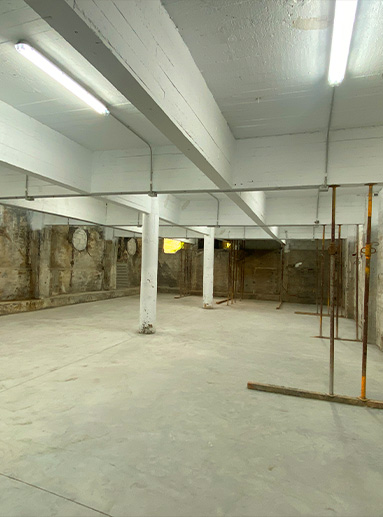
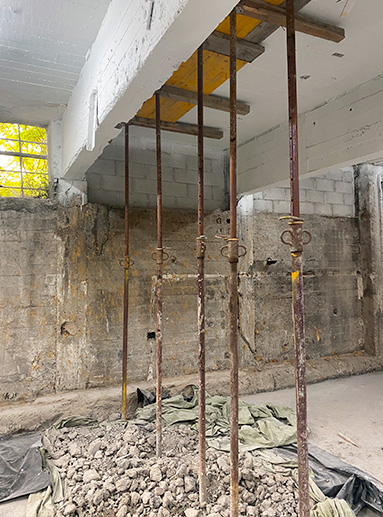
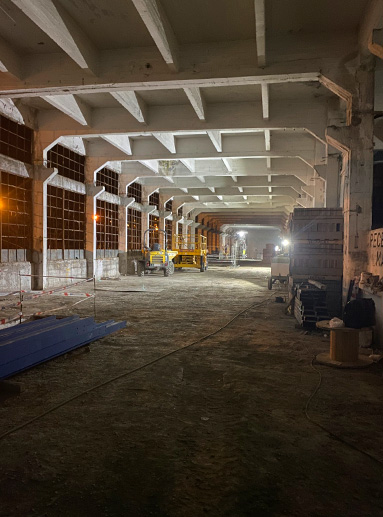
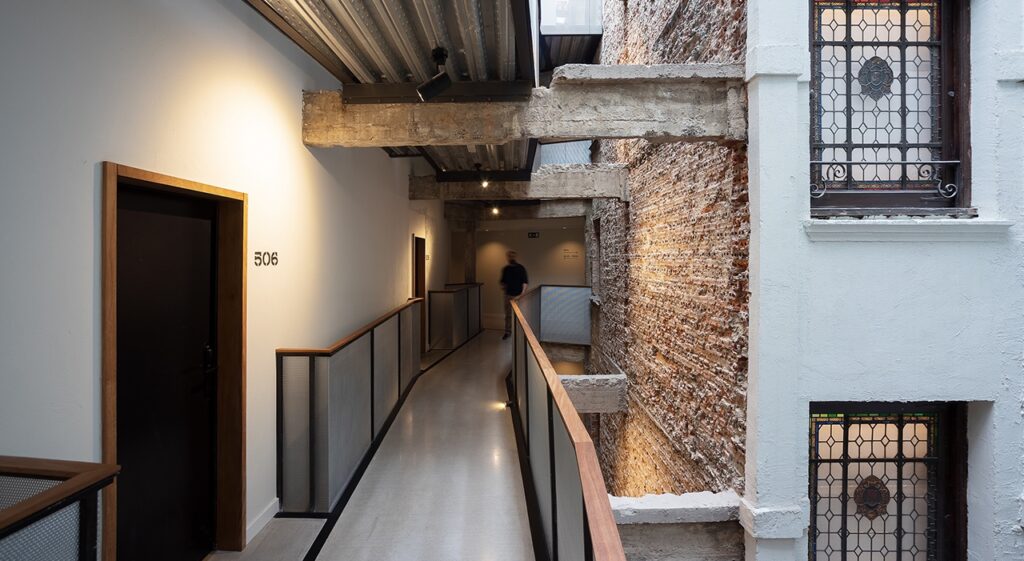
Angulo Arquitectura carried out a comprehensive renovation that included conservation work and a redesign of the building’s floors. An open-plan configuration was chosen, allowing for future subdivision into mini-warehouses, always respecting the maximum evacuation distances established by current regulations. Furthermore, all existing installations have been reviewed and updated, including rainwater and sewage downpipes, the plumbing and drainage network, the load-bearing structure, and waterproofing systems in the exterior areas.
Regarding the technical installations, a new electrical system has been installed, adapted to the center’s needs, along with telecommunications networks and mechanical ventilation systems. Service shafts have also been implemented to house these installations in an organized and accessible manner, facilitating maintenance and future expansion.
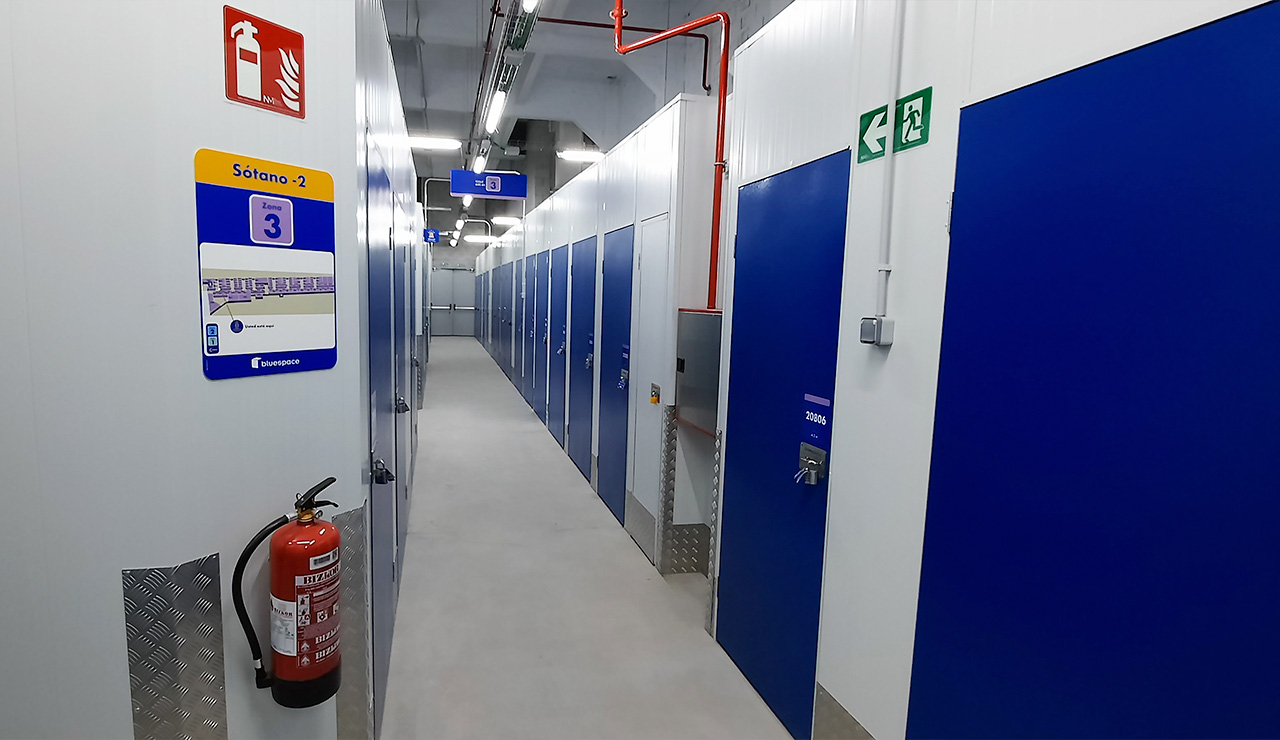
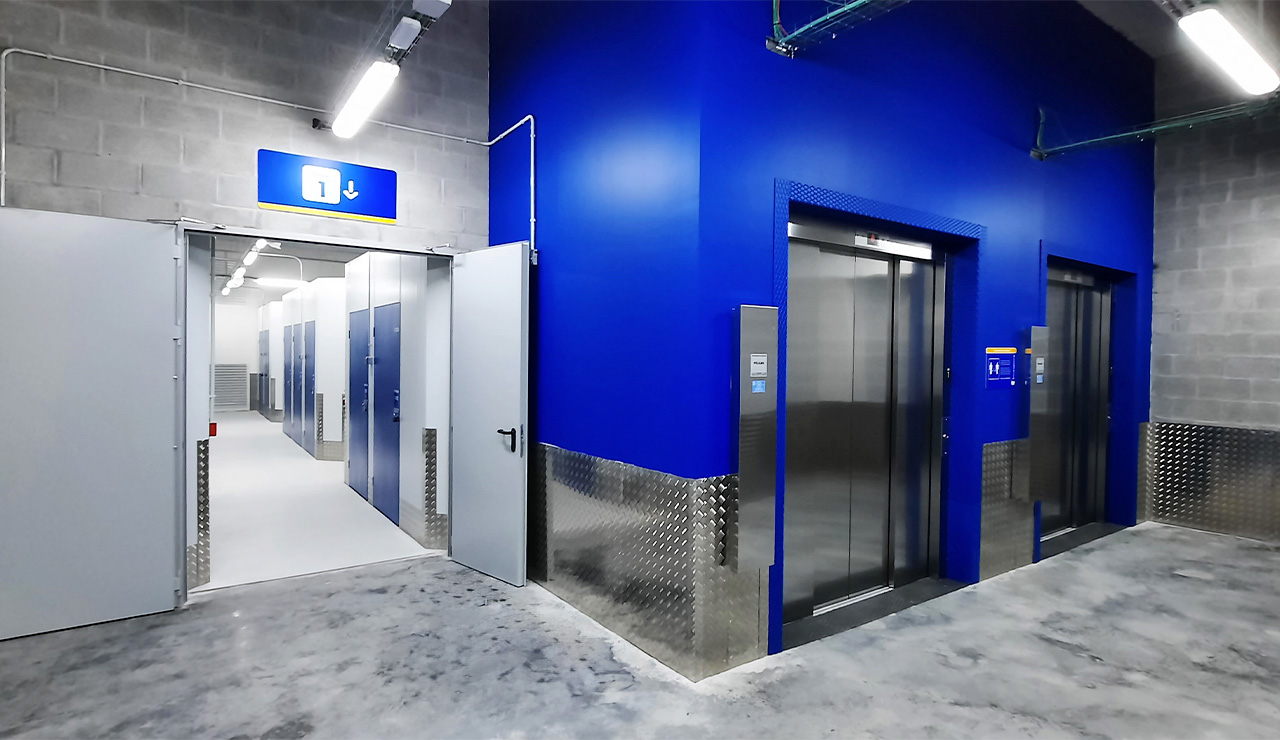
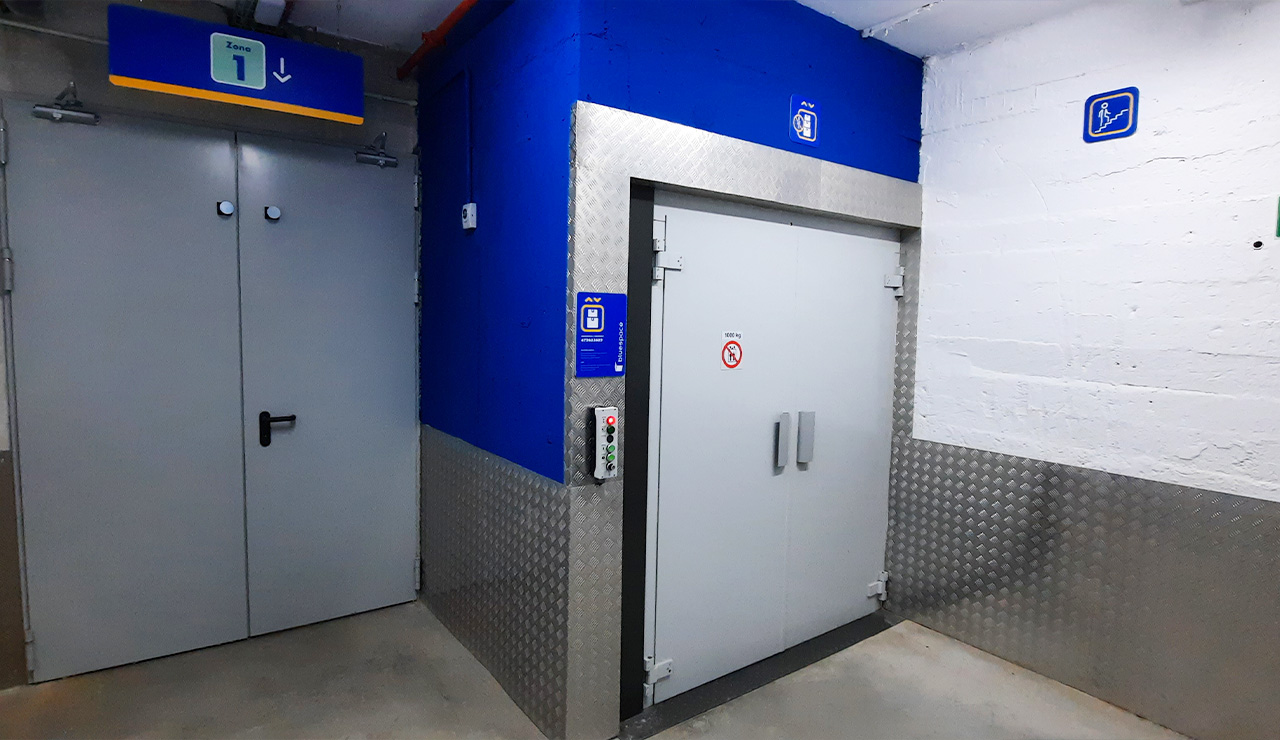
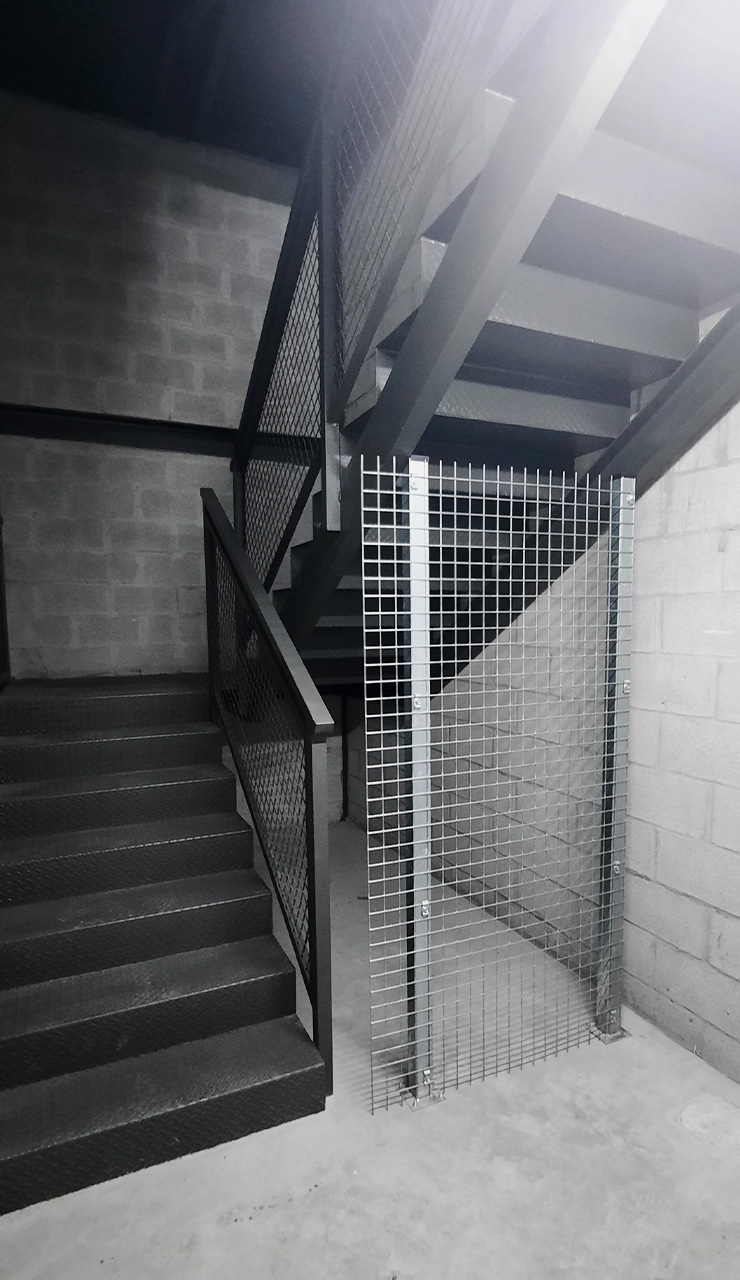
Safety has been a priority in the center’s design. Evacuation routes have been improved by creating independent lobbies, and fire safety regulations have been strictly followed. This has involved the installation of fire doors, illuminated signage, detection and suppression systems, and the removal of architectural barriers to ensure universal accessibility.